AI visibility platform
for marketing teams
People now ask ChatGPT which product to buy. GetCited tells a brand whether it makes it into those answers, shows the proof and turns every gap into a task. We designed and built it, from the first idea to a live product.
- Industry
- Marketing techSaaSAI
- Our role
- Product discovery, UX/UI design, full-stack SaaS development, AI integrations, website
- Stack
- Nuxt, NestJS, PostgreSQL, OpenAI, Gemini, Claude
- Live site
- getcited.me ↗

About the project
Summarize this case with AI
GetCited is a SaaS for marketing teams and agencies who want to know what AI says about their brand. It asks ChatGPT, Gemini, Claude, Perplexity and Google AI Overviews the questions buyers ask, then shows who gets recommended, which pages AI trusts and what to fix first.
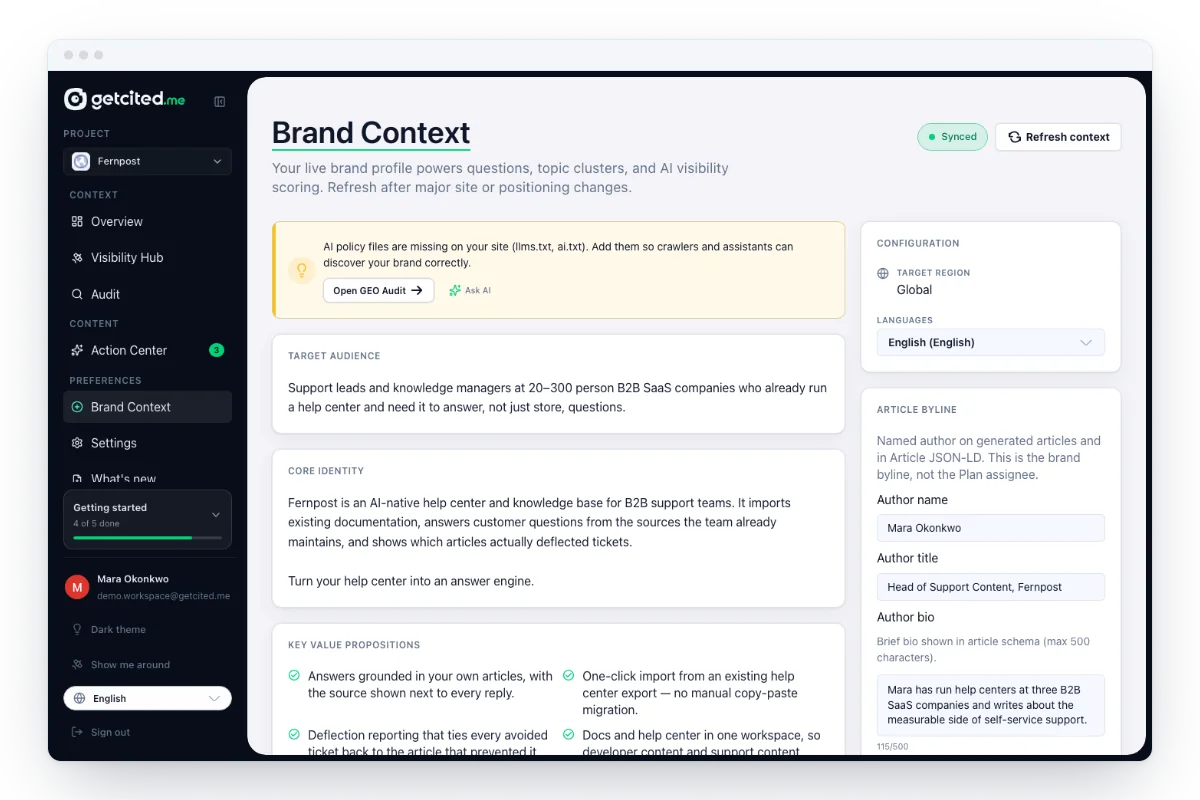
We did the SaaS design, SaaS development, AI development and the website, from the first call about the idea to the launch and the releases after it. Screens from inside the app show demo data.
Challenge
A few paragraphs.
A whole product to define
The client came to us with an idea that fit in a few paragraphs: show brands what AI tells their buyers.
The hard part was everything a mention hides. Did AI recommend the brand, or only name it because the question did? Was it even talking about the right company? Which sources shaped the answer, and what should the team do next?
How GetCited works
One loop, from a buyer’s question to a fix
We worked the idea through with the client, suggested the features and wrote the specification. Every screen we designed serves one of four steps.
01Track
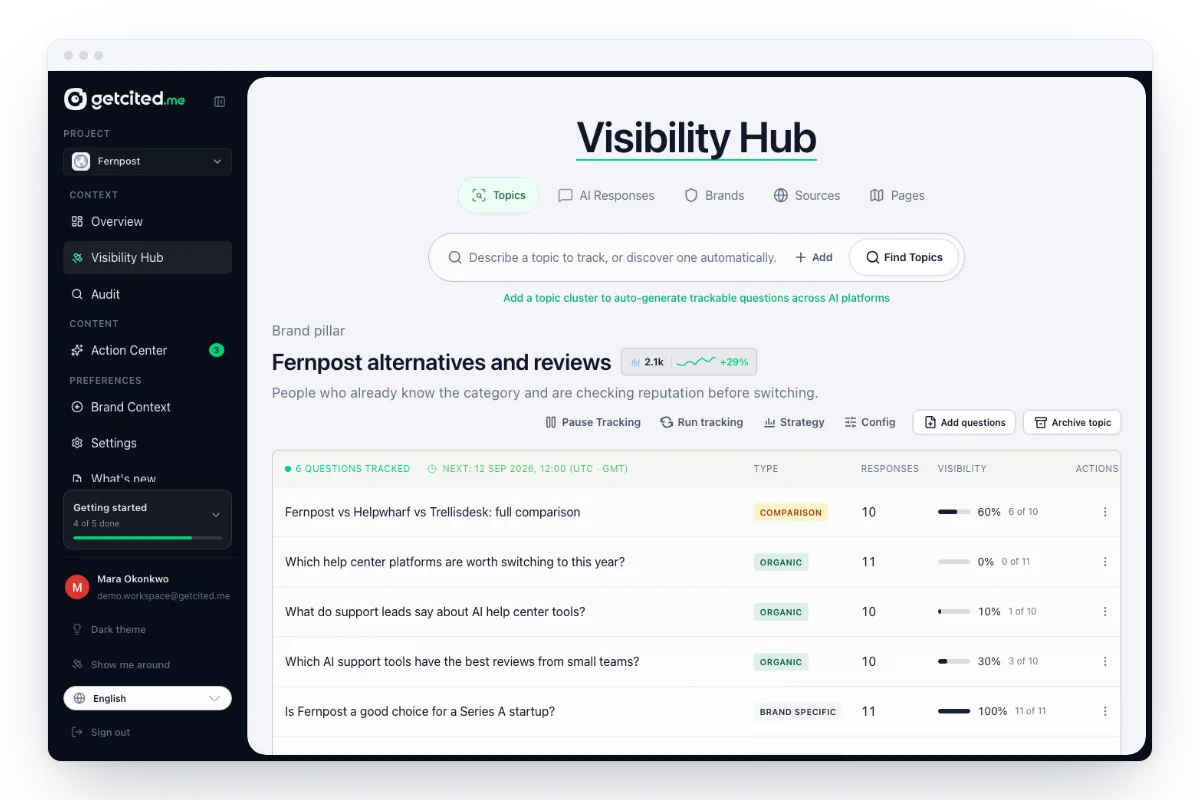
GetCited asks the questions buyers ask, daily or weekly, across every engine on the plan.
02Inspect
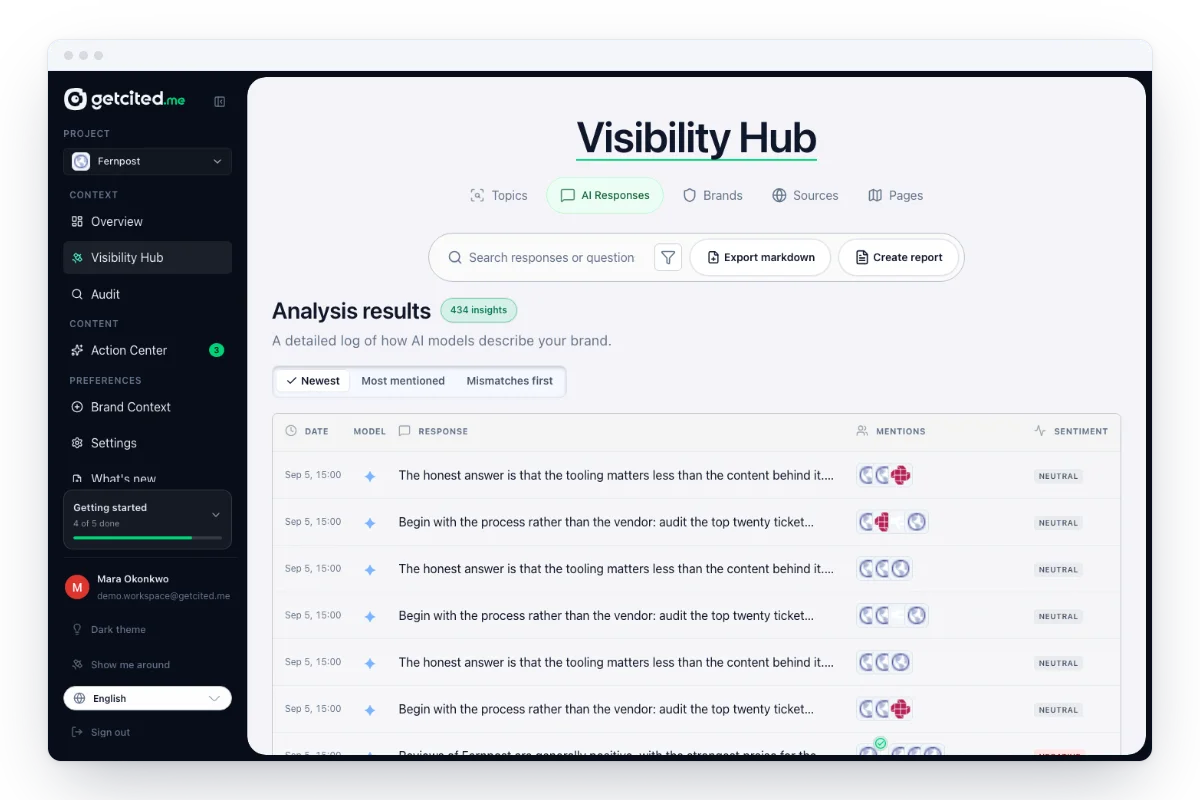
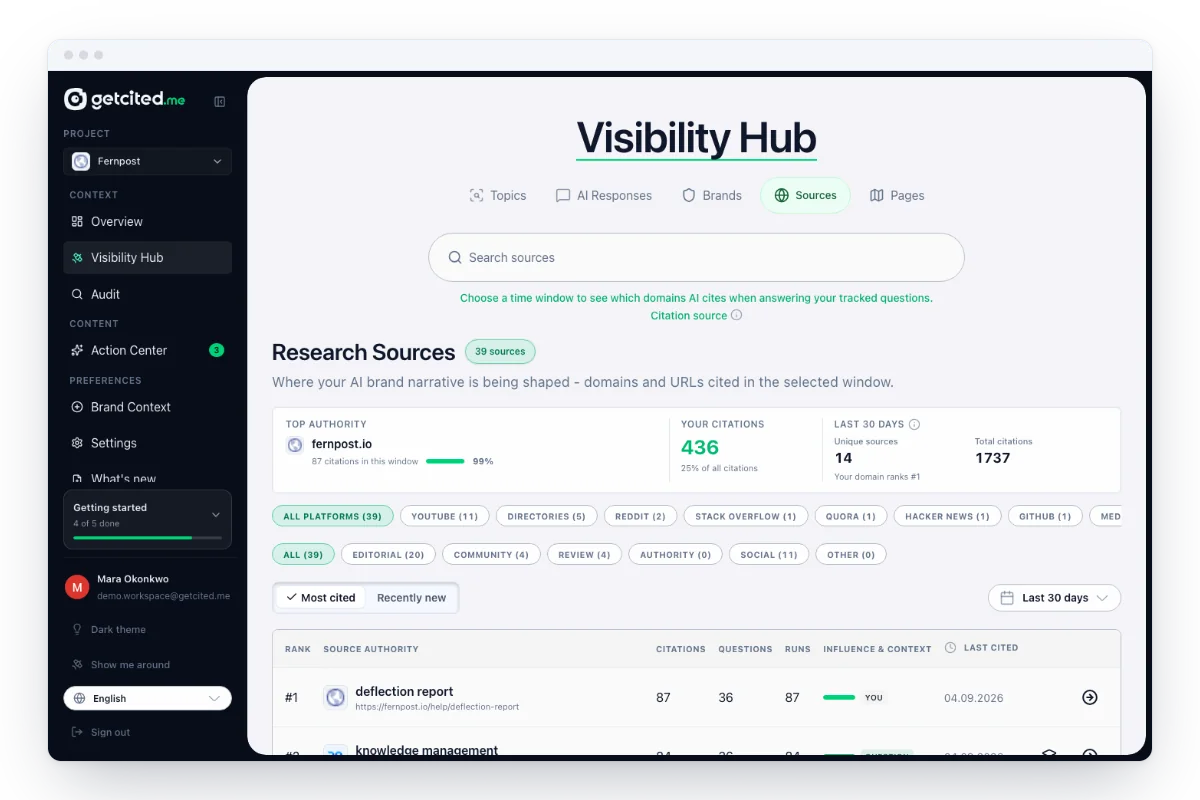
Each answer shows the brands it names, the exact quote and its sources.
03Act
A gap becomes a task: a technical fix, an article or a community reply.
04Recheck
Fresh answers and a new audit show what changed after the work went live.
01 · First answer
The first useful answer comes before the account
People don’t sign up for a new kind of product on faith. A visitor types in a domain, and GetCited finds the brand’s real competitors and writes the questions a buyer would ask.
Then it puts one question to Gemini and shows the actual answer: was the brand named, and who was recommended instead?

02 · Measurement
A brand can look visible without being recommended
Asked about a brand by name, AI usually knows it. Asked for a recommendation, it may never mention it.
So we split branded, comparison and organic questions, and made organic the headline even though it makes the first day look worse. Each figure shows the count behind it.

03 · Evidence
Every result needs a trail you can follow
From any score, a marketer can open the answer behind it, with its engine and date. We made each quote match that answer word for word, and a link to the brand’s site that returns a 404 doesn’t count as a citation.
When AI mixes the brand up with a company of the same name, Entity Clarify counts it as a mismatch and prepares the text and structured data that set the record straight.

04 · Action Center
A missing mention becomes a piece of work
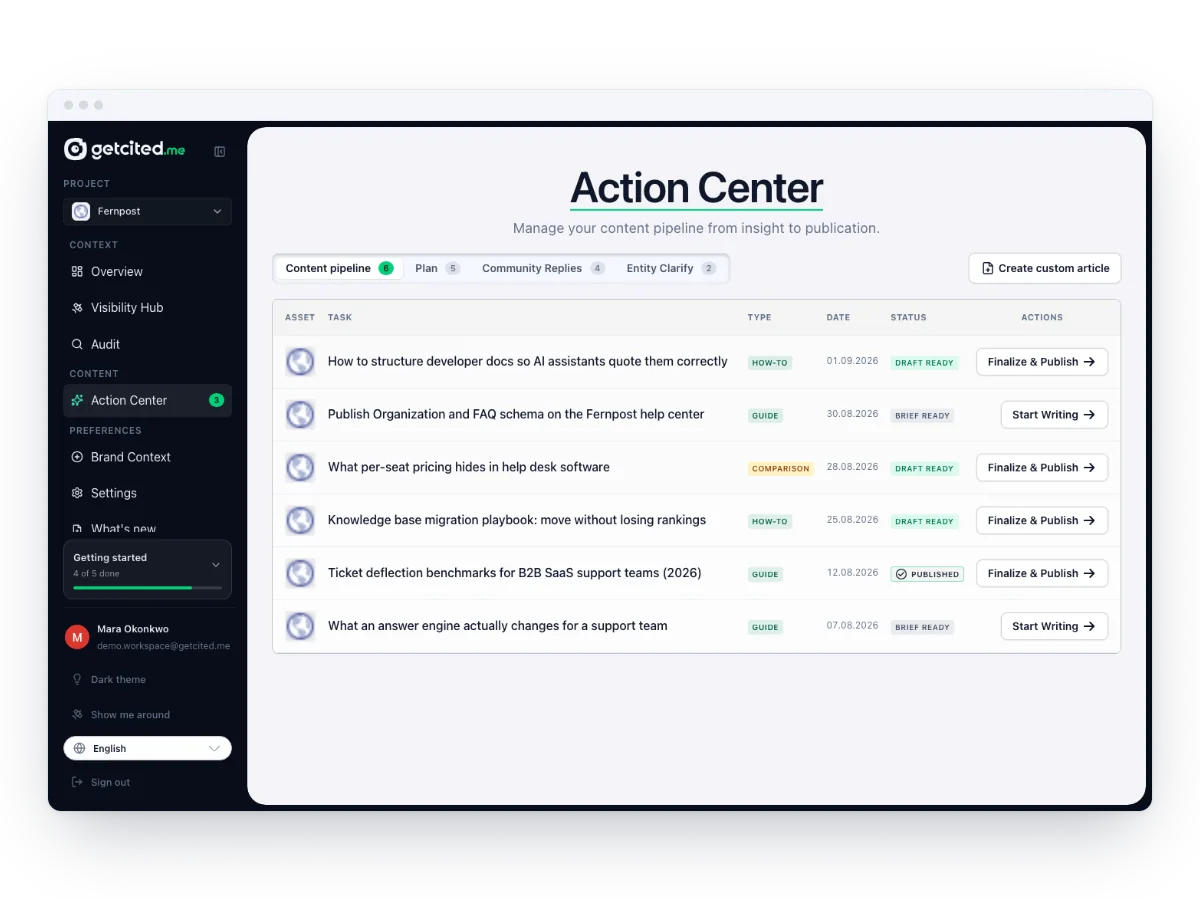
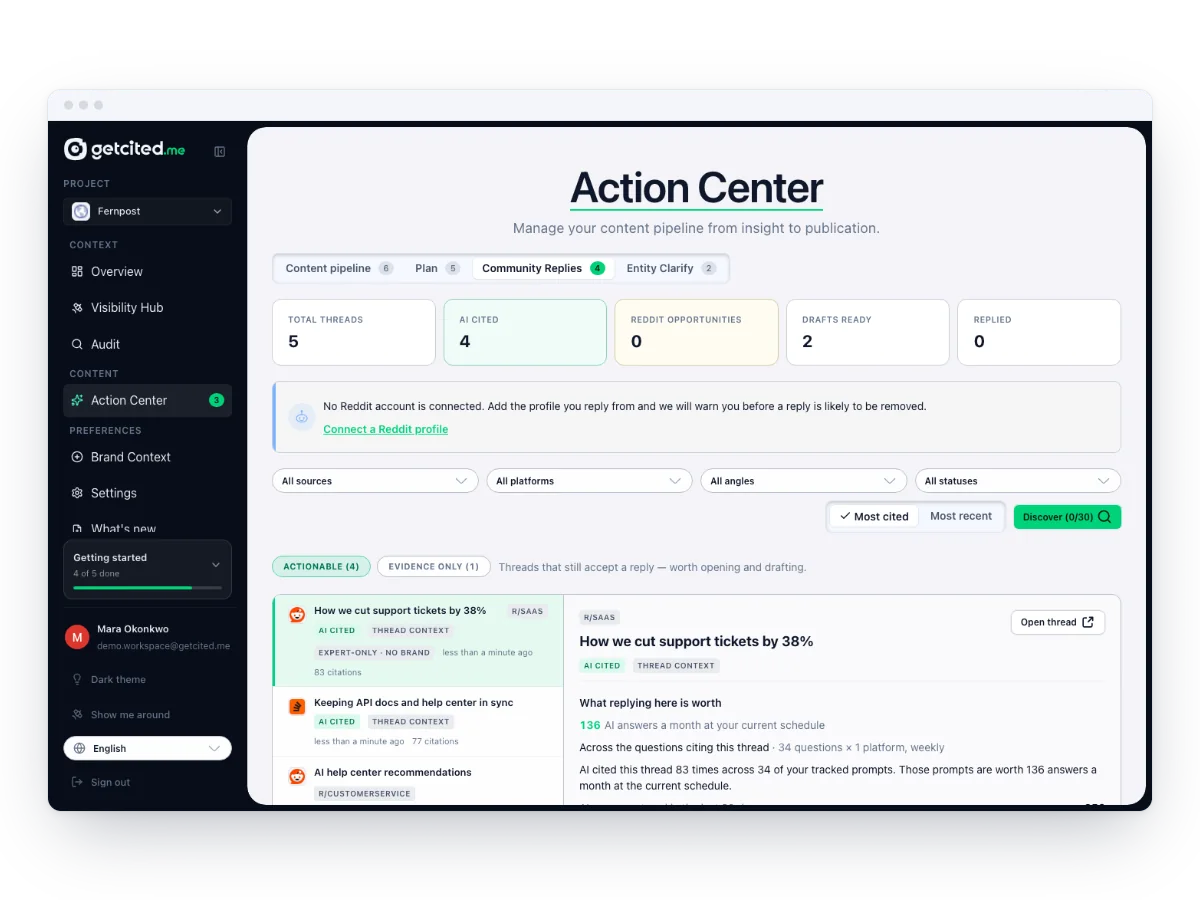
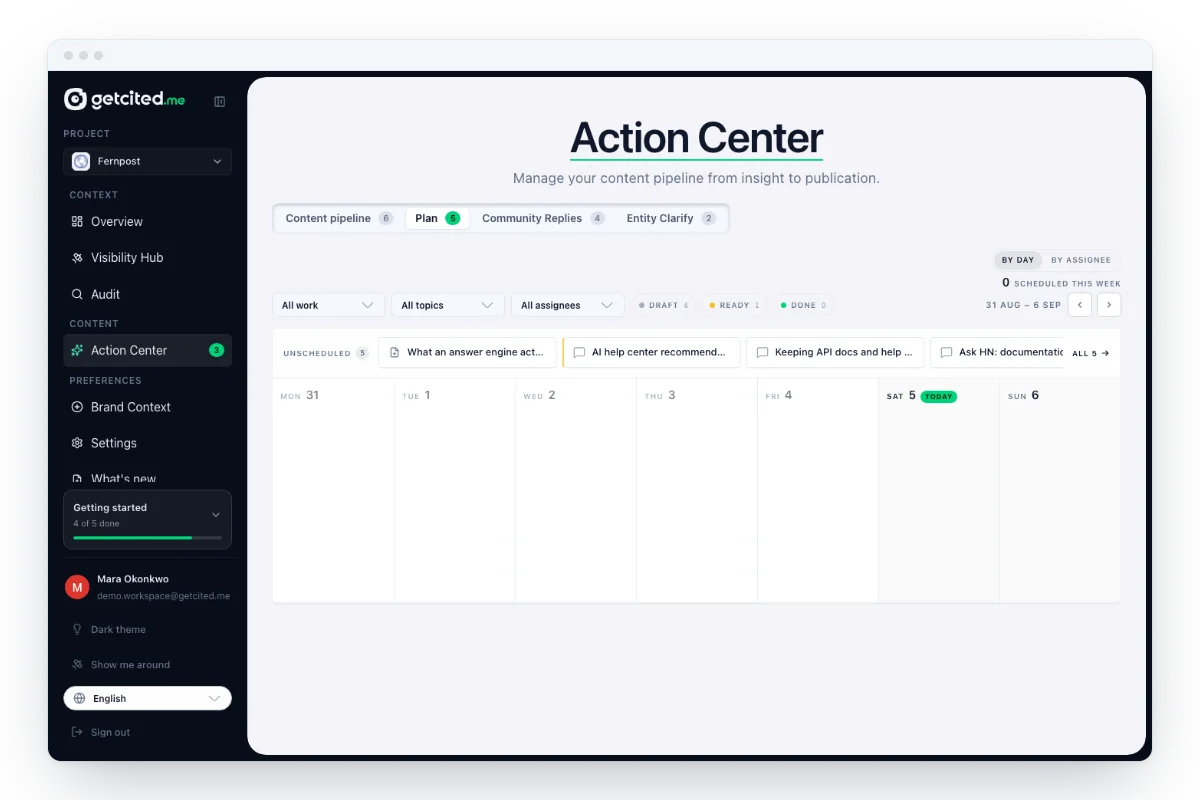
Gaps turn into briefs, articles and replies to the Reddit and Stack Overflow threads AI already quotes, each with its evidence attached.
We made each draft pass a check for numbers without a source, “studies show” and competitor features their own pages don’t list. GetCited never publishes; a person on the brand’s team does.
05 · GEO audit
The audit had to be repeatable before it could be useful
An early, model-scored audit gave the same untouched site two very different scores. We rebuilt it on 20 weighted checks: the model explains and can lower the score, but never raise it.
The report goes to a developer as a link, with the files ready to paste.

06 · The website
A website AI can read as easily as people
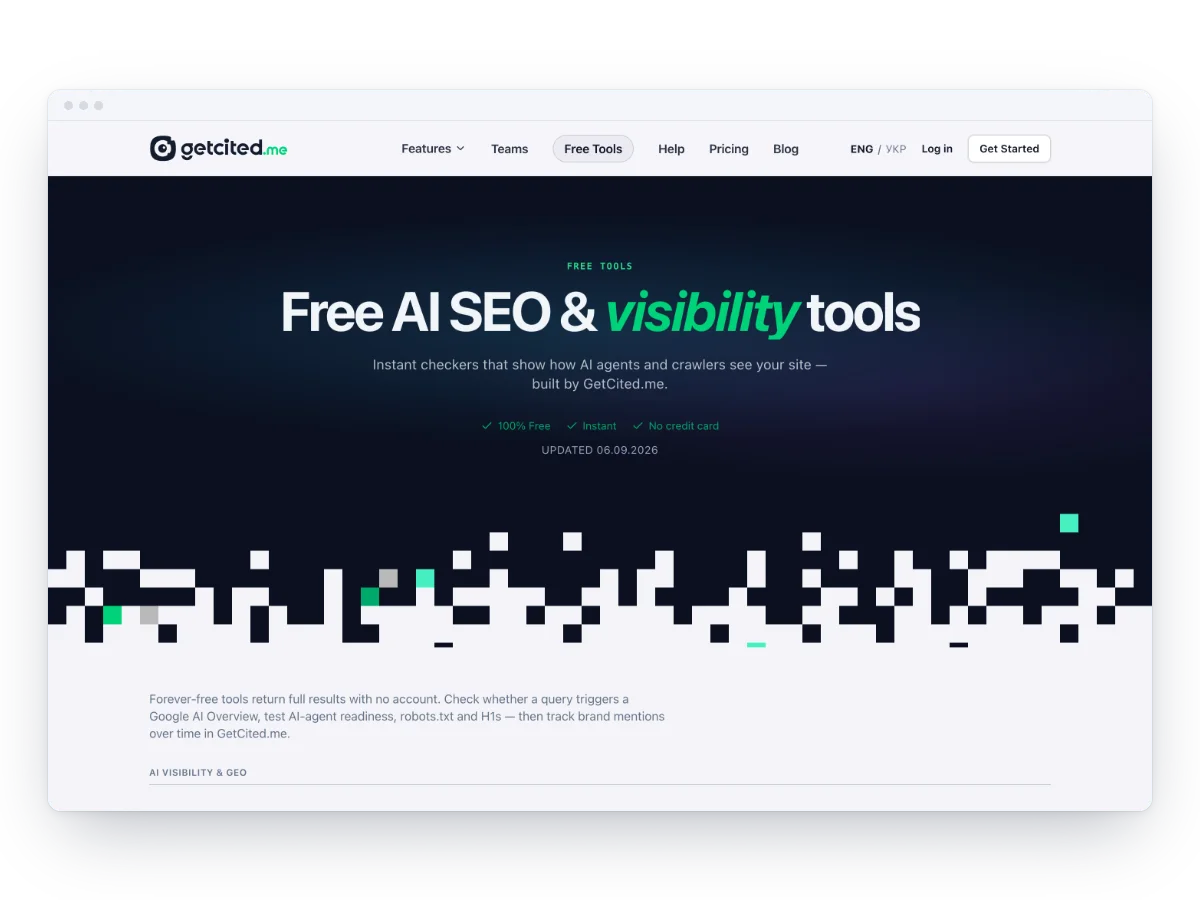
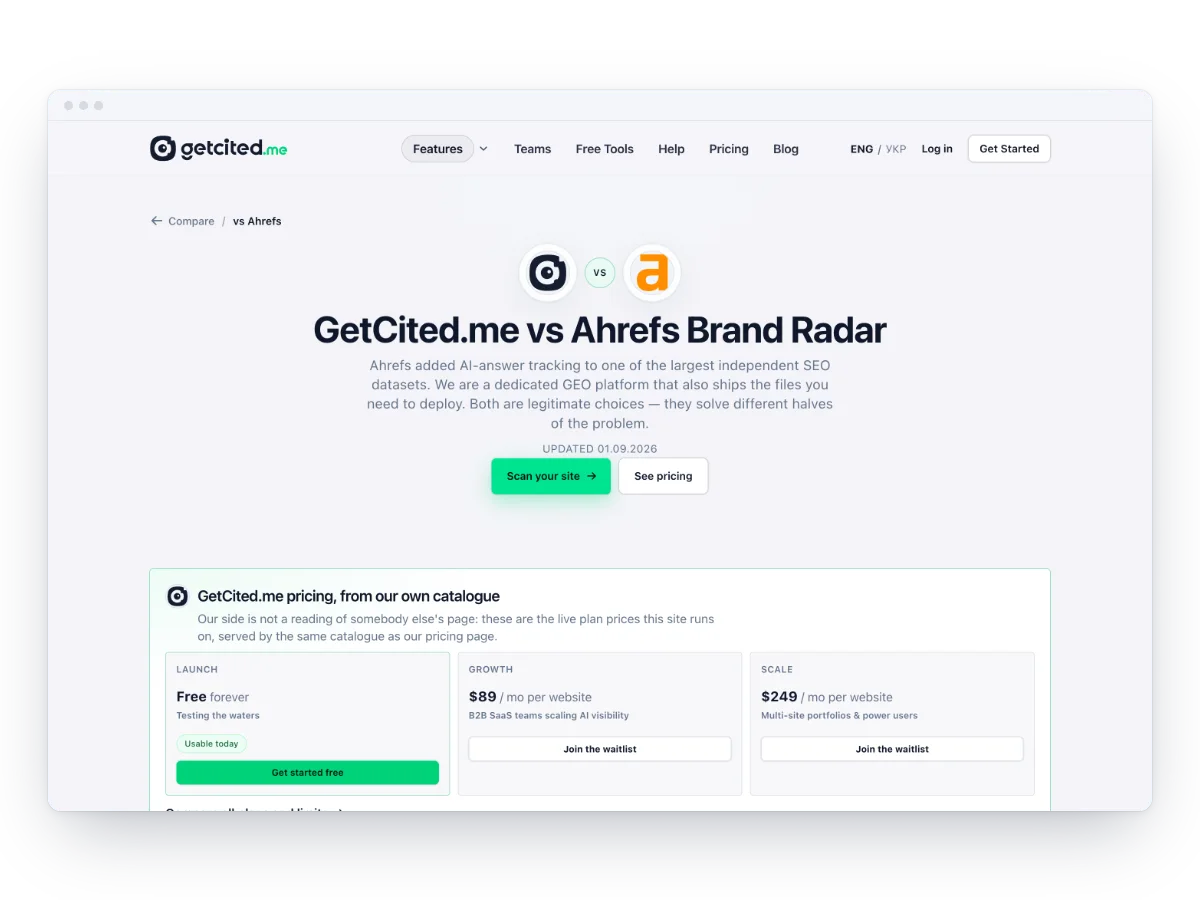
We designed and built getcited.me alongside the product: the free check, 17 free tools, comparison pages and guides.
Its llms.txt and ai.txt change with each feature and its sitemap dates come from real edits, so people and AI assistants read the same facts.
07 · Technology
The tech stack behind GetCited
We send each question through the engines’ official APIs the way a buyer types it: no hidden instructions, no hint about the brand, web search on.
01Interface
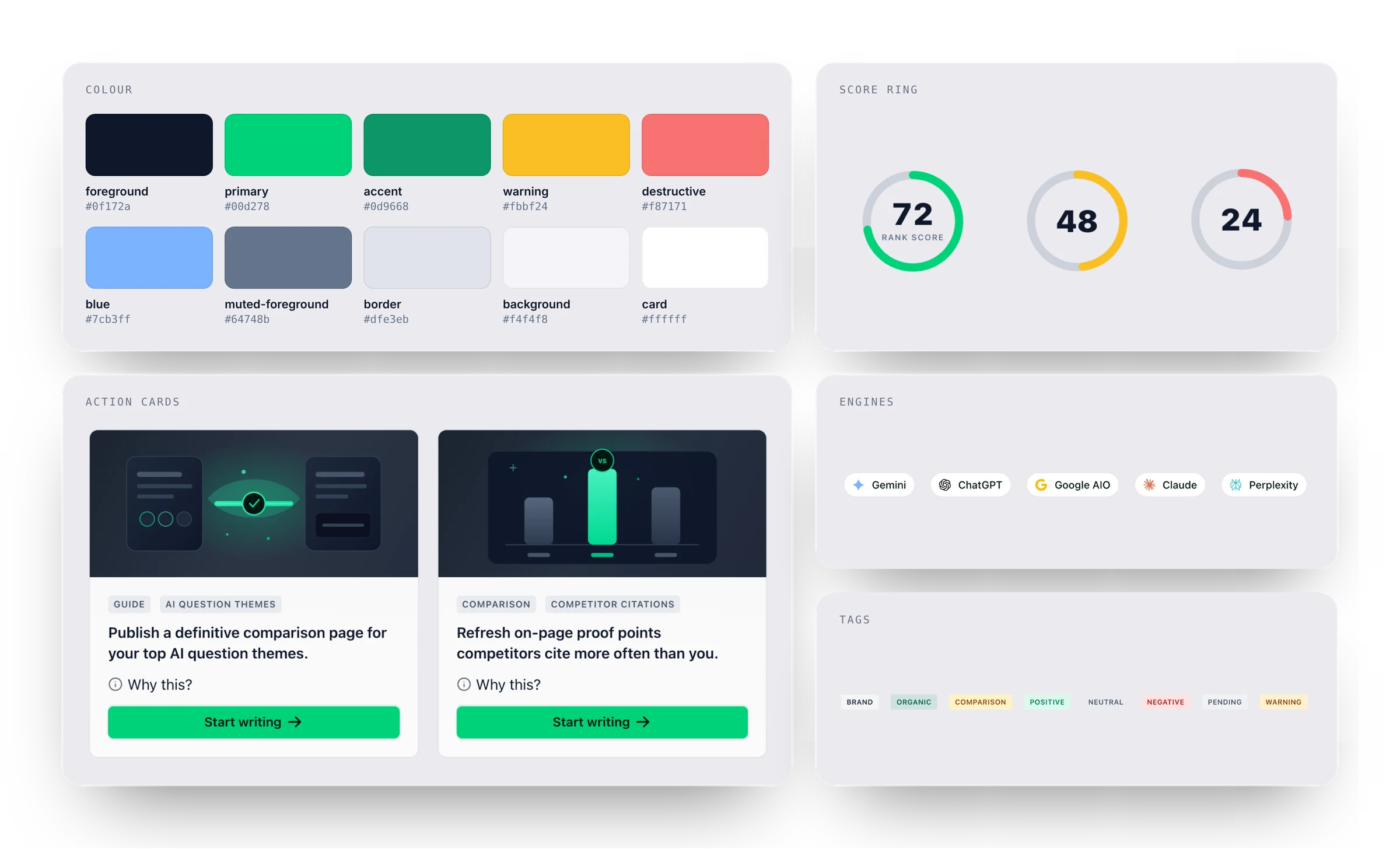
Nuxt, Vue and TypeScript with our own component system; Three.js for the website hero.
02Backend
NestJS, PostgreSQL and Prisma; Redis and BullMQ for queued work; Socket.IO for live updates.
03AI
OpenAI, Gemini, Anthropic and Perplexity APIs, OpenRouter, and DataForSEO for AI Overviews.
04Integrations
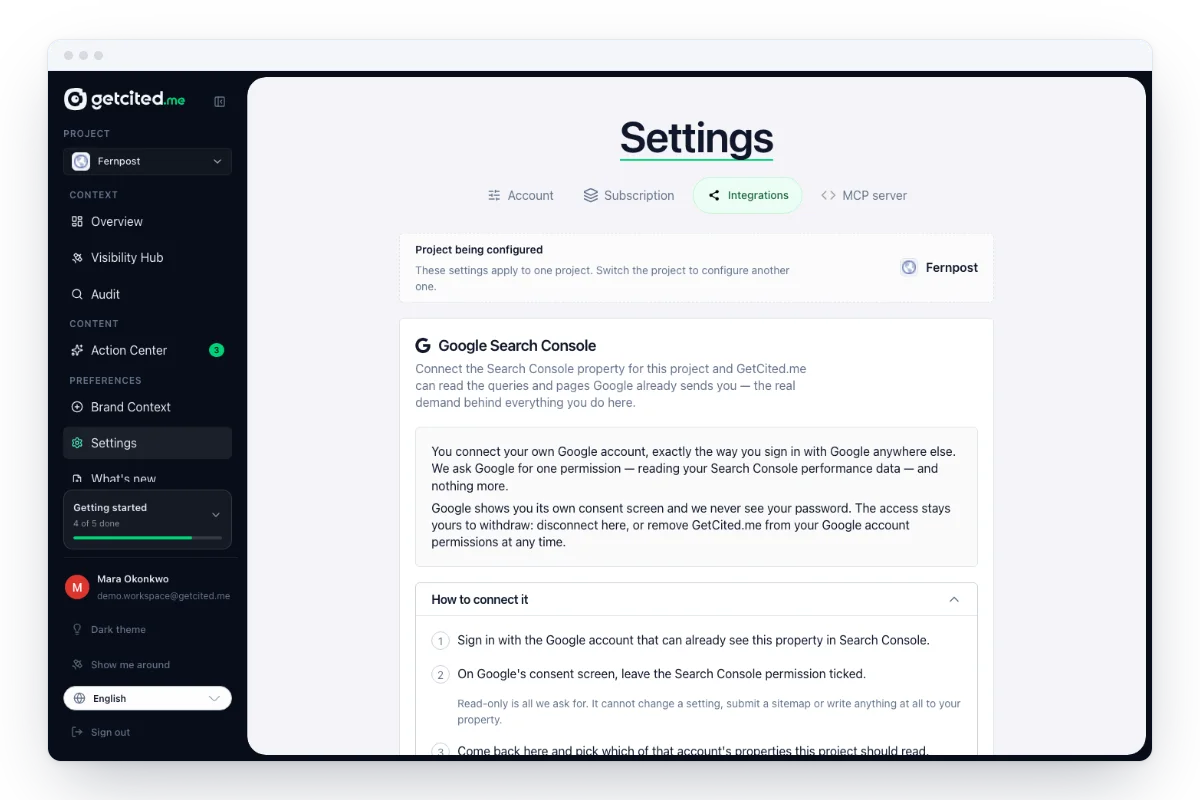
Google Search Console and an MCP server for coding agents.
05Delivery
Docker, Caddy and Cloudflare; Sentry, Prometheus and Grafana.
Results
Live since July 2026
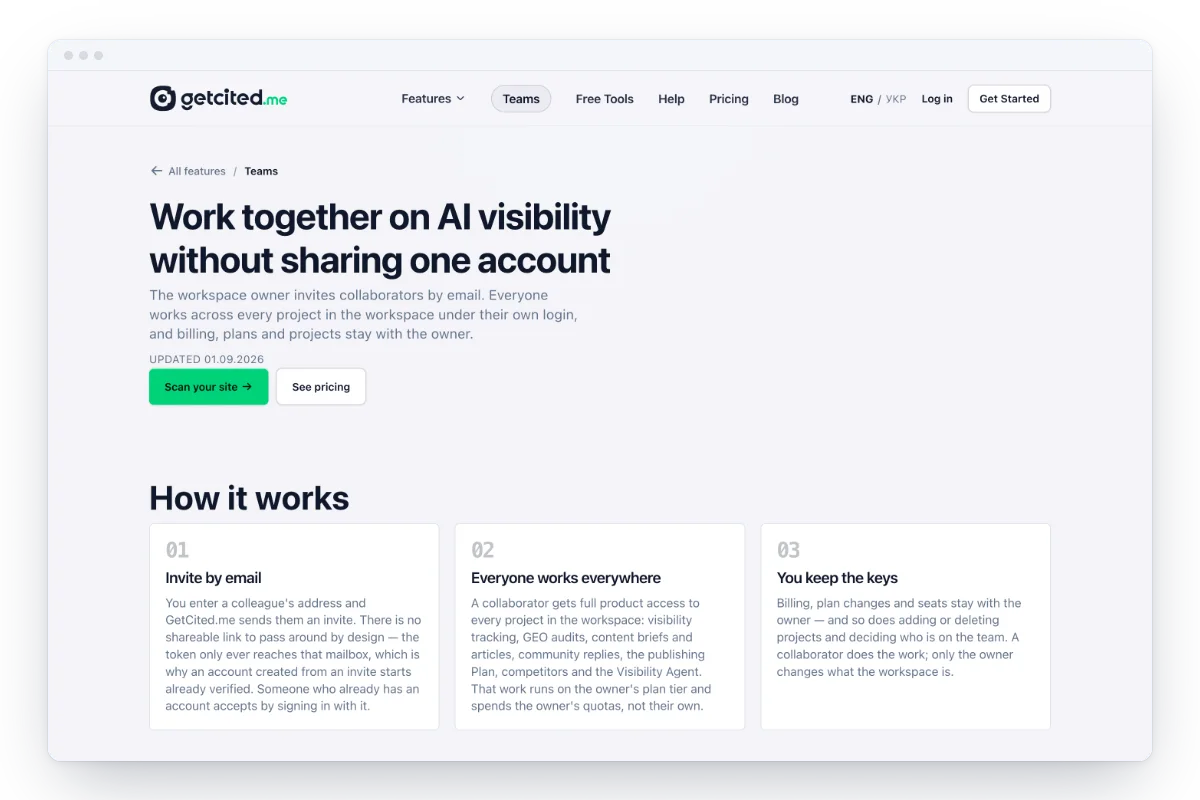
GetCited opened to the public as a beta on July 12, 2026. In the months after launch we added the agent, team workspaces, comparisons, shareable audits, the MCP server and Search Console.
- 8weeks to the first working version, with the core features and the website
- 23updates in the two months after launch
Every update is public. See the GetCited changelog ↗
Our team
The people who took GetCited from the first idea to launch.
5 specialists- 1
Project manager
Planning and delivery
- 1
Product designer
Experience and visual design
- 1
Frontend developer
Interfaces and interactions
- 1
Backend developer
Architecture and integrations
- 1
QA engineer
Testing and quality
We needed a product that shows a brand how AI assistants talk about it, and we needed a first version fast. Redlab had it working in about two months. The hardest part was getting several AI agents to agree on one answer, and they figured it out without us having to babysit it.
They’re direct, they ask the right questions, and they don’t disappear after the release. We’re happy with the team and we’d work with them again.
Questions about GetCited
Case study by Redlab · Updated
What is GetCited?
GetCited is an AI visibility SaaS for marketing teams, SEO specialists and agencies. It asks ChatGPT, Gemini, Claude, Perplexity and Google AI Overviews the questions buyers ask, shows where a brand gets recommended and which sources AI cites, and turns each gap into work.
Who designed and built GetCited?
Redlab designed and built GetCited: discovery and the specification, the UX/UI and the design system, the front end and the back end, the AI integrations and the getcited.me website.
How long did it take to build GetCited?
Eight weeks to the first working version, with the core features and the website. GetCited opened to the public on July 12, 2026, and we shipped 23 updates in the two months after launch.
How does GetCited keep its numbers honest?
It never blends questions that name the brand with questions that don’t. Every figure shows its count, a share is held back below 20 answers, and a change is called significant only when it clears a 95% confidence interval. A change feed records the events behind the numbers.
What does the Visibility Agent do?
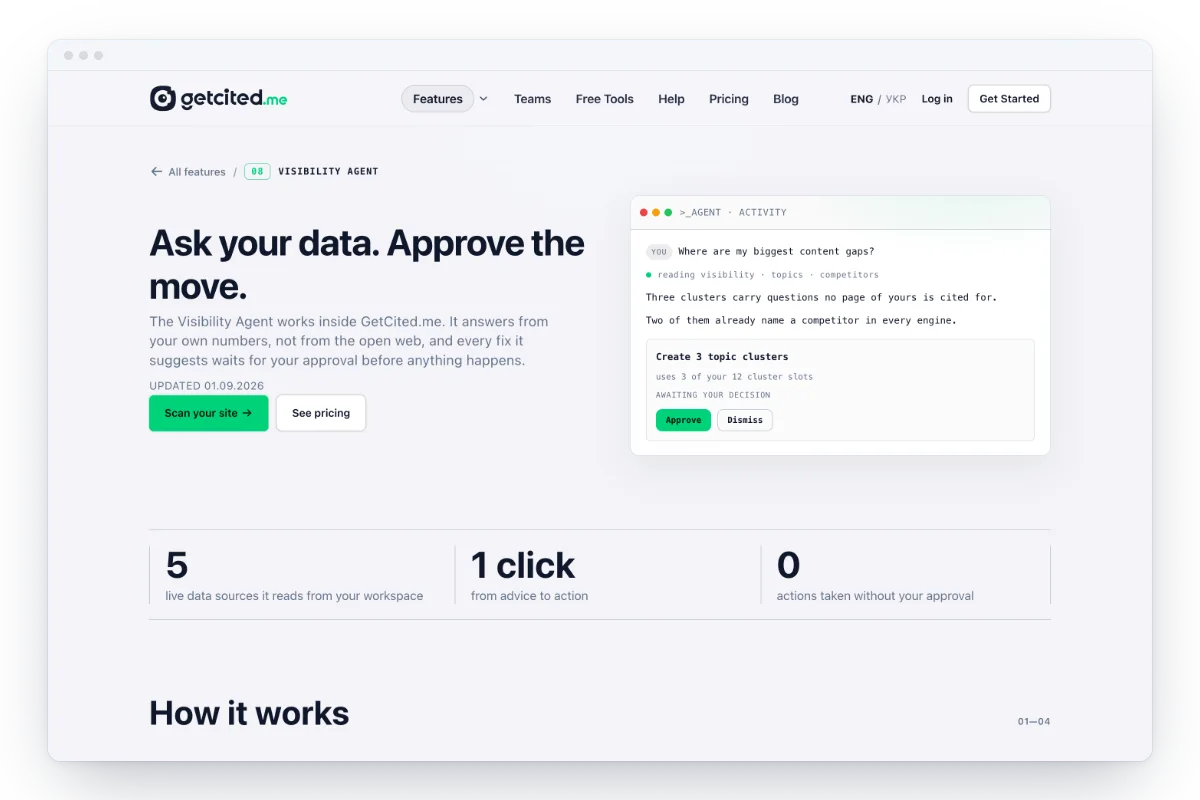
It explains the numbers in plain language from the workspace’s own data and proposes the next step with its cost. Nothing runs until a person presses Approve, and text inside third-party AI answers can’t steer it.
What is Entity Clarify?
A tool that finds AI answers confusing the brand with a company of the same name, counts them as mismatches rather than mentions, and prepares the fix: structured data, About text, an FAQ, an llms.txt line and a checklist.
Does GetCited work for agencies and teams?
Yes. Owners invite colleagues into a shared workspace, agencies send clients frozen before-and-after reports by private link, Google Search Console connects read-only, and an MCP server lets coding agents read the data and ship fixes.
Does GetCited use the AI chat apps or their APIs?
The official APIs. GetCited asks ChatGPT, Gemini, Claude and Perplexity through their APIs, and Google AI Overviews through a data provider, on a schedule. These answers can differ from what one person sees in their own chat.
Does GetCited publish content for the brand?
No. GetCited drafts articles and community replies with the evidence attached and reminds the team about target dates. A person on the brand’s team reviews and publishes.
Can Redlab build an AI product like this for us?
Yes. We design and build SaaS and AI products from an early idea to launch, and a short description is enough to start. See AI development or MVP development, or tell us about your product below.
More products we’ve built
Tell us about your product
A few lines or a link is enough — we’ll come back with questions and a first view of scope.

Thank you
Linda has your request. Expect a reply within 12 hours — with questions, or a time to talk.