A crypto academy that builds
a route for every learner
Each learner gets their own route through a crypto academy of courses, quizzes and practical quests. We built the frontend and backend, starting from an early idea.
- Industry
- EducationWeb3
- Our role
- Product scoping, frontend and backend development, payments, admin panel
- Stack
- Nuxt.js, Node.js, BoomFi, Wert
About the project
Summarize this case with AI
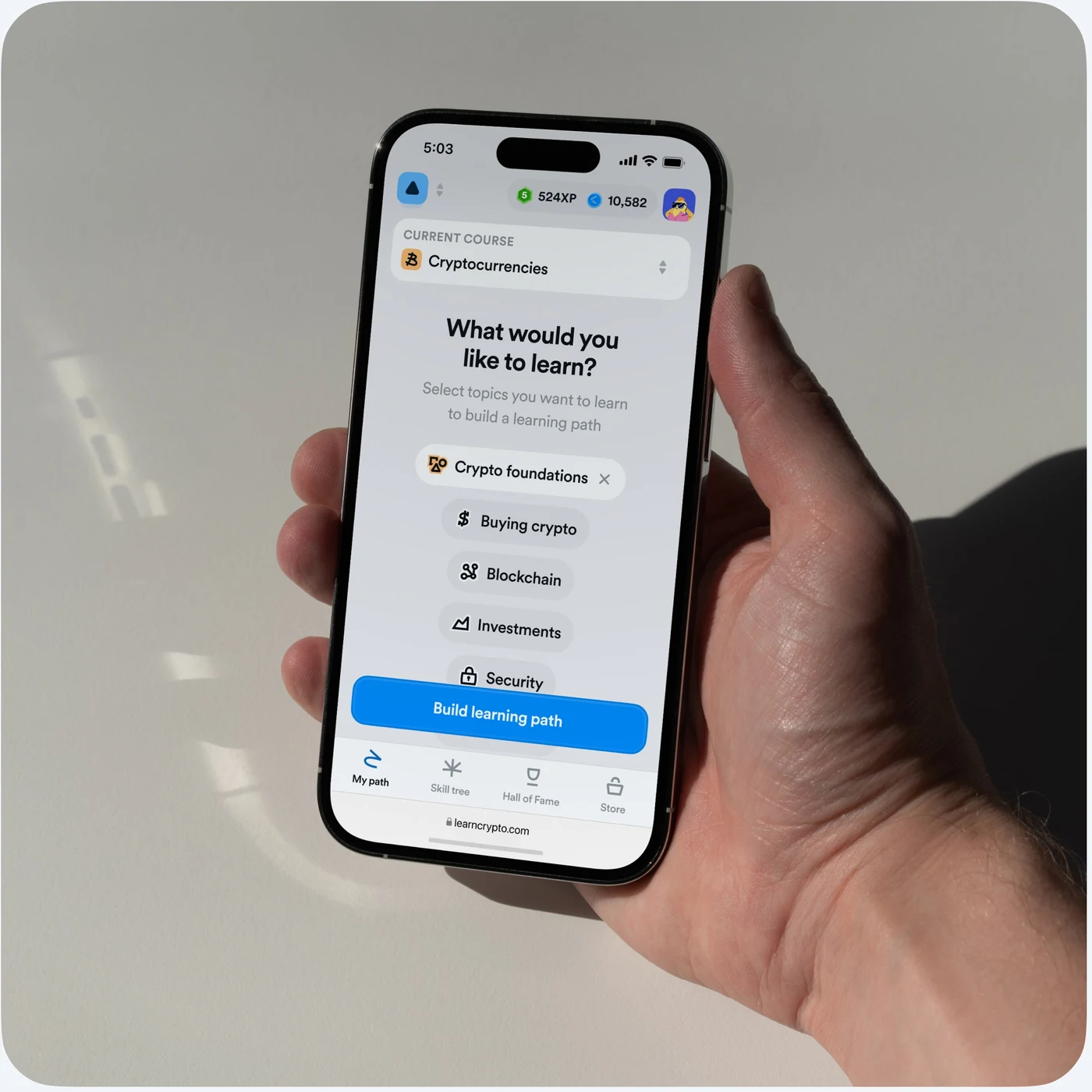
Learncrypto is a Web3 education platform where people learn about crypto through courses, quizzes and practical quests. Each learner can follow a personalized route through the academy or choose their own topics in an interactive Skill Tree.
We did the development: the frontend and backend, from the lesson-selection logic to subscriptions and content management. Our work began while the product was still an idea: we helped define how its features would work, then built the platform in Nuxt.js and Node.js. After launch we supported the platform for about three years.
Challenge
An academy for different starting points
The client wanted an academy that could guide people through crypto at their own pace. Someone learning the basics and someone exploring DeFi should find relevant material without following the same course sequence.
Together with the client, we worked through how people would choose topics, move through lessons, practice what they learned and pay for premium courses. The client’s team also needed to add courses, lessons and news themselves, with new material fitting into the learning map as the academy grew.
01 · Personalized learning paths
A route through the academy for each learner
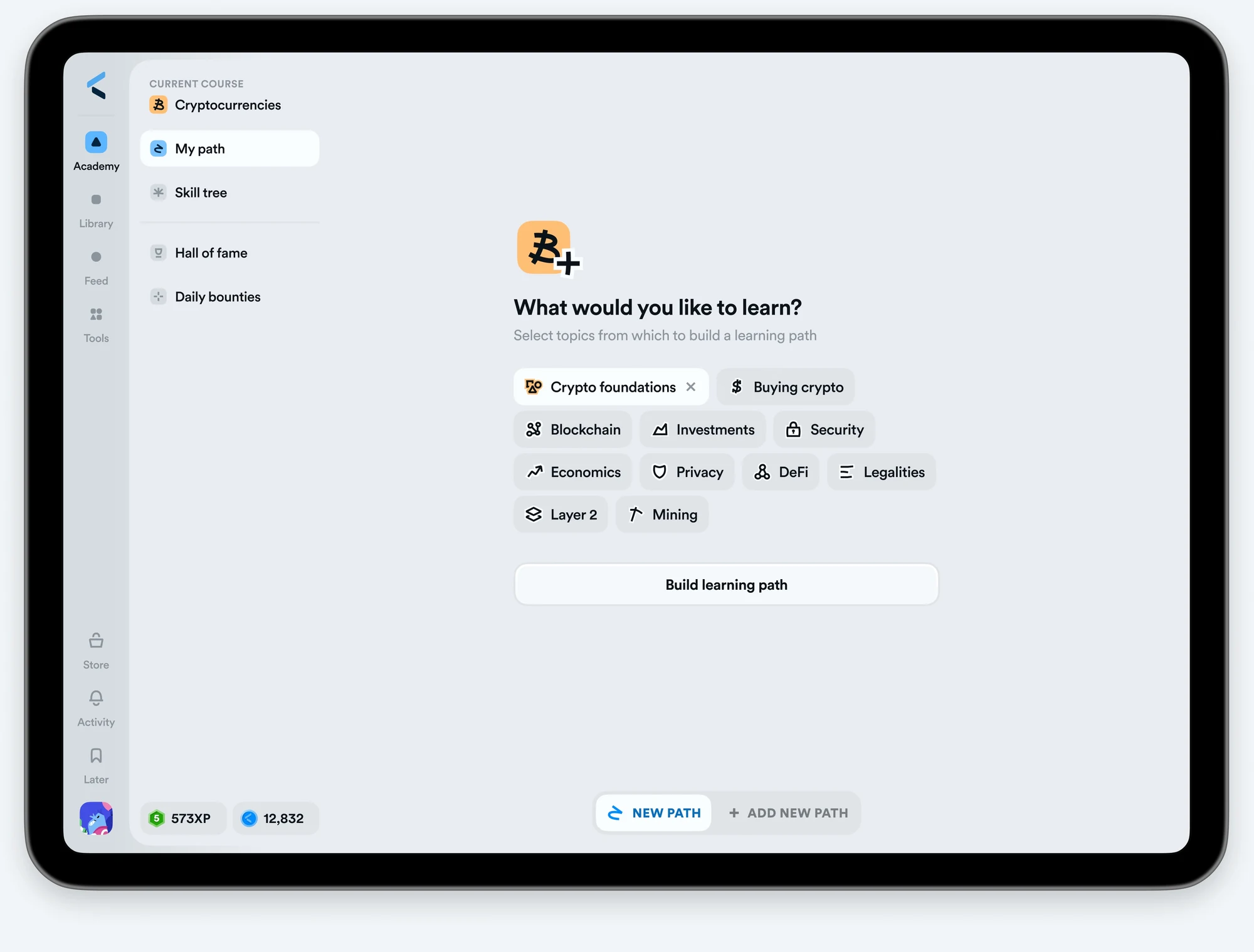
A short quiz and a choice of interests give Learncrypto what it needs to build a personal learning path. The platform selects relevant lessons and puts them into a route the learner can follow.
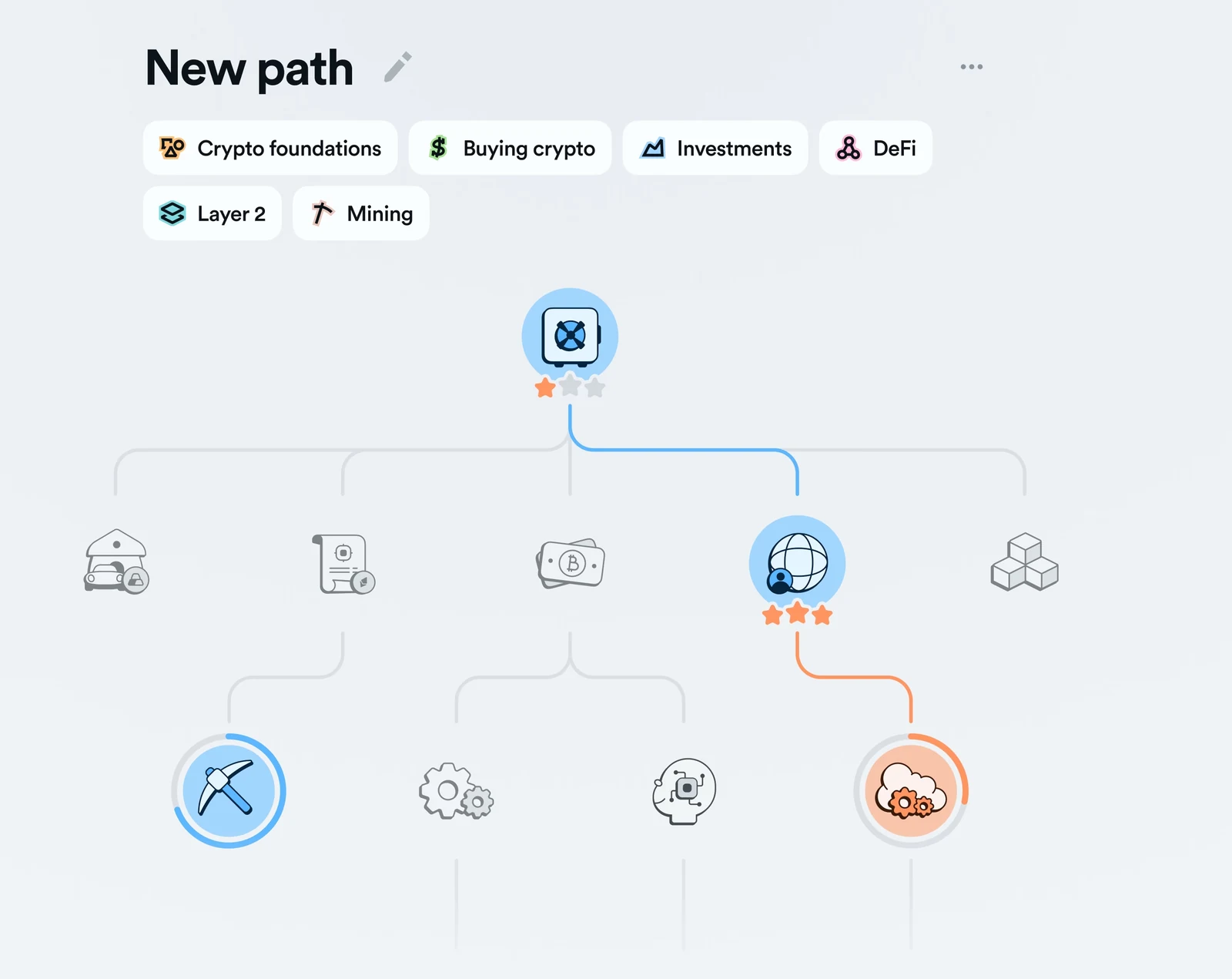
That route appears in the Skill Tree, an interactive map of the academy. Learners see their progress, which lessons are open and where to go next. They can follow the suggested path or explore the tree and build their own route.
02 · Lesson selection
The hardest part: the right lessons for each person
Personalization had to work across the whole academy. Quiz answers and chosen interests had to produce a useful sequence of lessons for each person, while the rest of the content stayed open to explore.
We built the lesson-selection logic behind those routes. Learners get a clear starting point and relevant next steps, and can still switch to another topic whenever they want.
03 · Skill Tree
A map that grows with the academy
Showing the route was a separate engineering problem. The Skill Tree is a large map of connected lessons: progress changes, lessons unlock and the path is drawn through them, and the connections have to stay clear as the learner moves on.
We built the map so new lessons and topics fit in without developers rearranging it. The team could keep expanding the academy without coming back to us for every layout change.
04 · Lessons, quizzes and quests
From a lesson to real-world practice
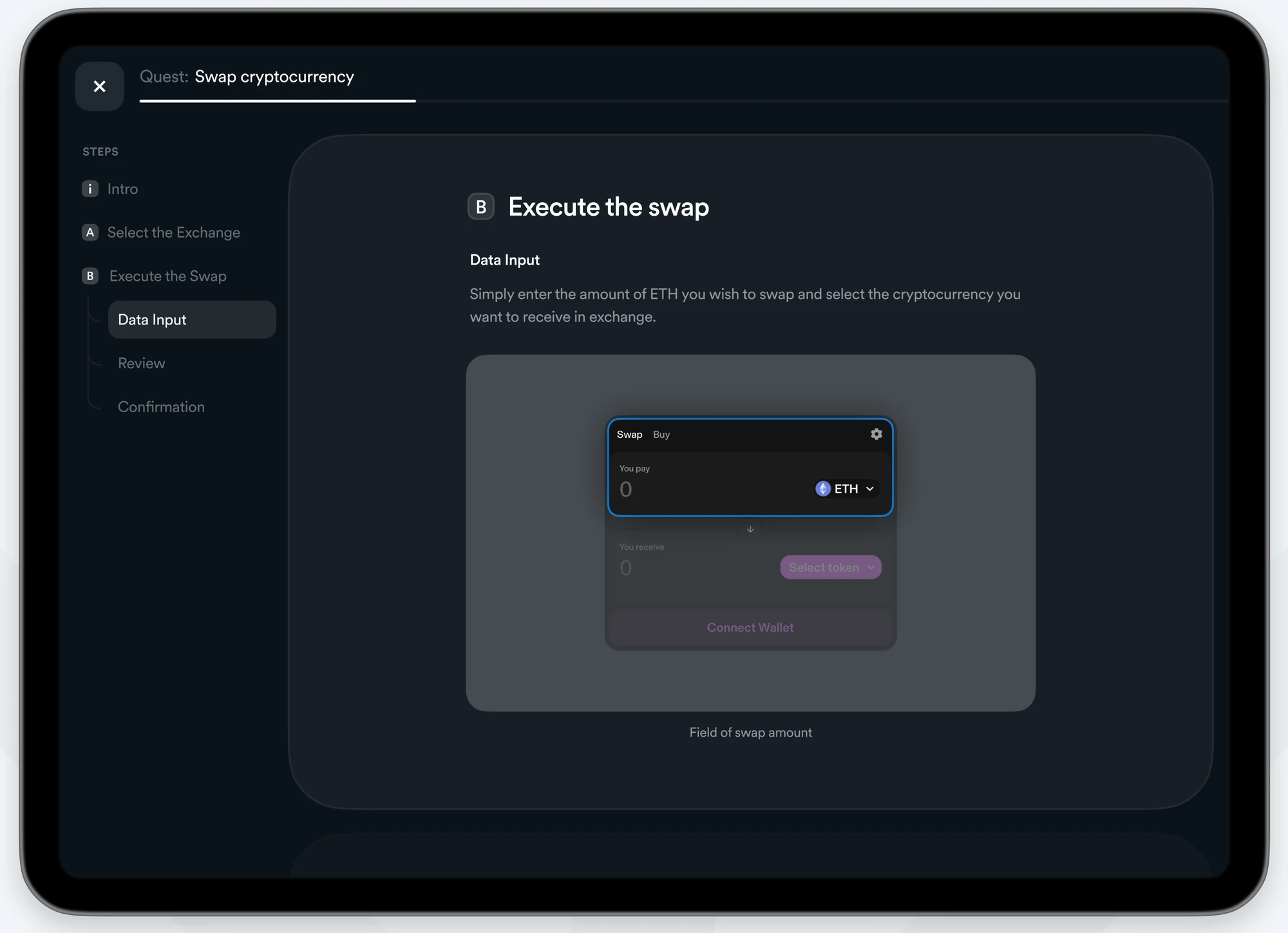
Courses break subjects into short modules. Learners study a lesson, answer quizzes that check their understanding before they move on, and complete practical quests in real crypto services.
A quest can, for example, walk someone through a cryptocurrency swap. For selected tasks, the platform checks the blockchain transaction to confirm the task is done, so course progress is tied to something the learner actually did.
05 · Certificates and profile
Certificates worth sharing
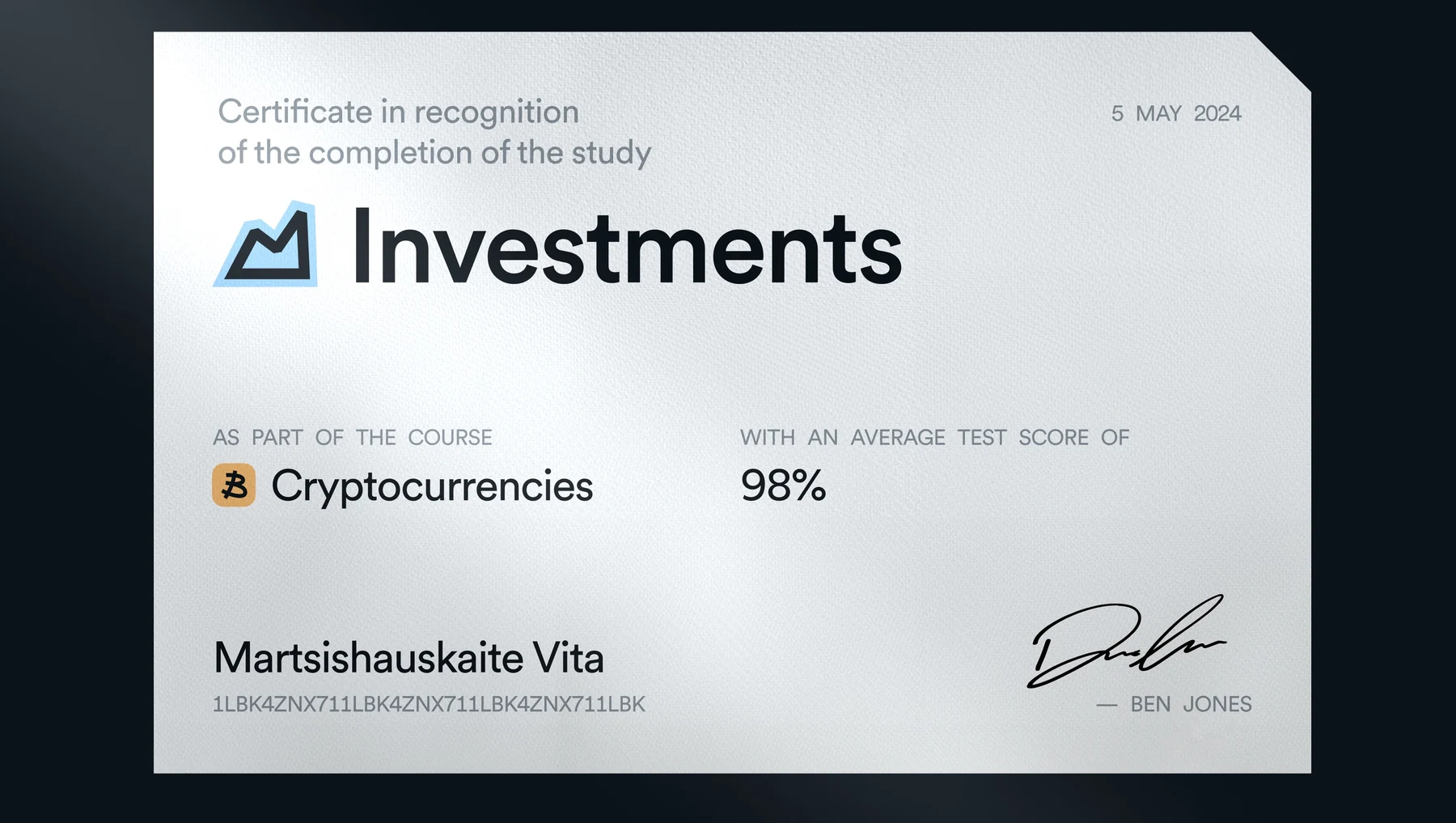
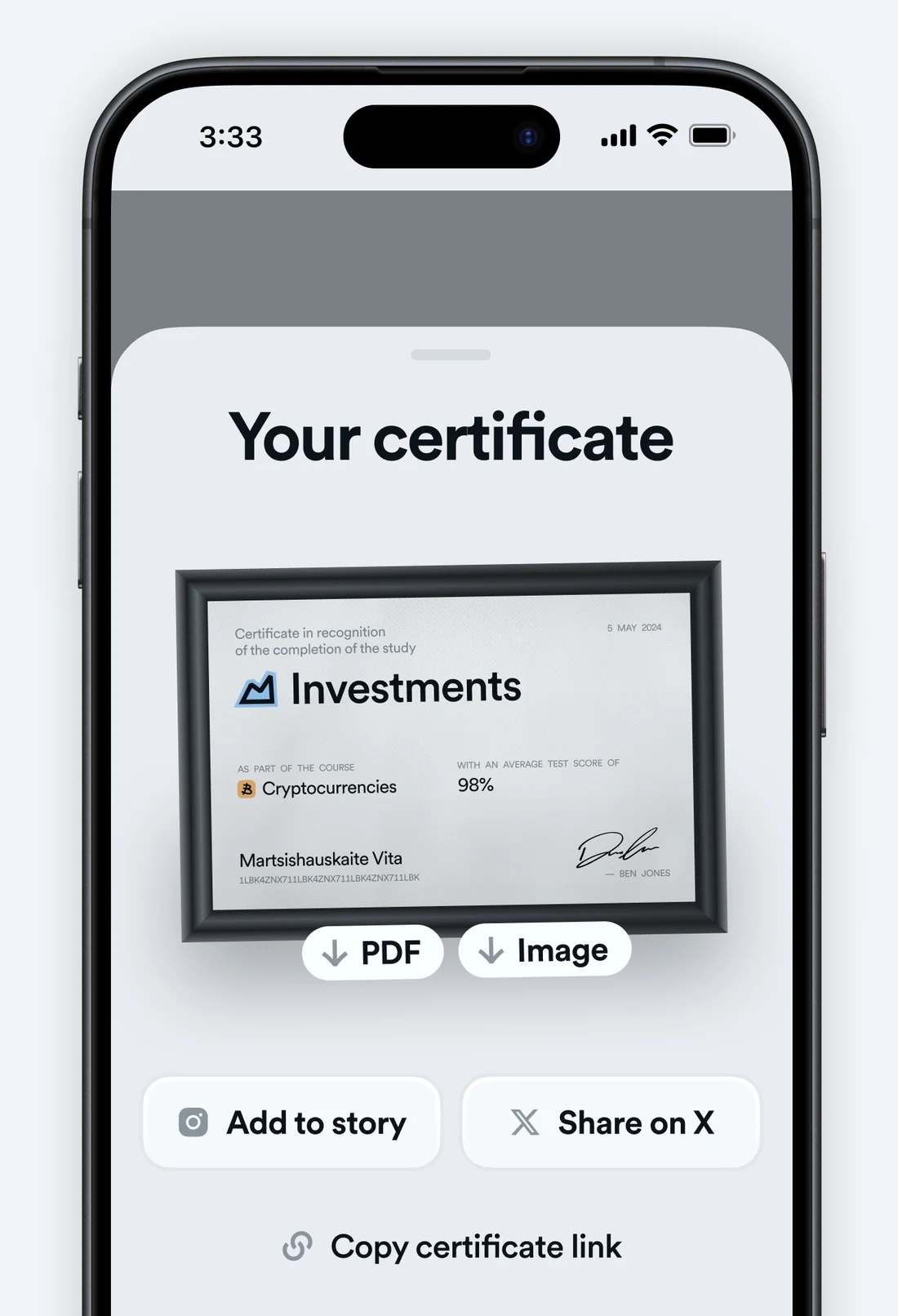
Completing a course or a topic earns a certificate. Learners download it as a PDF or an image, post it to social media or share a link to it.
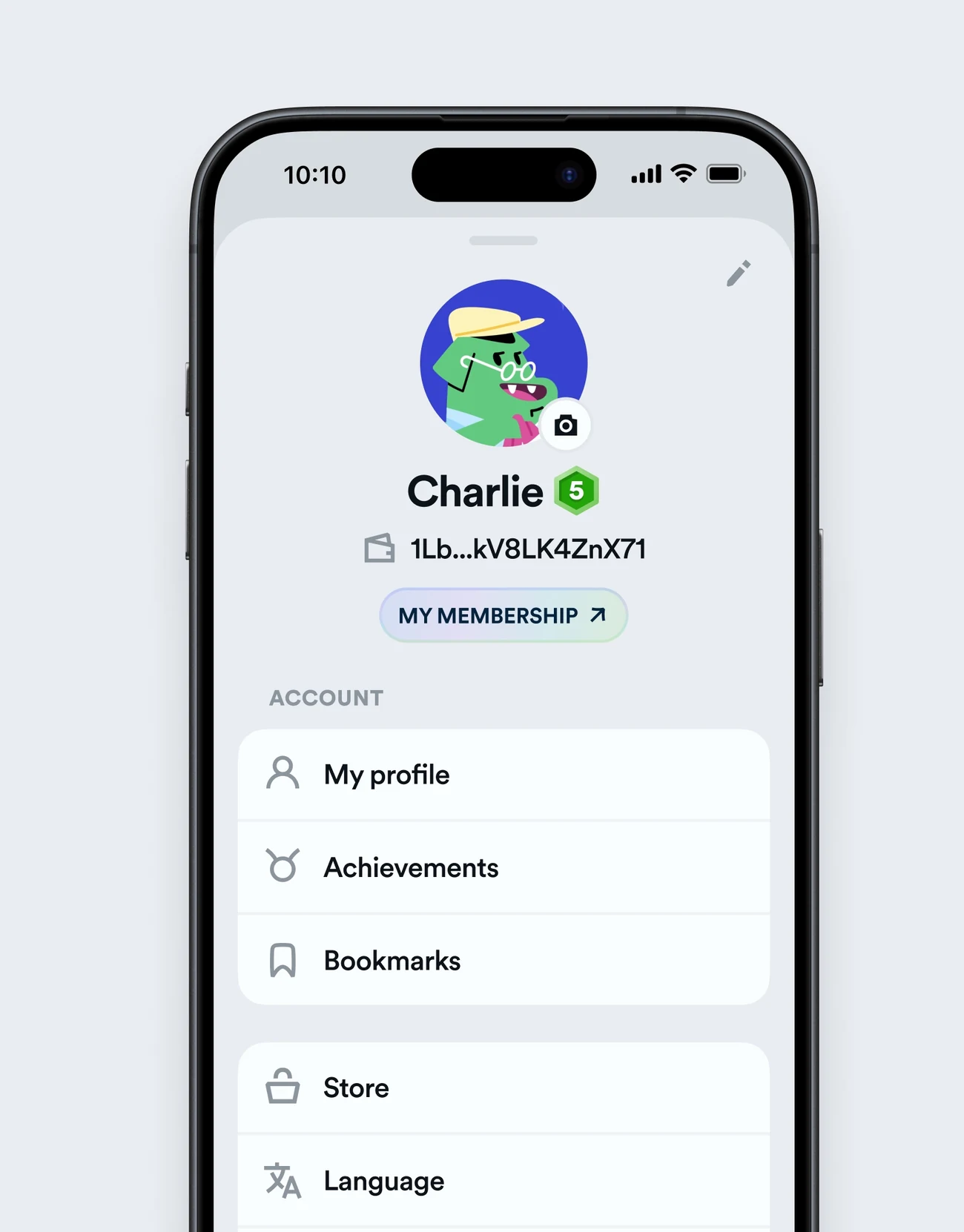
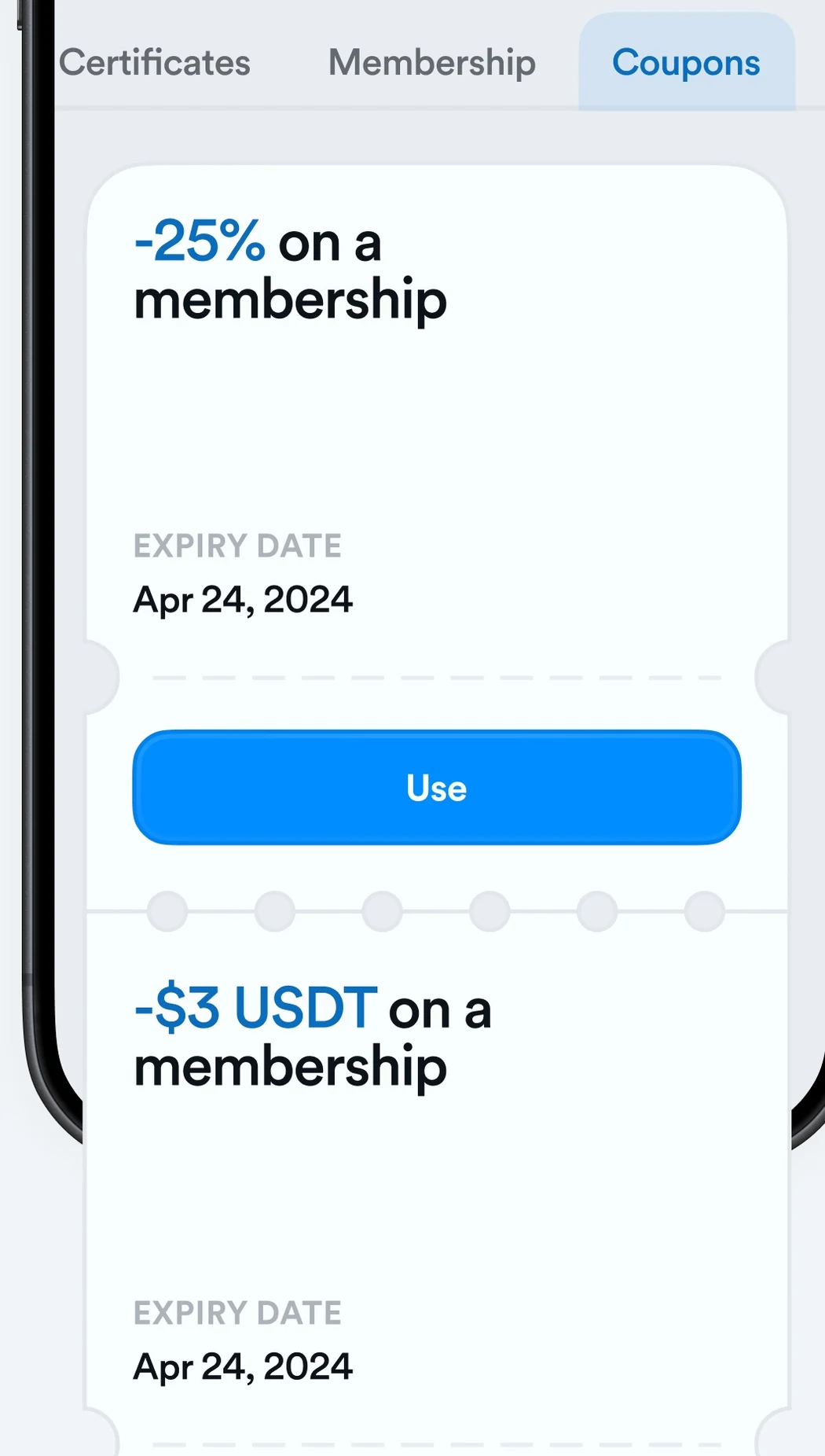
The personal profile keeps certificates together with the learner’s level, membership details and coupons.
06 · XP, leagues and daily rewards
Goals beyond finishing a course
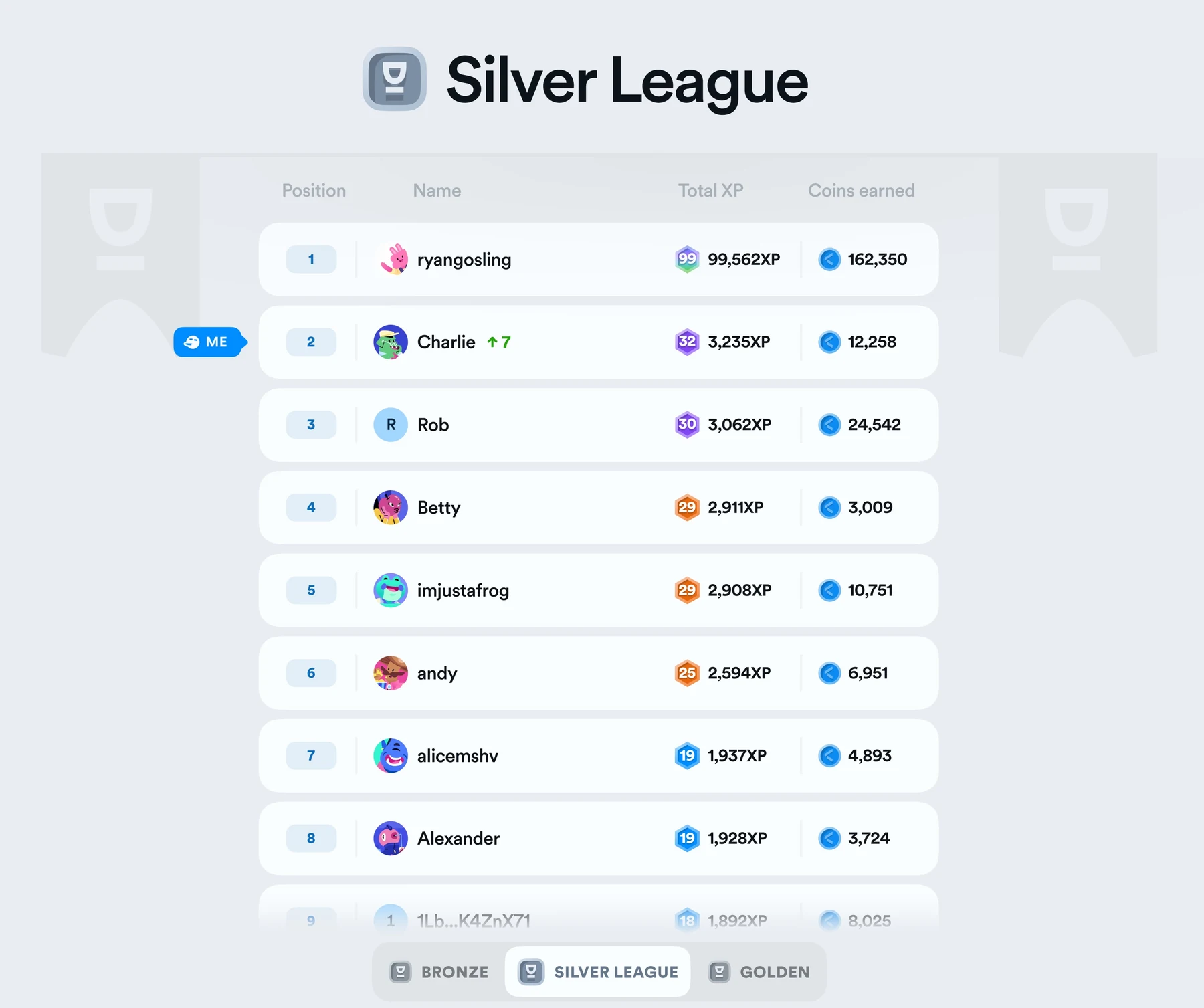
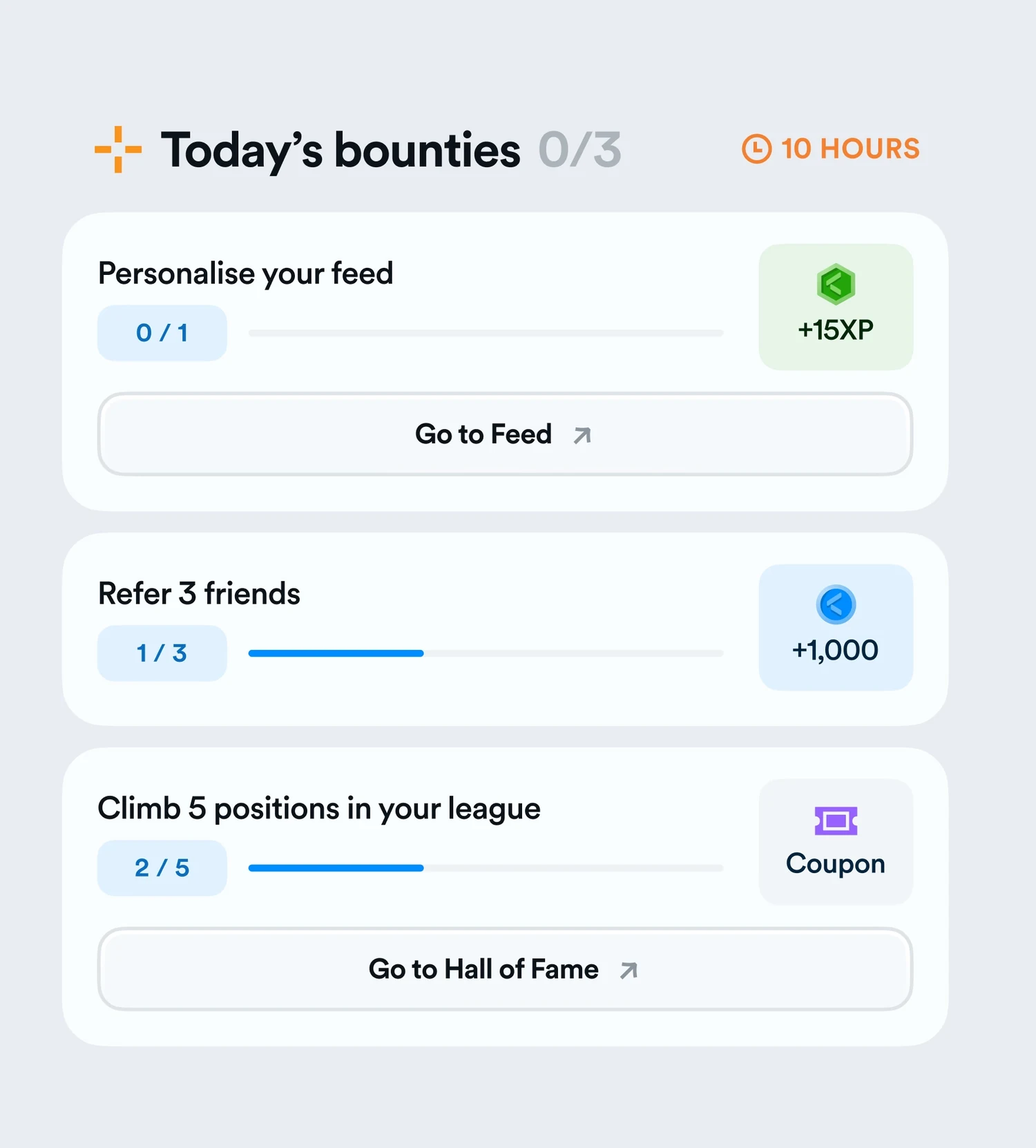
Learners earn XP as they progress, and their level rises as experience adds up. The Hall of Fame has Bronze, Silver and Gold leagues to compare progress with other learners.
Daily bounties add tasks for XP, coins and coupons. Coins are spent in the internal store, and discount coupons lower the price of paid access.
07 · Subscriptions
Pay in crypto or by card
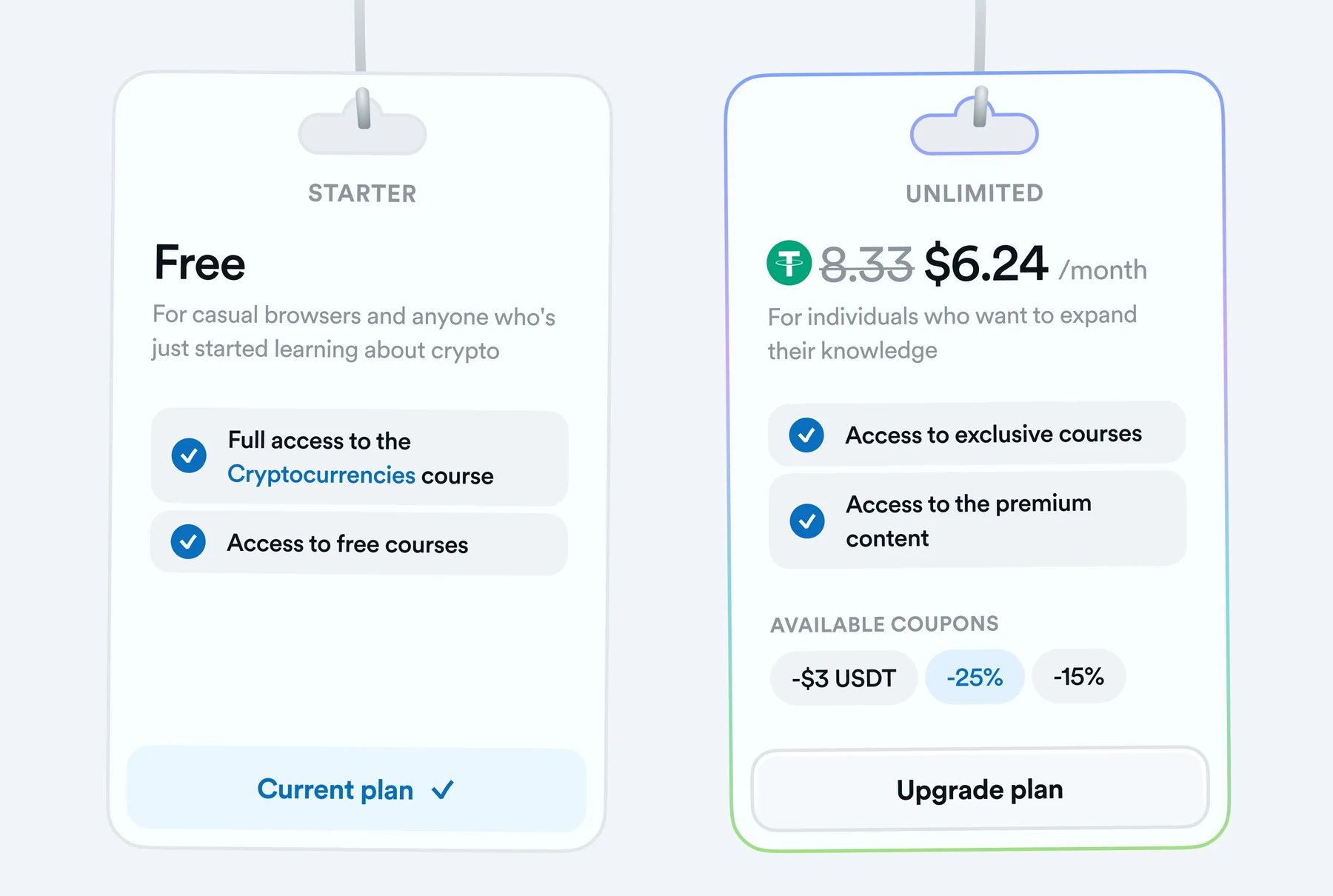
The academy has free courses and premium content by subscription. People start with free material and upgrade when they want the premium courses.
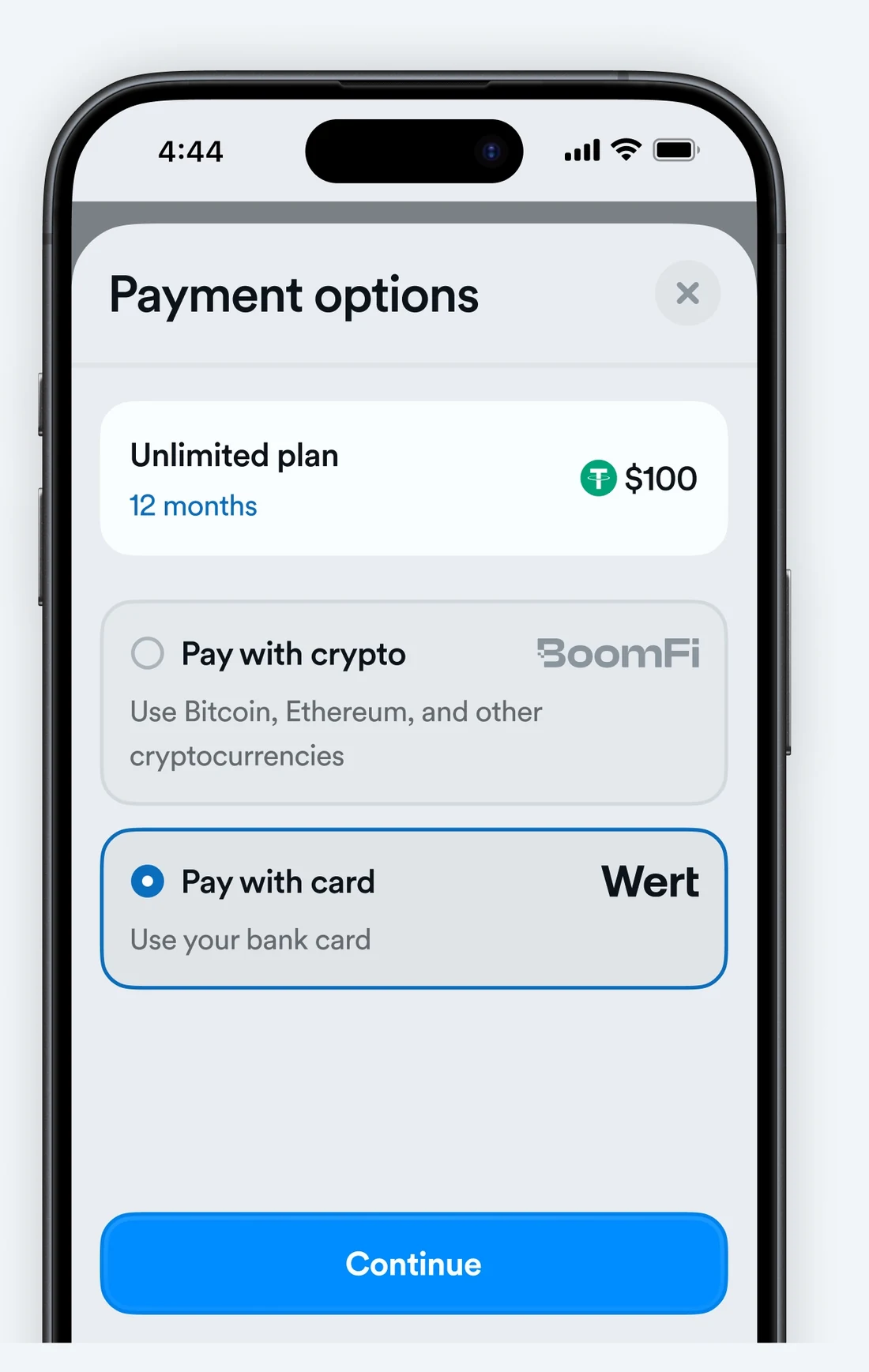
We connected two payment options: BoomFi for crypto and Wert for bank cards, so learners can pay whether or not they already have a crypto wallet. The platform also supports Web3 sign-in.
08 · Personal feed
News and prices on the learner’s own topics
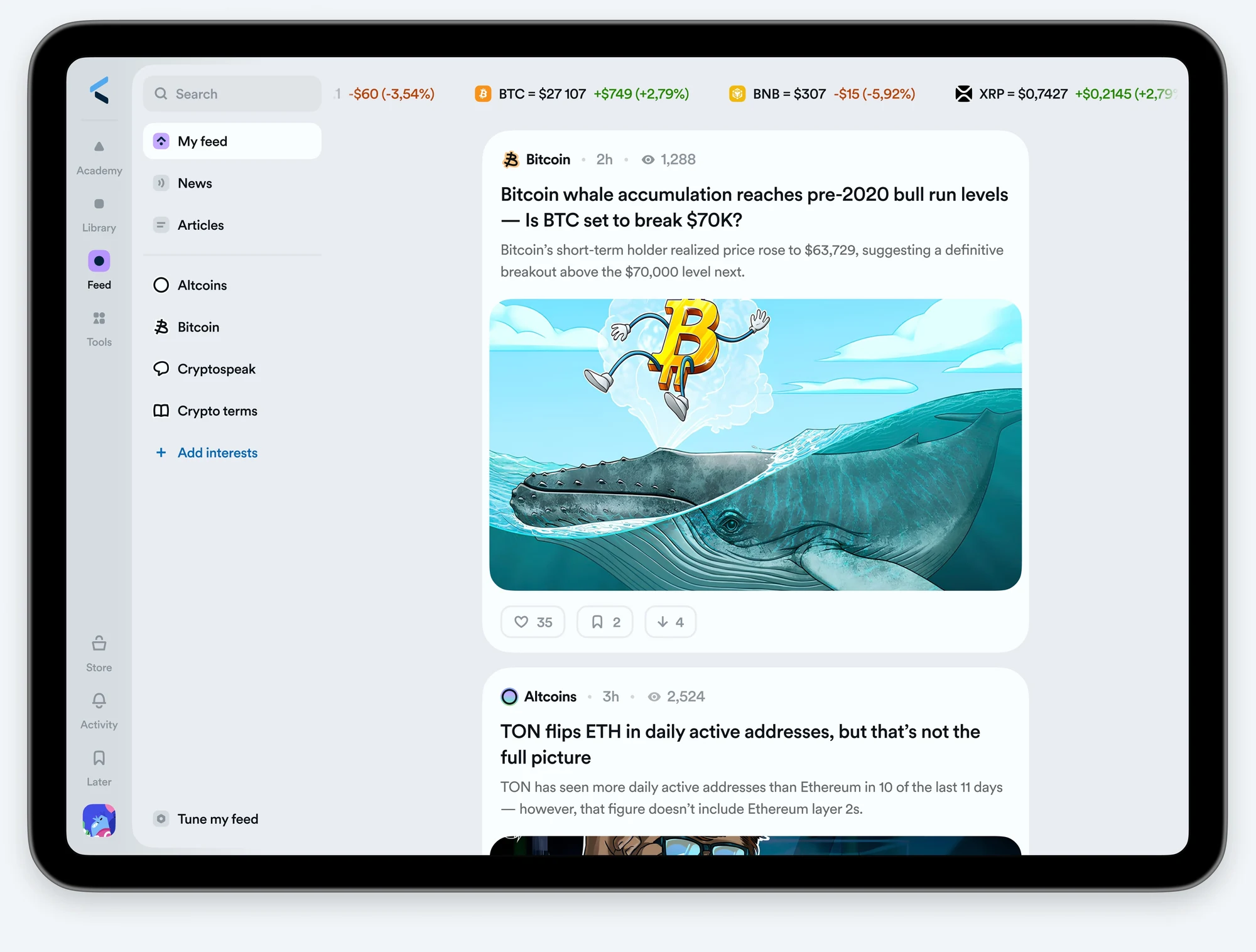
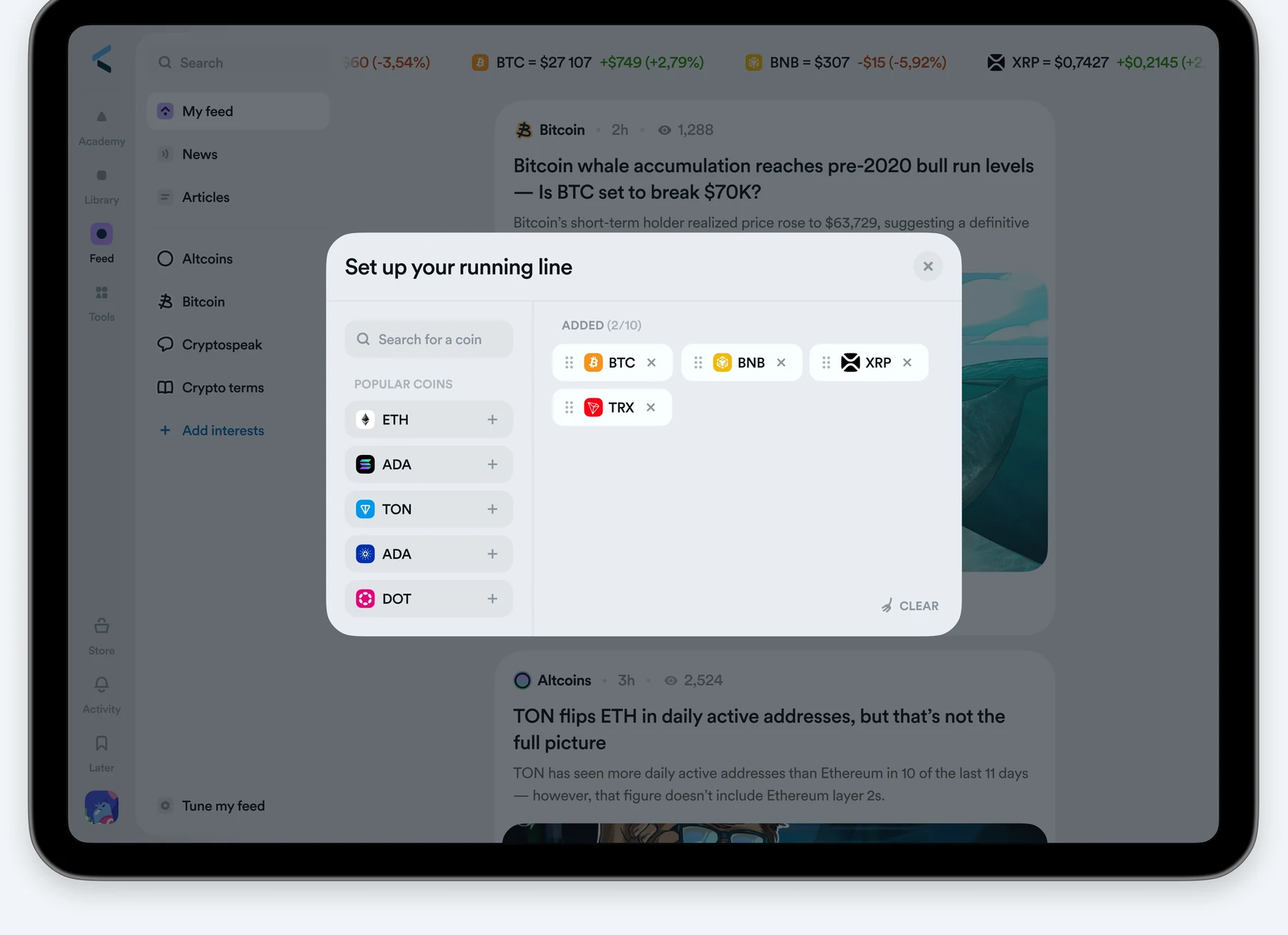
The personal feed brings news, articles and other platform content into one place. Learners choose the topics and sources they follow and see updates that match them.
They can also pick the coins they want to track and see current prices in a ticker. A visit can be a quick catch-up on a topic or a look at an asset, without starting another lesson.
09 · Library, glossary and tools
A crypto knowledge base around the courses
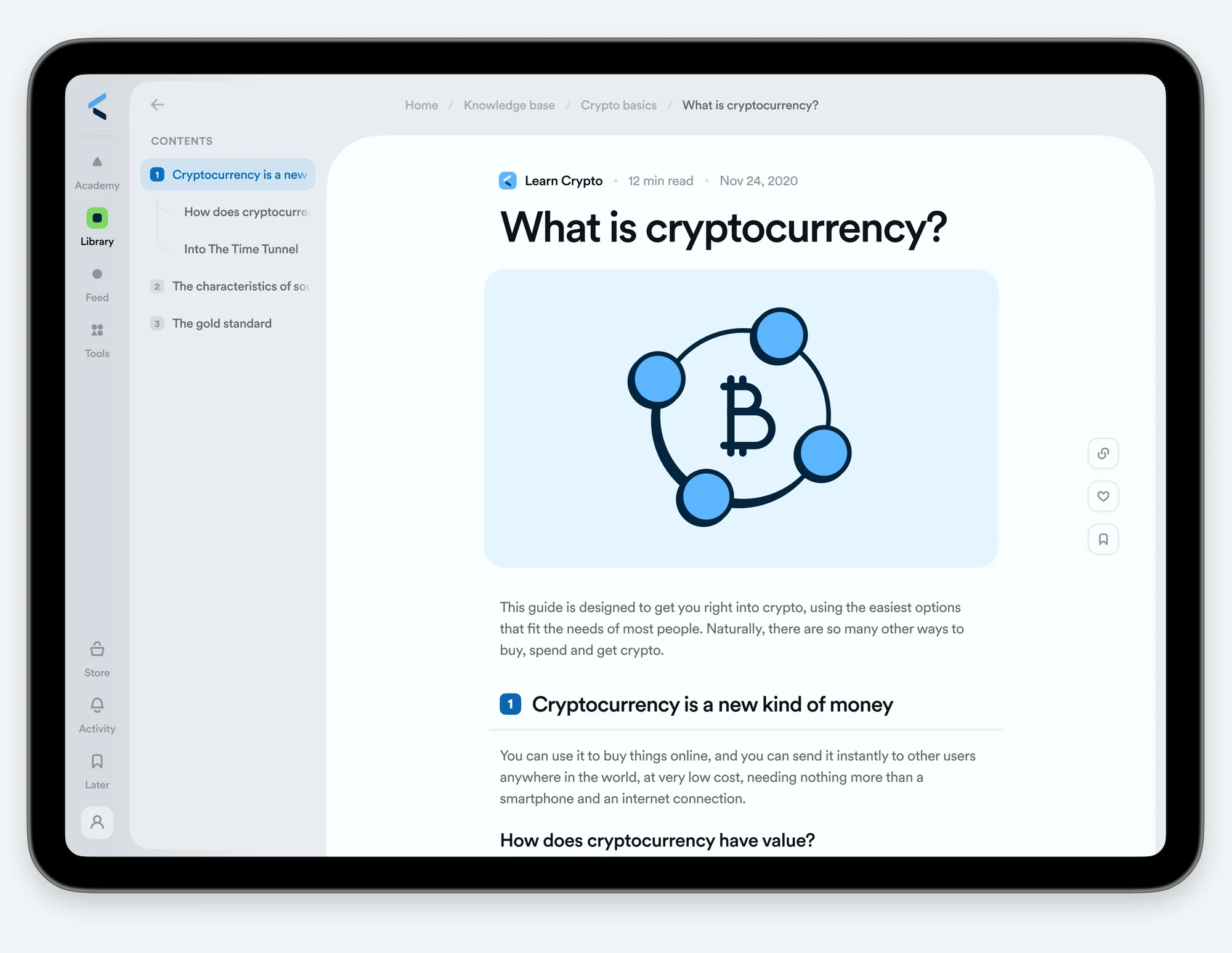
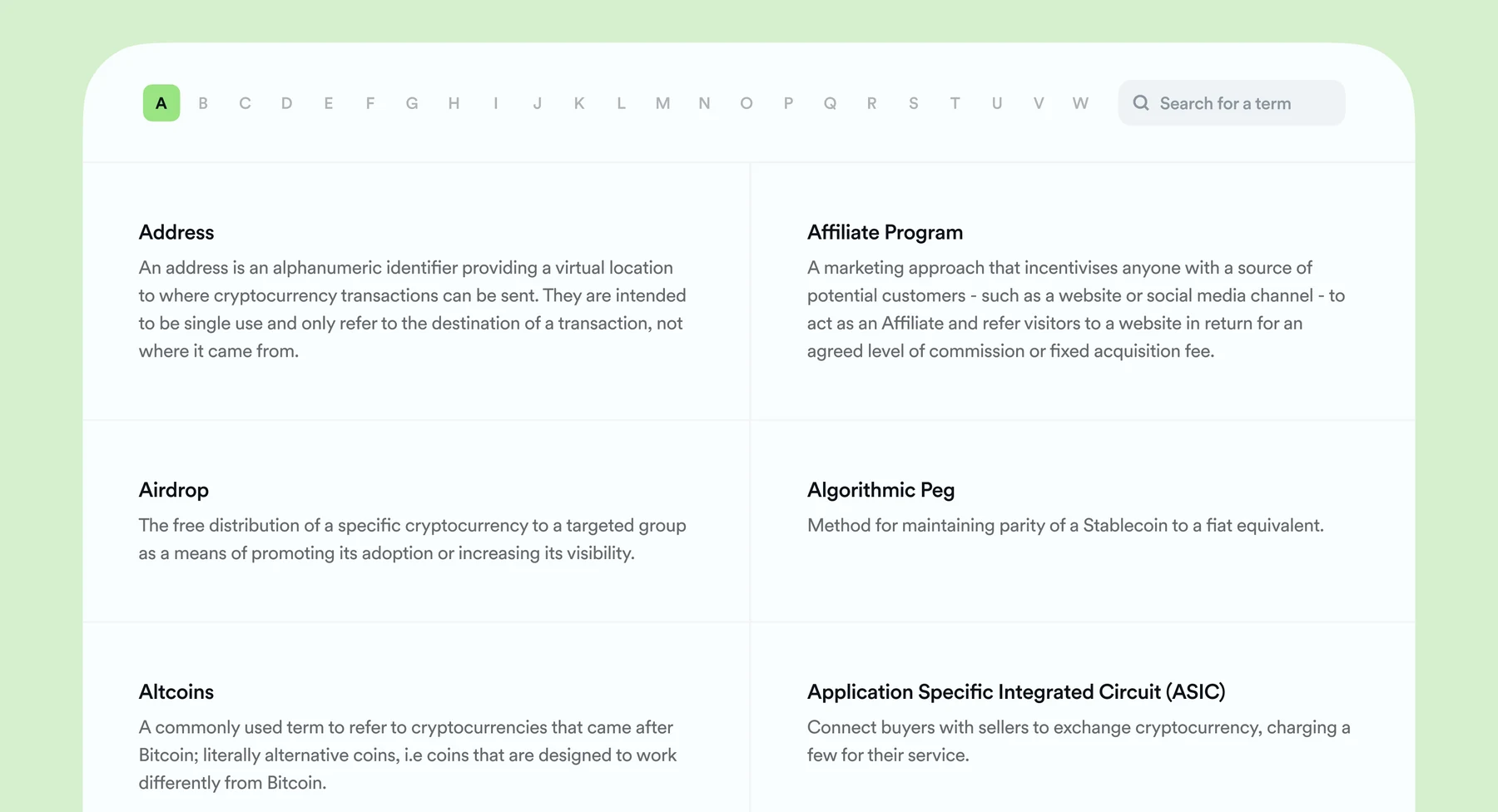
The library covers crypto subjects in detailed articles. A searchable glossary explains unfamiliar terms, and a directory sorts crypto tools and services by category.
Learners use them during a course or explore them on their own.
10 · Admin panel
Publishing tools for the academy team
In the admin panel the Learncrypto team creates and manages pages, publishes news and keeps academy content up to date. They build new courses, add lessons and revise existing material in one place.
Day-to-day publishing stays with the client. Adding a course is part of running the academy, and new material fits into the learning map without developers rearranging it.
Technology
The stack behind Learncrypto
Built on Nuxt.js and Node.js, with two payment providers and Web3 sign-in.
Frontend
Nuxt.js.
Backend
Node.js.
Payments
BoomFi for crypto, Wert for bank cards.
Sign-in and checks
Web3 sign-in, blockchain transaction checks for selected tasks.
Results
A working academy the team runs itself
The client has a working academy and the tools to run it: publish new material and offer paid access. The part we are proudest of is the Skill Tree, where the lesson-selection logic and the interactive map give every learner a personal route through an academy that keeps growing.
- 30,000+people have used Learncrypto, as of 2026
Our team
The people who built Learncrypto’s frontend and backend.
7 specialists- 1
Project manager
Planning and delivery
- 1
Tech lead
Architecture and code review
- 2
Frontend developers
Interfaces and interactions
- 2
Backend developers
Services, payments and integrations
- 1
QA engineer
Testing and quality
Questions about Learncrypto
Case study by Redlab · Updated
What is Learncrypto?
Learncrypto is a Web3 education platform where people learn about crypto through courses, quizzes and practical quests. Each learner can follow a personalized route through the academy or pick their own topics in an interactive Skill Tree.
What did Redlab build for Learncrypto?
We built the whole frontend and backend: the lesson-selection logic, the Skill Tree, courses, quizzes and quests, XP and leagues, subscriptions and payments, the feed and library, and the admin panel.
How does the personalized learning path work?
A learner answers a short quiz and picks the topics that interest them. From those answers the platform selects relevant lessons and puts them into a route, which appears in the Skill Tree. The learner can follow it or explore the tree and build their own route.
What was the hardest part of building Learncrypto?
Personalization across the whole academy. On the backend, quiz answers and interests had to produce a useful sequence of lessons for each person. On the frontend, the Skill Tree had to keep a large map of connected lessons clear as new lessons and topics are added, without developers rearranging it.
How do practical quests work?
Quests take learning into real crypto services, for example a cryptocurrency swap. For selected tasks, the platform checks the blockchain transaction to confirm the task is done before the learner continues.
How do XP, leagues and rewards work?
Learners earn XP and levels, compete in Bronze, Silver and Gold leagues in the Hall of Fame, and take daily bounties for XP, coins and coupons. Coins are spent in the internal store, and coupons lower the price of paid access.
Do learners get certificates?
Yes. Completing a course or topic earns a certificate that can be downloaded as a PDF or an image, posted on social media or shared by link. The profile keeps certificates with the level, membership and coupons.
How do people pay for Learncrypto?
By subscription. The free courses are open to everyone, and the premium courses need a paid plan. BoomFi takes crypto payments and Wert takes bank cards, so people can pay whether or not they have a crypto wallet. The platform also supports Web3 sign-in.
What else is on the platform besides courses?
A personal feed of news and articles on the topics a learner follows, a price ticker for the coins they choose, a library of in-depth articles, a searchable glossary and a directory of crypto tools by category.
Can the Learncrypto team add courses without developers?
Yes. In the admin panel the team creates pages, publishes news, builds new courses and adds or edits lessons, and new material fits into the Skill Tree without developers rearranging it.
How did Learncrypto start?
The first version was a simplified interface we built on top of Thinkific, with single sign-on between the two. As the academy grew, we redesigned the whole product and moved it to its own platform, which is the one learners use today.
Which technologies does Learncrypto use?
Nuxt.js on the frontend and Node.js on the backend, with BoomFi for crypto payments, Wert for card payments, Web3 sign-in and blockchain transaction checks for selected tasks.
Can Redlab build a learning platform like this?
Yes. We build web platforms with personalized content, progress, payments and an admin panel, often from an early idea. See LMS development and web app development, or tell us about your product below.
More products we’ve built
Tell us about your platform
A few lines or a link is enough — we’ll come back with questions and a first view of scope.

Thank you
Linda has your request. Expect a reply within 12 hours — with questions, or a time to talk.