Industrial e‑commerce
for a 3M distributor, built end to end
Kapri sells 3M, Tesa and Scapa materials to factories, workshops and private buyers across Ukraine. We built its online store: one store for retail and B2B, with prices and stock from 1C, delivery through Nova Poshta and the catalog listed in Google Shopping.
- Industry
- E-commerceB2BIndustrial supply
- Our role
- Architecture, frontend, backend, admin panel and integrations
- Integrations
- 1C, Nova Poshta, PrivatBank, Google Merchant Center
- Stack
- Nuxt.js, Laravel, MongoDB, Node.js

About the project
Summarize this case with AI
Kapri is a Kyiv company that distributes and converts industrial materials: adhesive tapes and glues, abrasives, electrical supplies, workwear and personal protective equipment. It has been an authorized 3M distributor since 1995 and also carries Tesa, Scapa and Egebant, alongside its own brand, Montex.
Redlab did the development of kapri.ua from the first line of code to launch. Our team of six planned the architecture, built the storefront, the backend and the admin panel, and connected the store to the systems Kapri already runs on.
- 30+years Kapri has been in business
- 10,000+products Kapri keeps in stock
- 5brands, from 3M to Kapri’s own Montex
- 2,500 m²of warehouse and production space
Kapri in numbers, as the company states them.
Challenge
One store for a factory buyer and a one-roll buyer
Kapri’s products differ in details that decide the purchase: the width and thickness of a tape, the grit of a disc, the protection class of a respirator. Buyers have to find the exact item among near-identical ones and see whether it is in stock, without calling a manager.
The same store had to serve companies that pay by invoice and people who pay by card and collect a parcel from a locker. Prices and stock live in Kapri’s 1C, so the site had to stay in step with it without anyone retyping data, and every product had to be easy to find in Google.
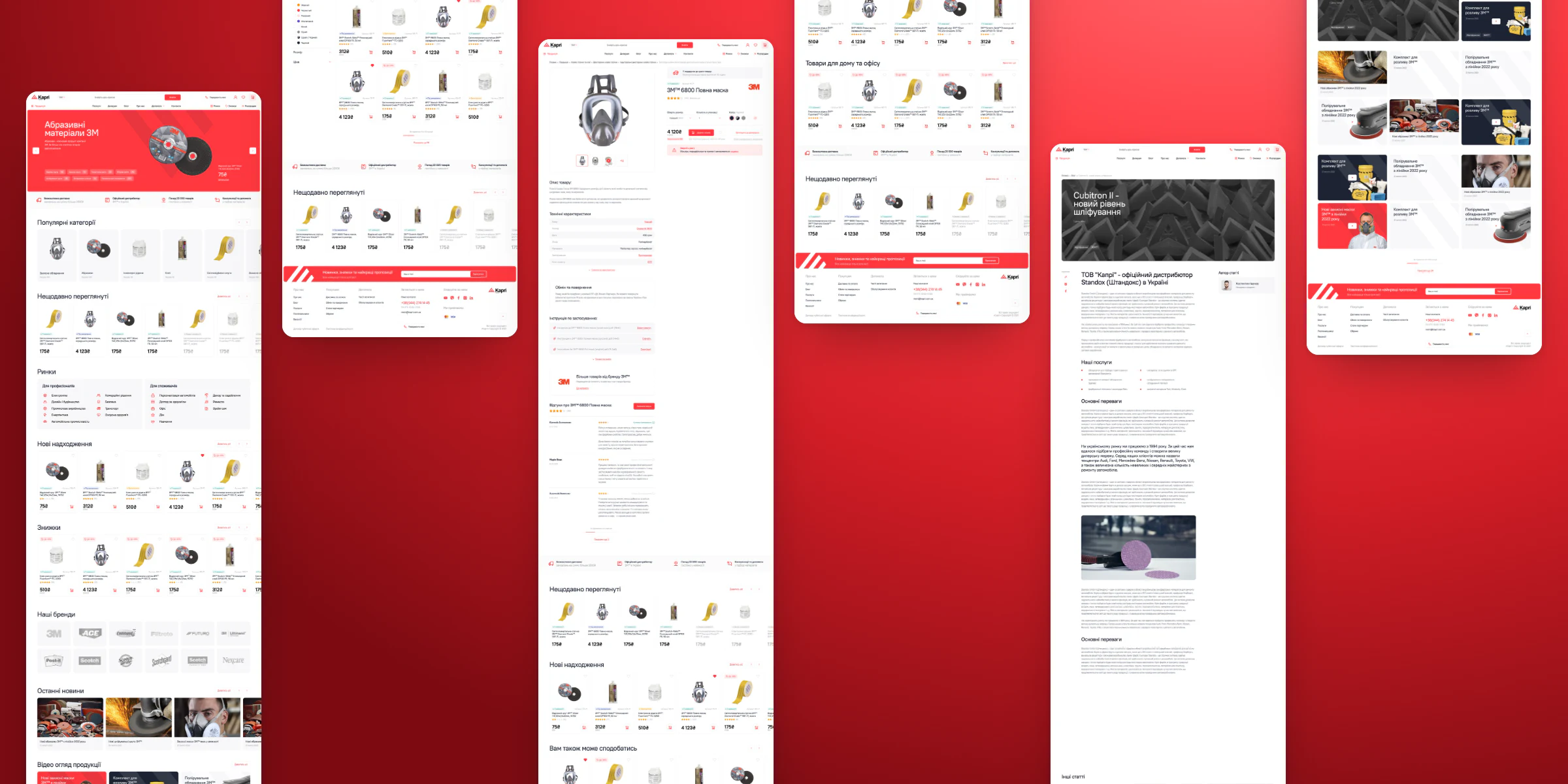
01 · Catalog
A three-level catalog, one click from any page
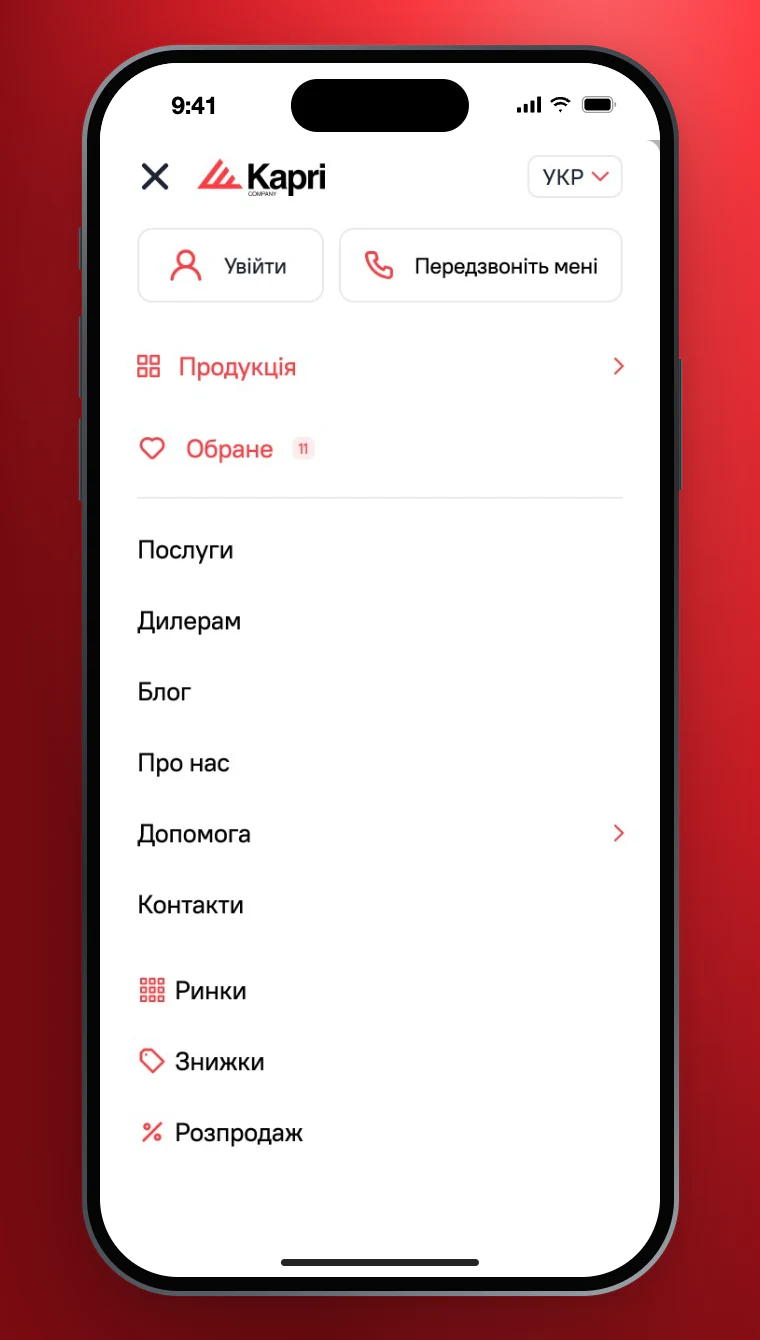
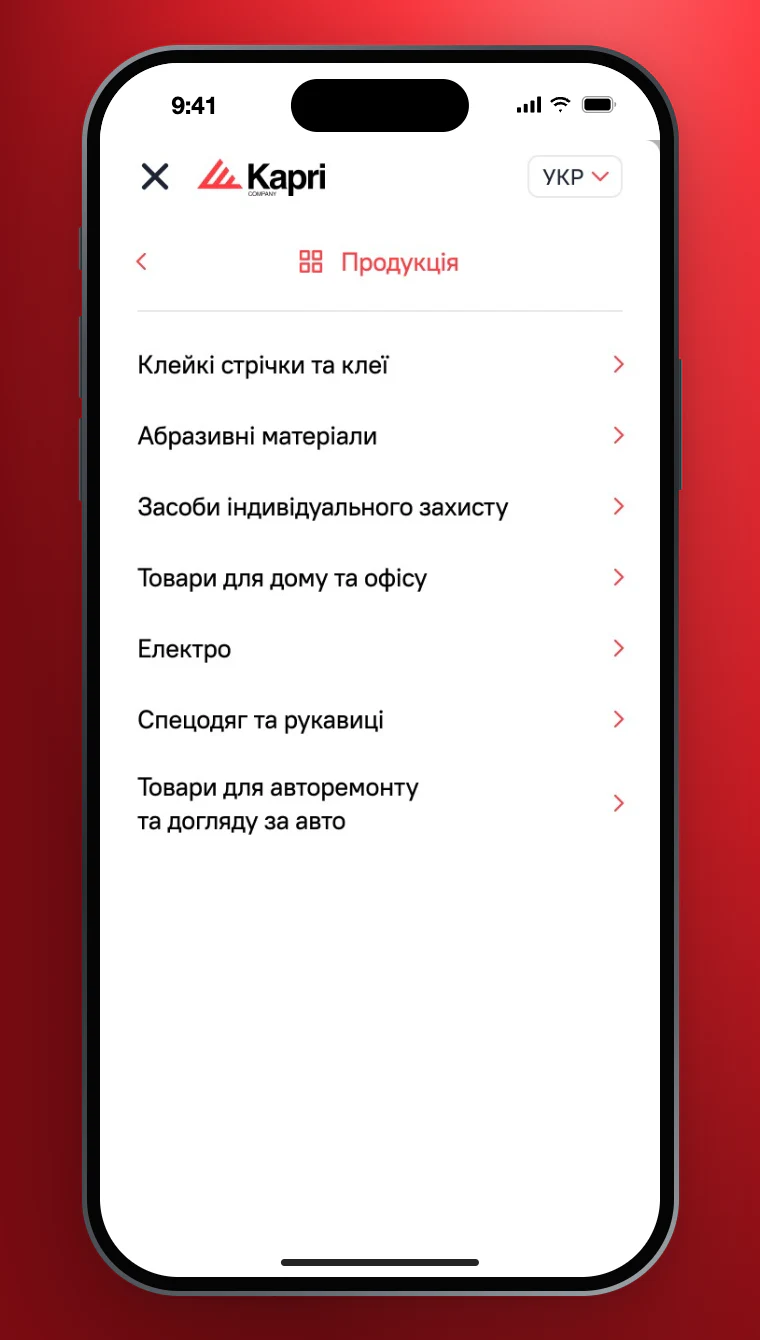
Kapri’s catalog goes three levels deep, from adhesive tapes to double-sided tapes to industrial double-sided tapes. A shop that makes buyers load a page for every level loses them before they reach a product.
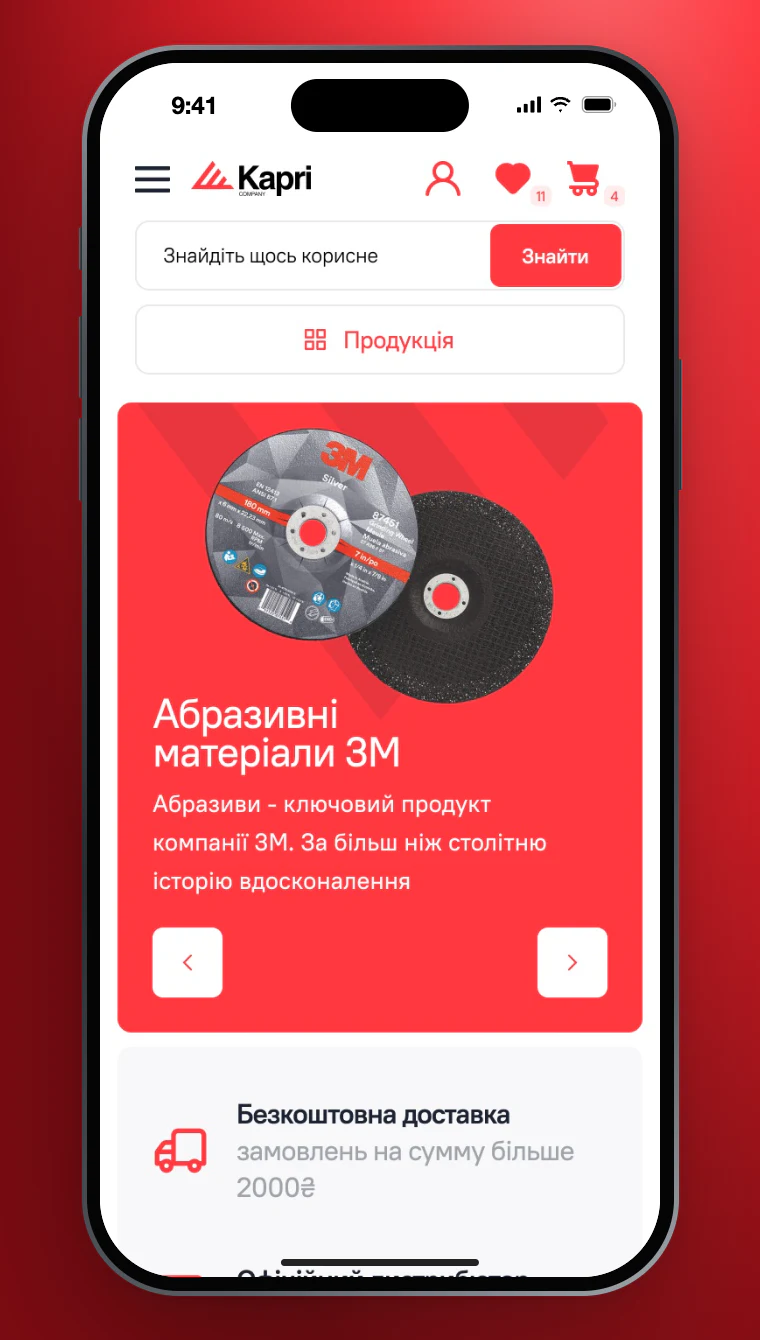
We built a mega menu that opens from any page and lays out the second and third levels side by side, so a buyer goes from the header to the exact subcategory in one click. On a phone the same tree turns into a step-by-step drawer.

02 · Filters
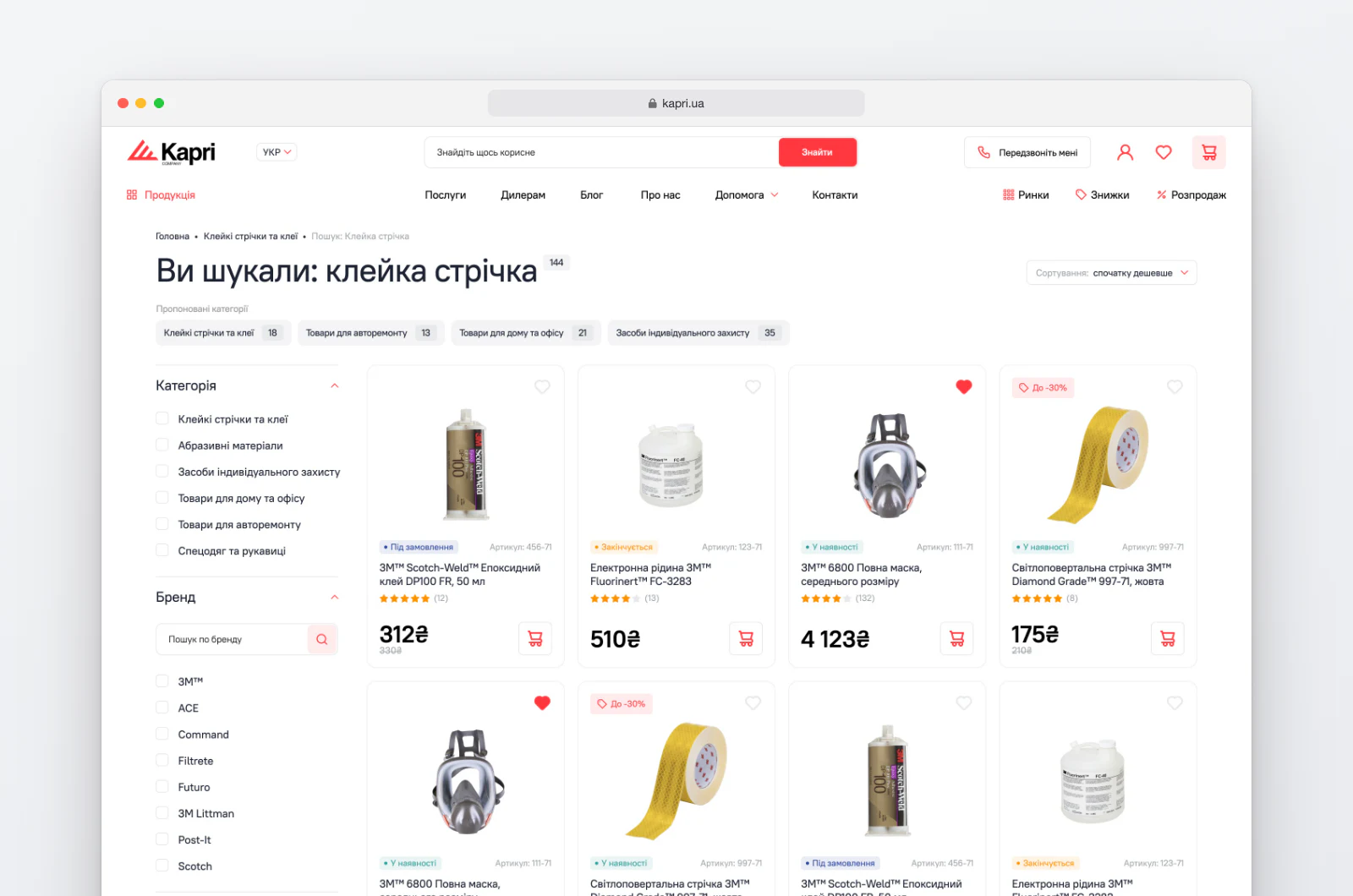
Filters built from each category’s own specs
A respirator is chosen by protection standard and valve, a heat-shrink tube by diameter and shrink temperature. Filters by price and brand alone don’t get a buyer to the right one.
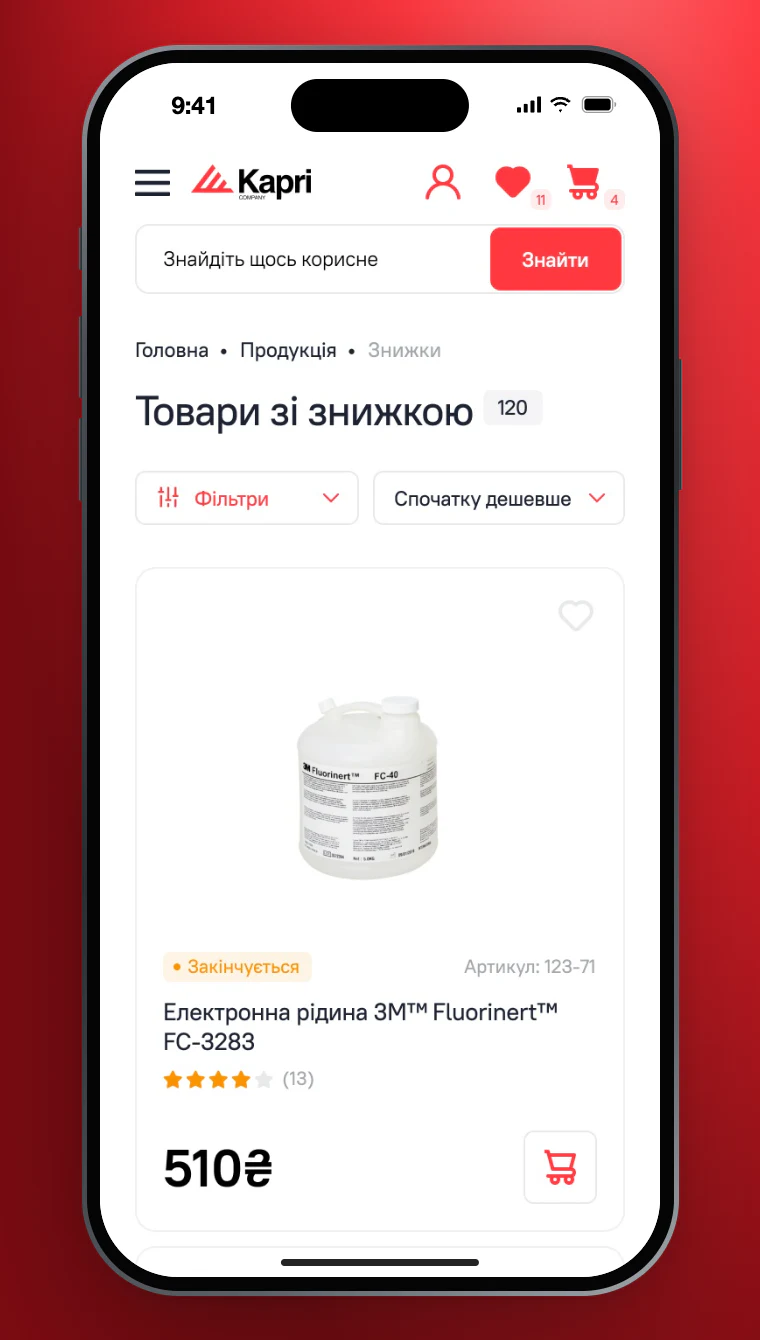
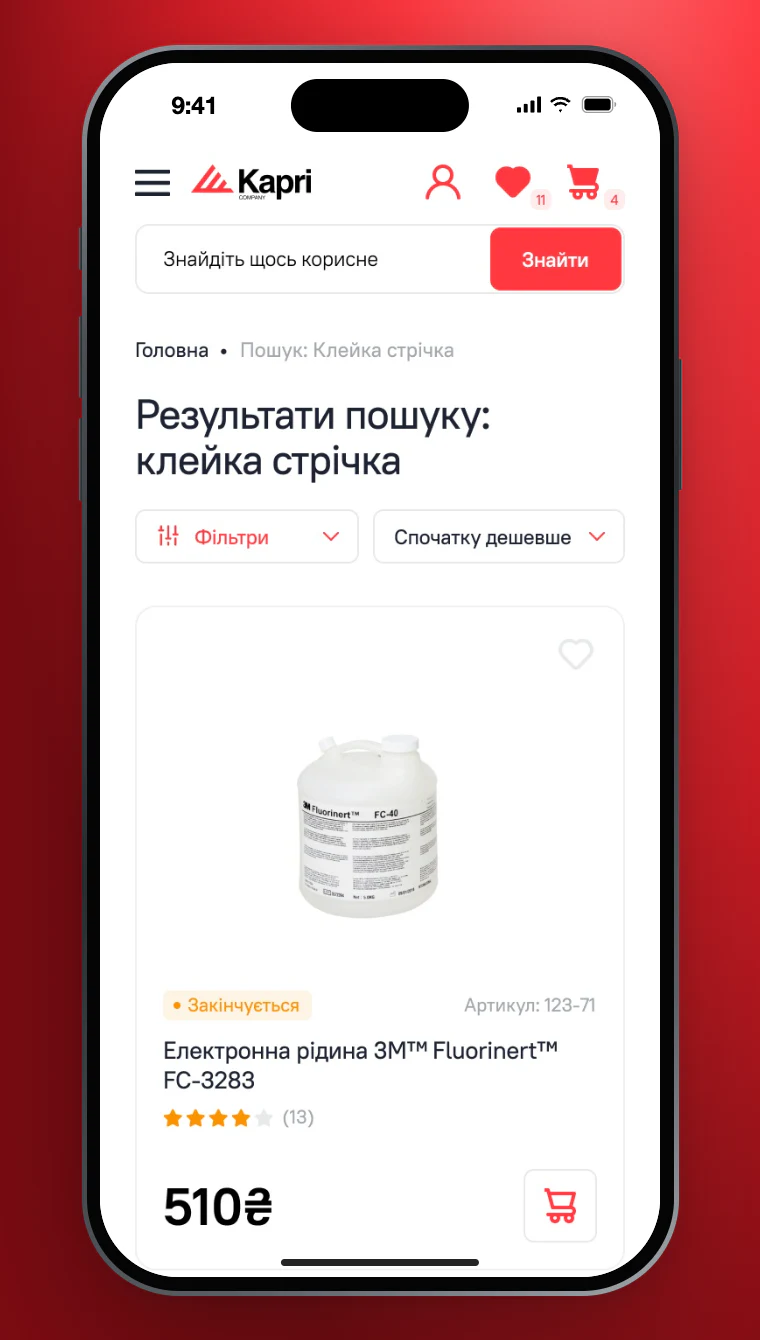
We made the filters data-driven: every category gets filters from the specs its products carry, next to discount, brand, price and availability. Buyers narrow dozens of near-identical items down to a handful in a couple of clicks, and on a phone the filters open as a full-screen panel.

03 · Markets
Shopping by industry, not only by product type
Many buyers know their trade better than Kapri’s category names. A car body shop needs abrasives, tapes, masks and gloves, which sit in four different categories.
We added a second way into the catalog: Markets gathers products from every category for eight industries, from heavy industry and car repair to agriculture and advertising. Each market page has its own category filter, so a buyer from one trade shops in one place and Kapri speaks to each industry directly.

04 · Search
Instant search by name, model or SKU
Regular buyers know what they want: a product name or the SKU from their last invoice. They shouldn’t have to browse the catalog to reorder it.
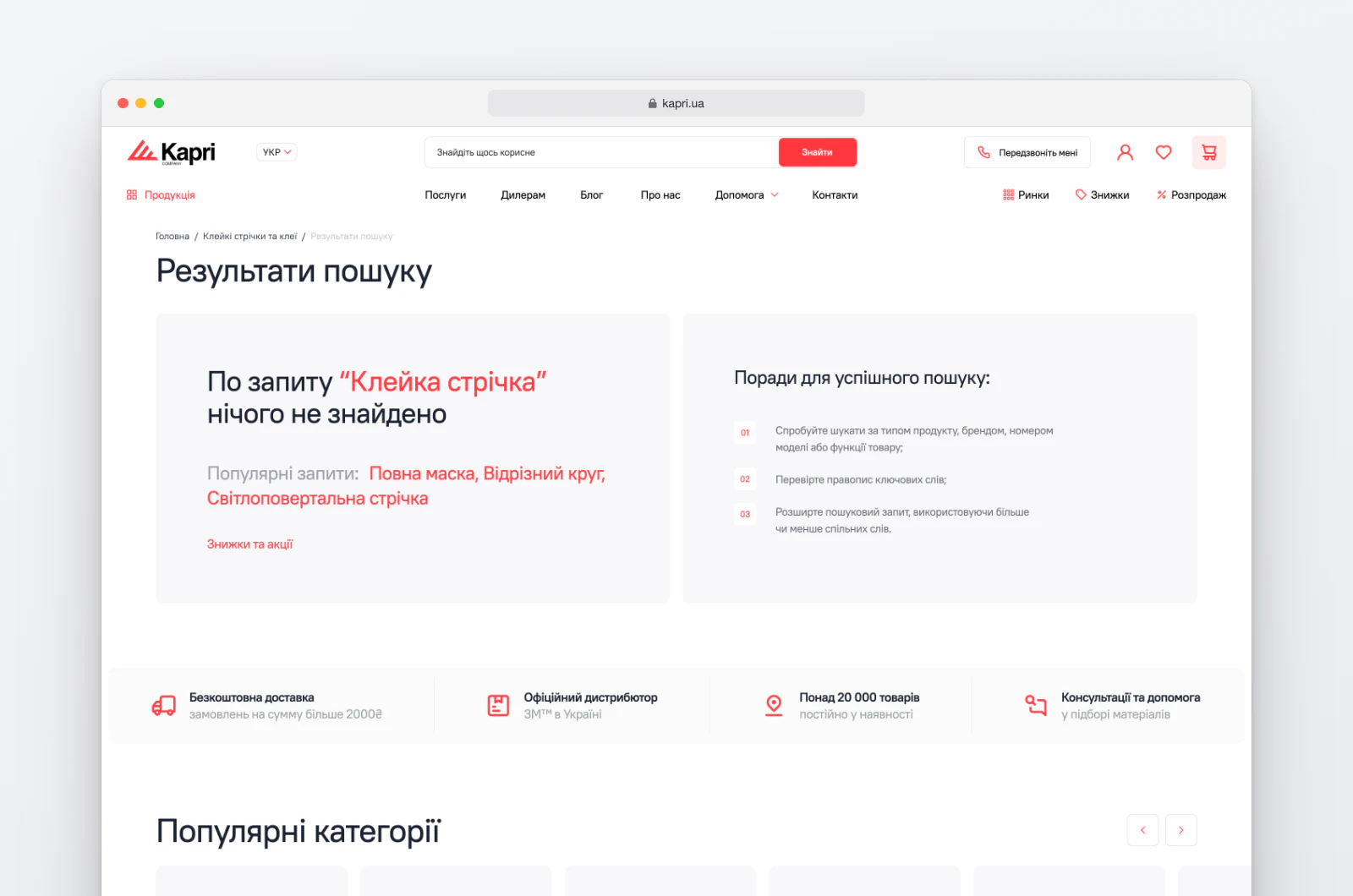
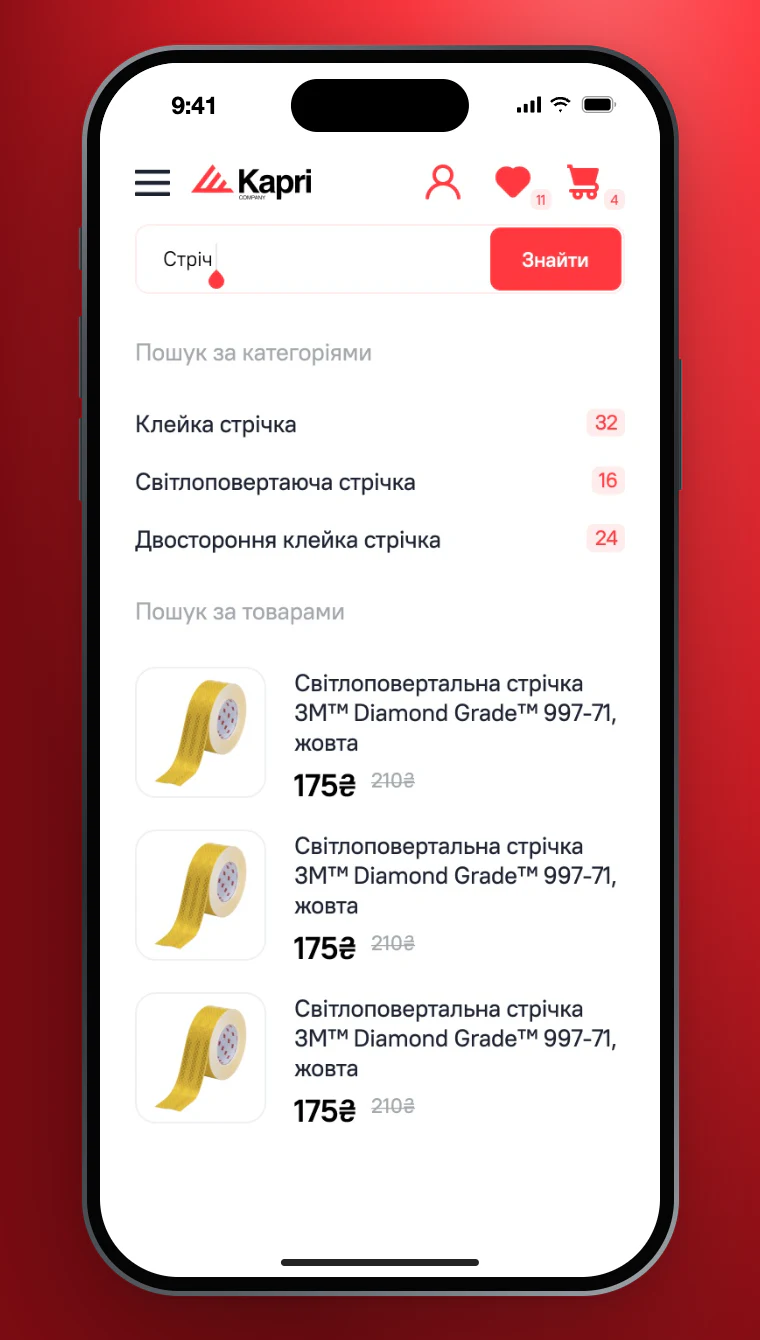
We built search as a separate Node.js service that queries the product database directly, so results appear while the buyer is still typing: matching categories with product counts first, then products with stock status, price and an Add to cart button. A reorder from a remembered SKU takes seconds, and the keystrokes go to the search service, not to the backend that handles orders.
Press Enter and the results page suggests related categories and adds the usual filters. A search that finds nothing returns tips on what to try instead of a dead end.

05 · Product page
Product pages that answer before the buyer asks
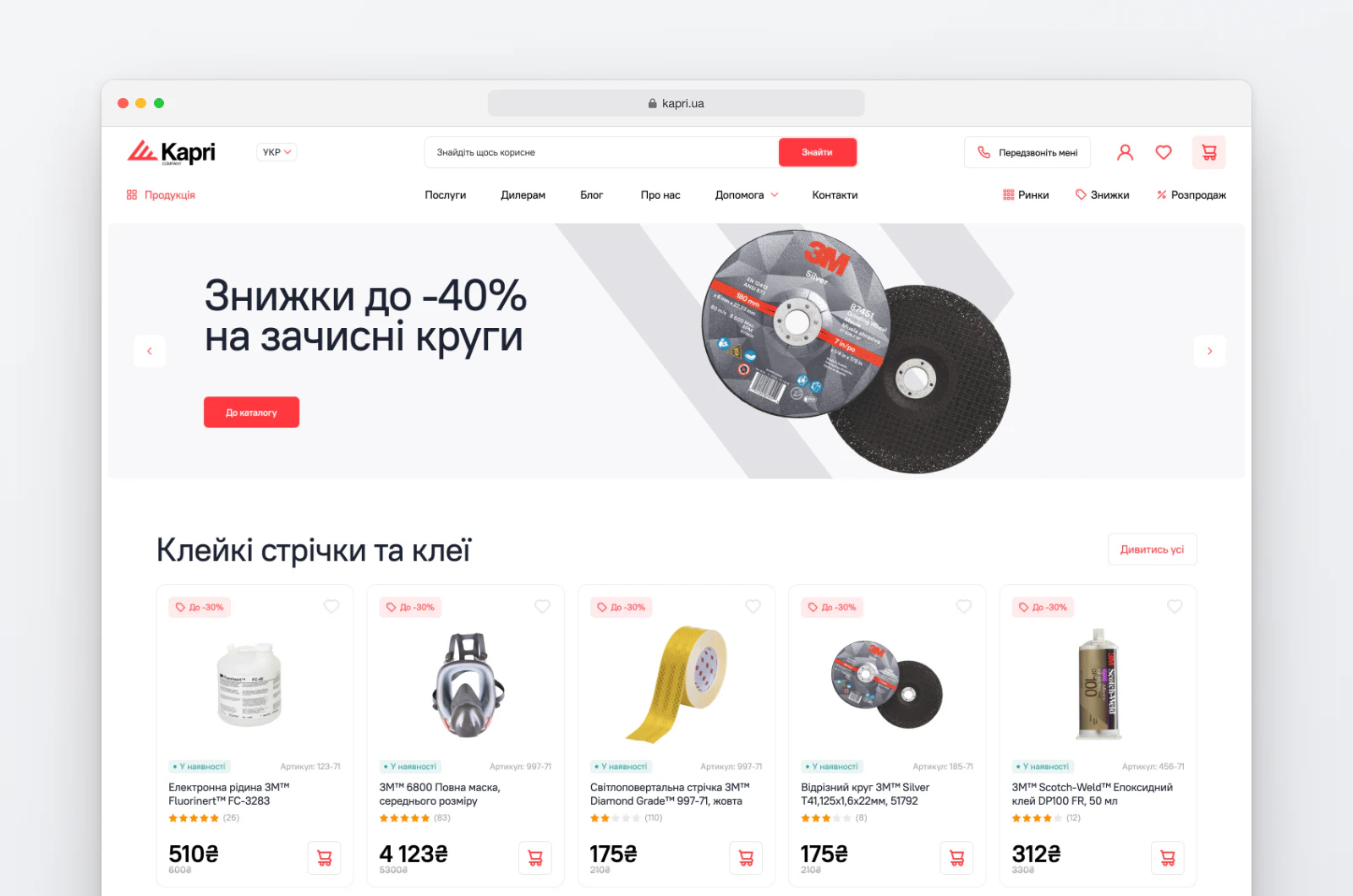
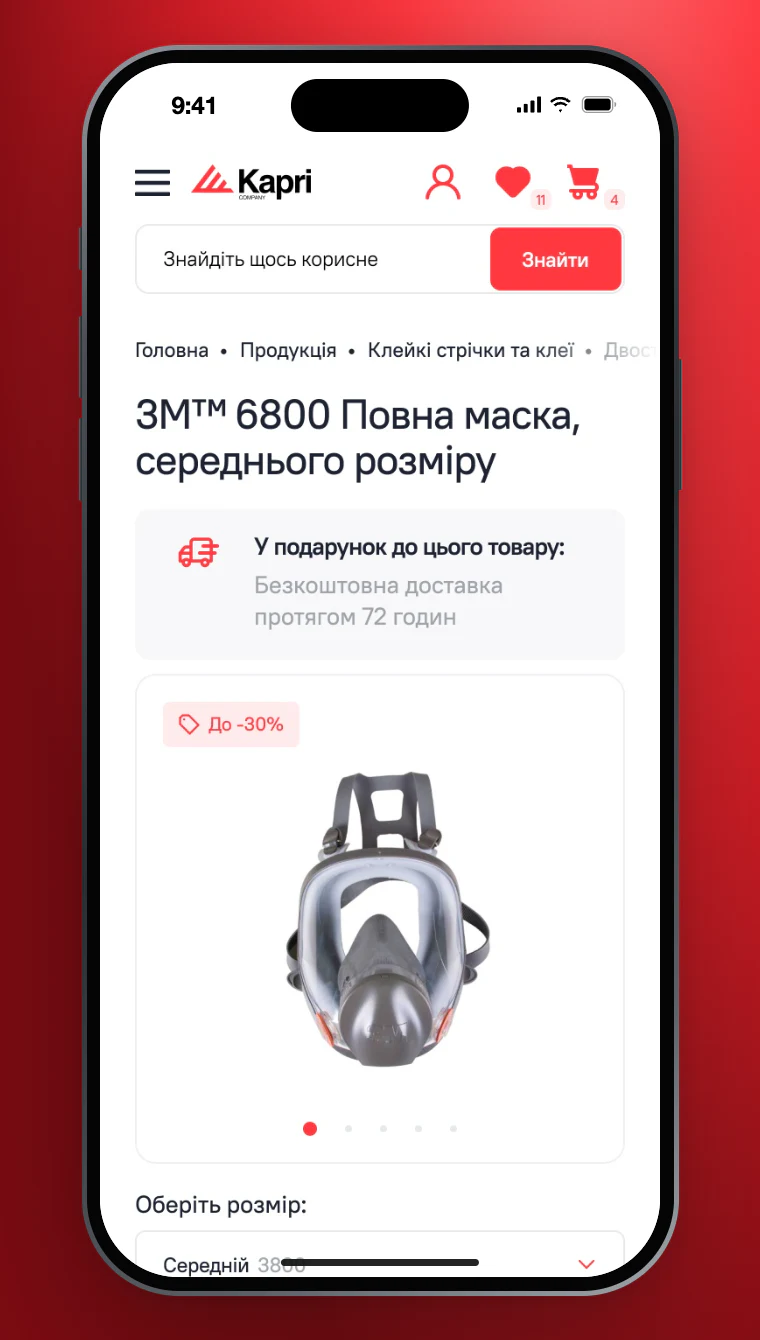
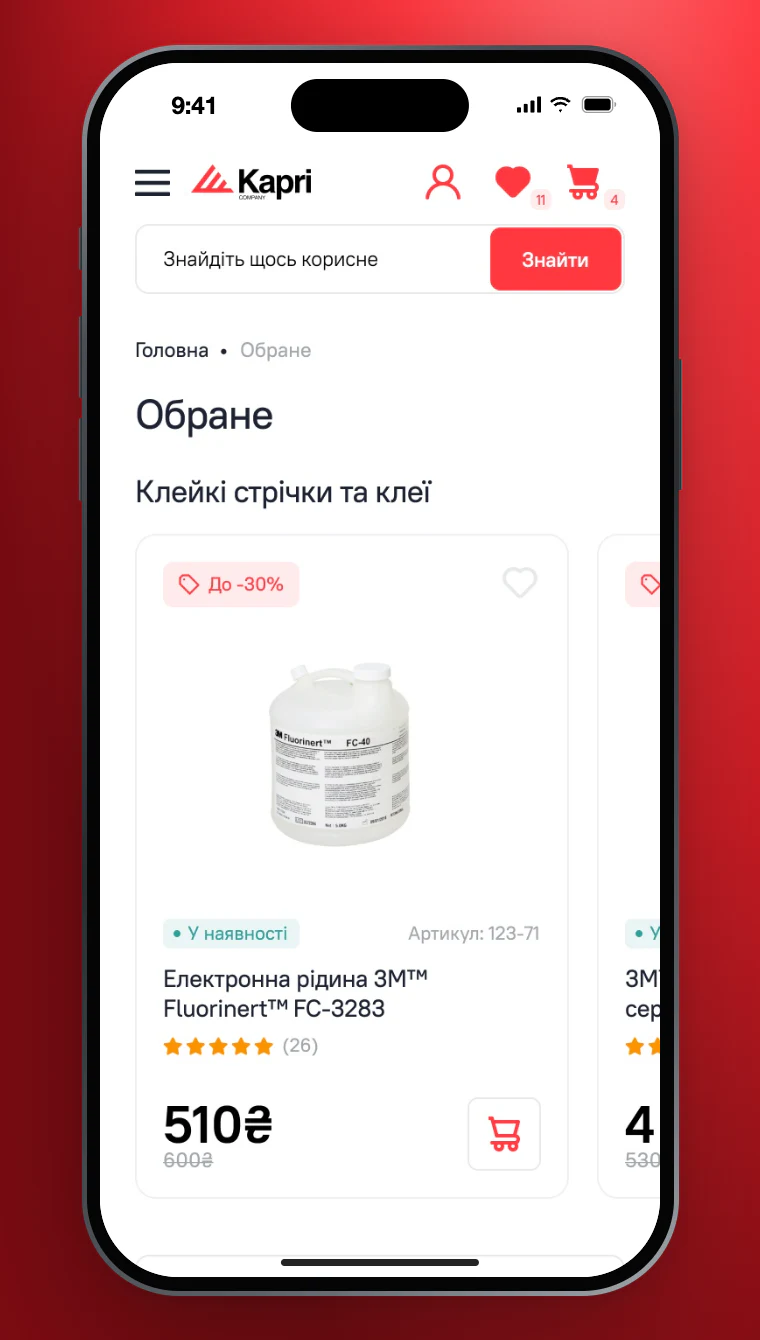
Brand, SKU, stock status and price sit at the top, with the discount and the saving spelled out. Variants of one product, such as grit, size or protection level, live on one page and switch with a tap instead of hiding on near-identical pages.
Below come the description, a full table of technical specs, technical data sheets to download where the manufacturer provides them, and the delivery and return terms. An engineer gets the answers from the page; a manager doesn’t have to give them on the phone.

06 · Reviews and pre-orders
An empty shelf doesn’t end the sale
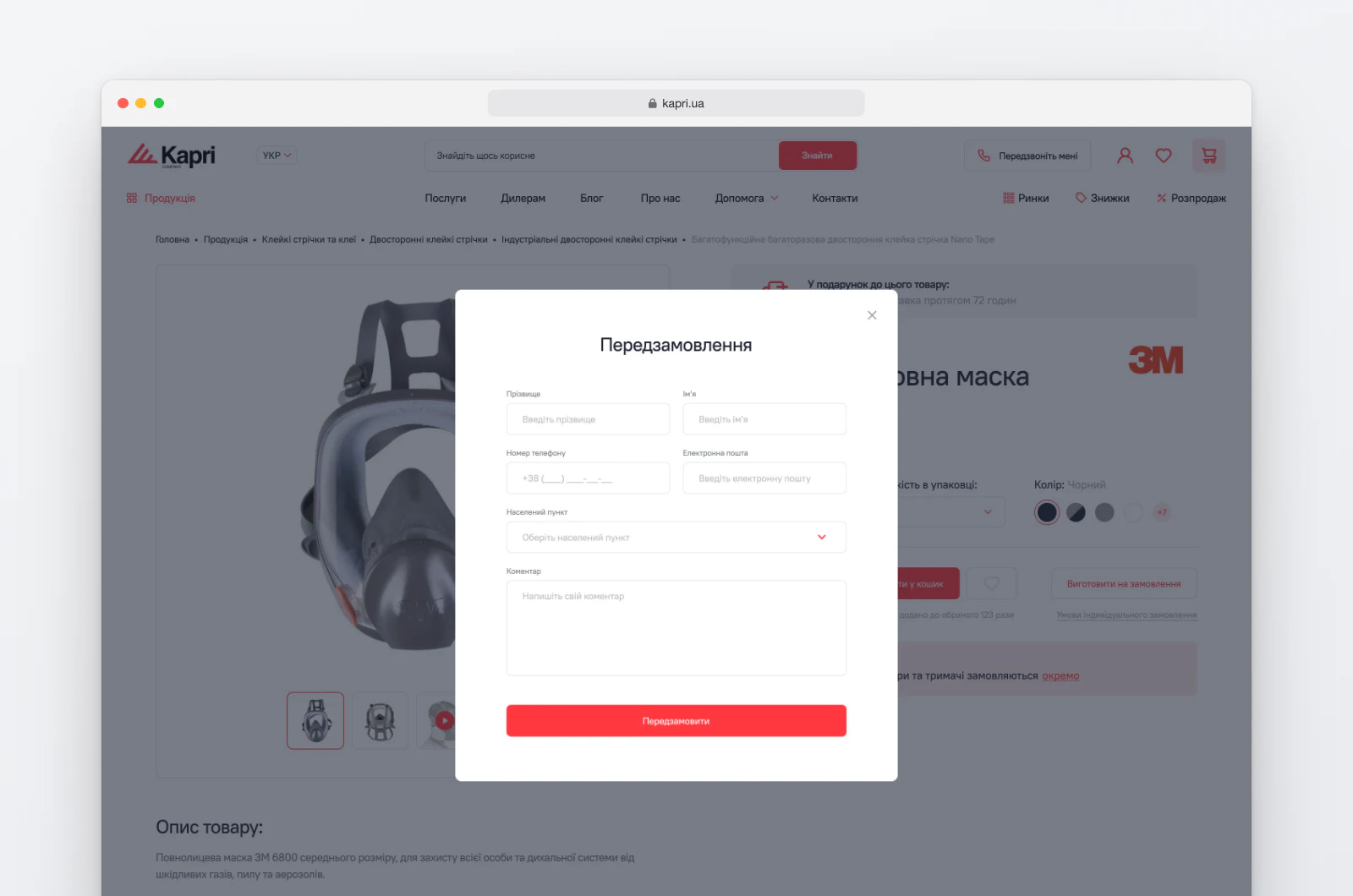
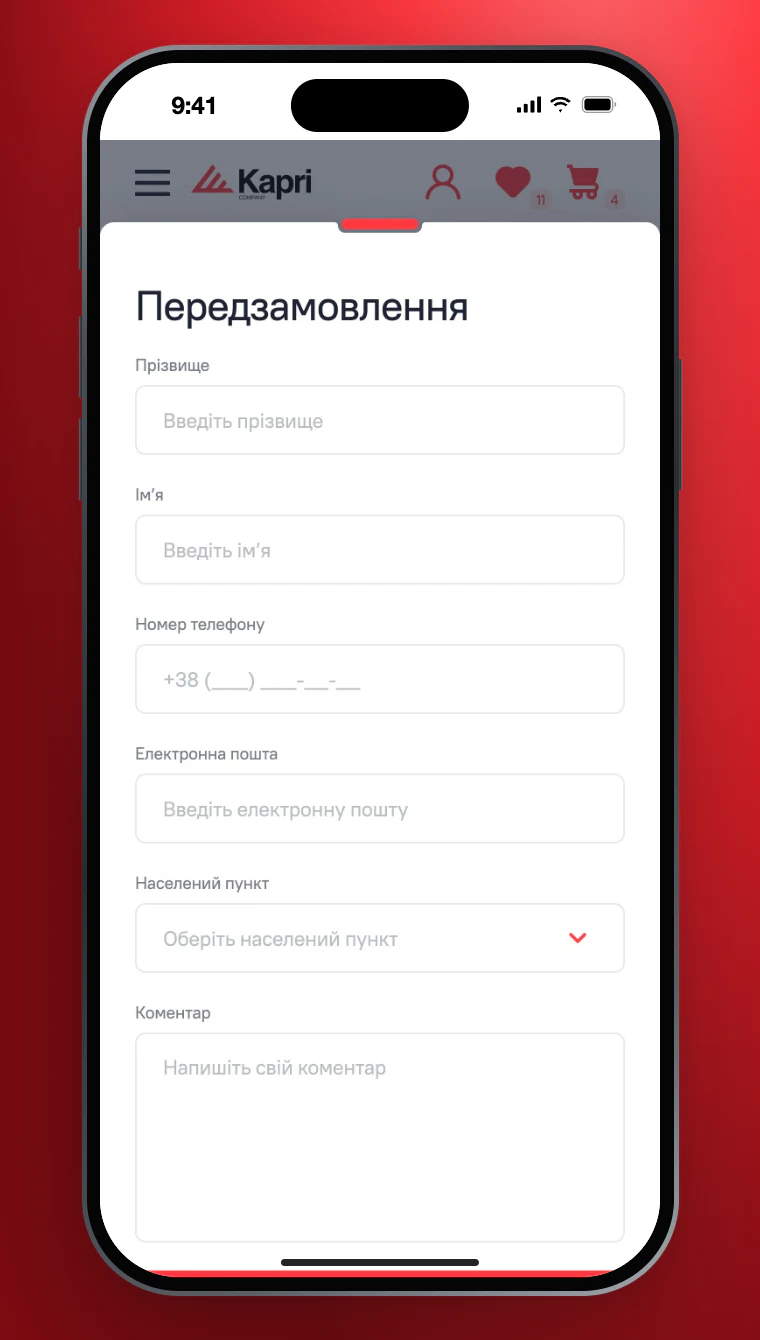
For items that aren’t on the shelf, the product page offers a pre-order instead of a dead end. The buyer leaves their contact details and city, and Kapri’s manager gets back to them when the stock arrives.
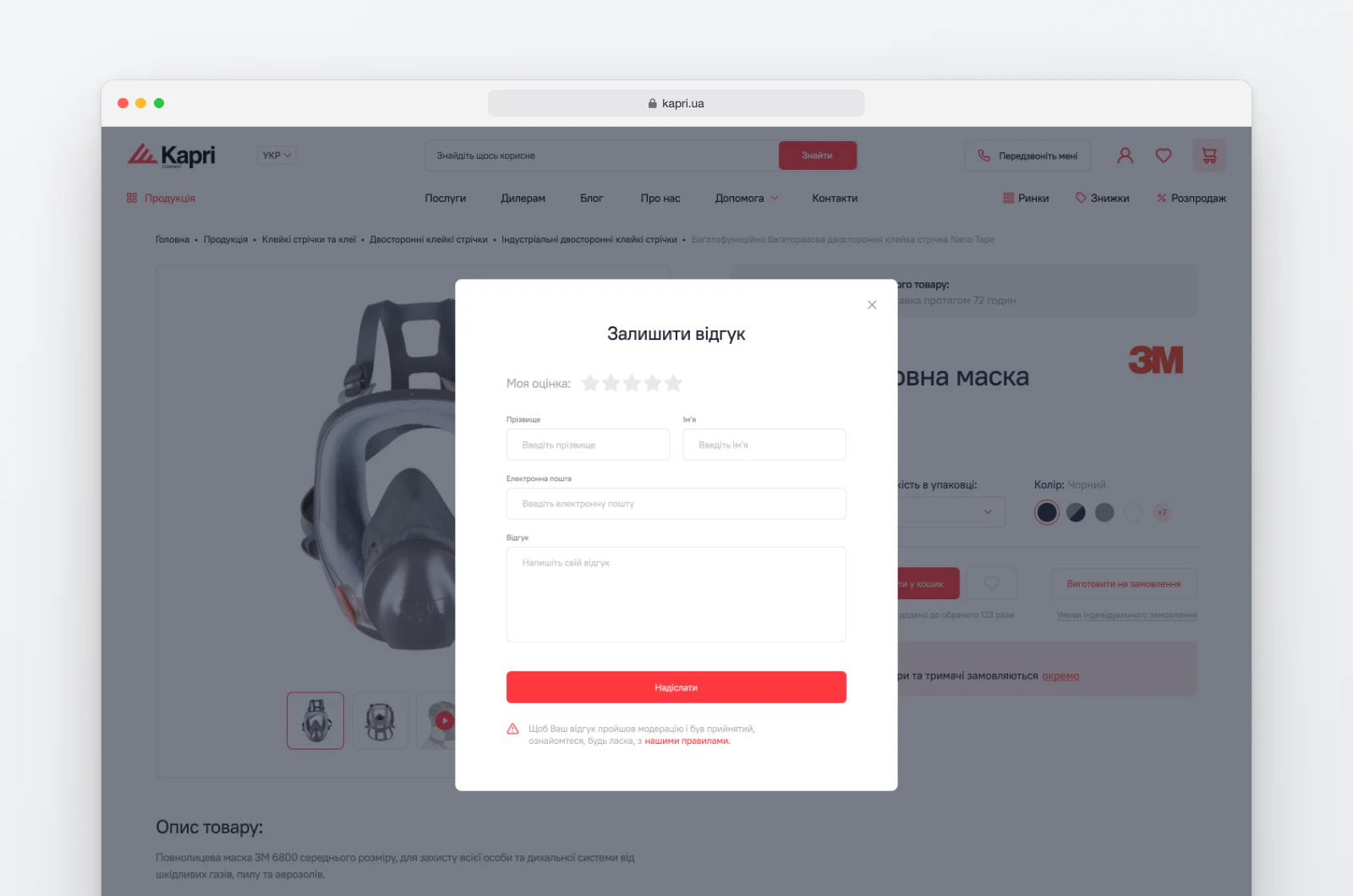
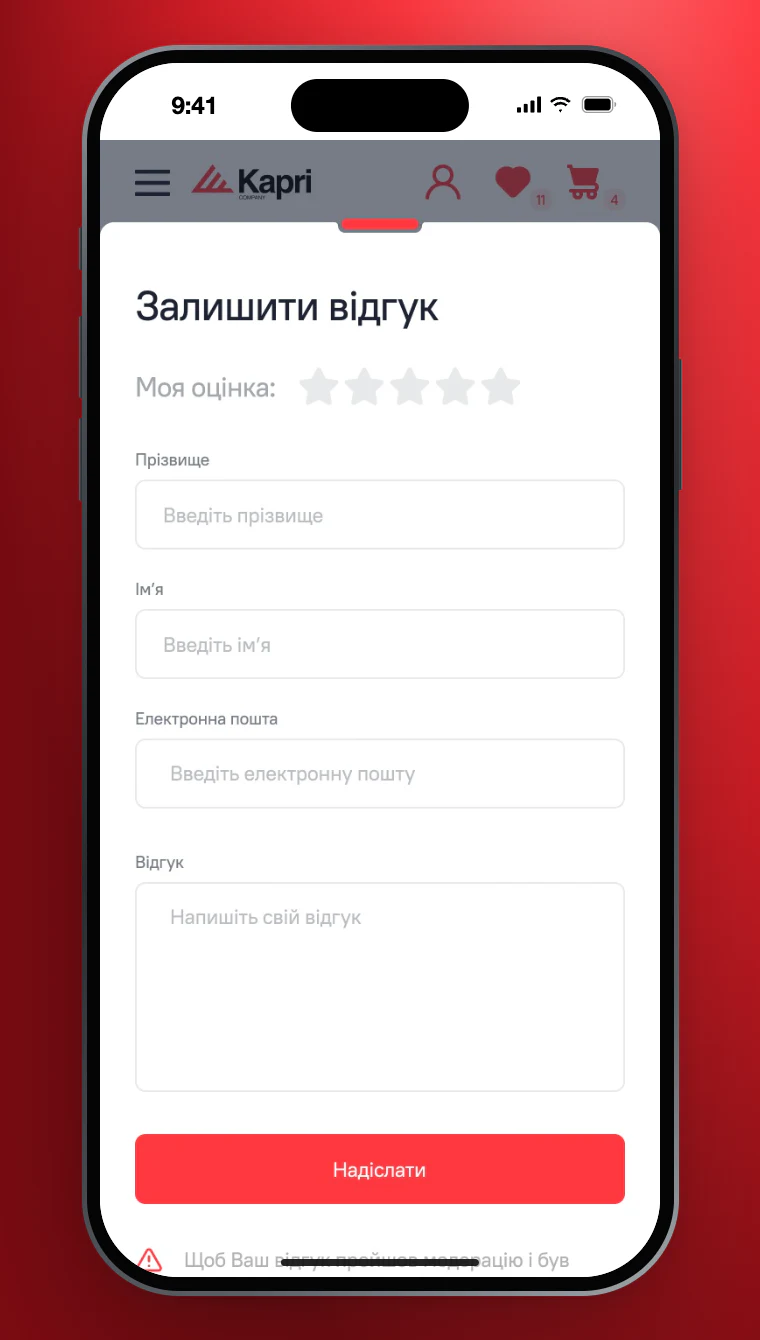
Buyers rate and review products right on the product page, and reviews go through moderation before they appear, so the ratings help the next buyer instead of filling up with spam.
07 · Made to order
Tape cut to size, checked before it is ordered
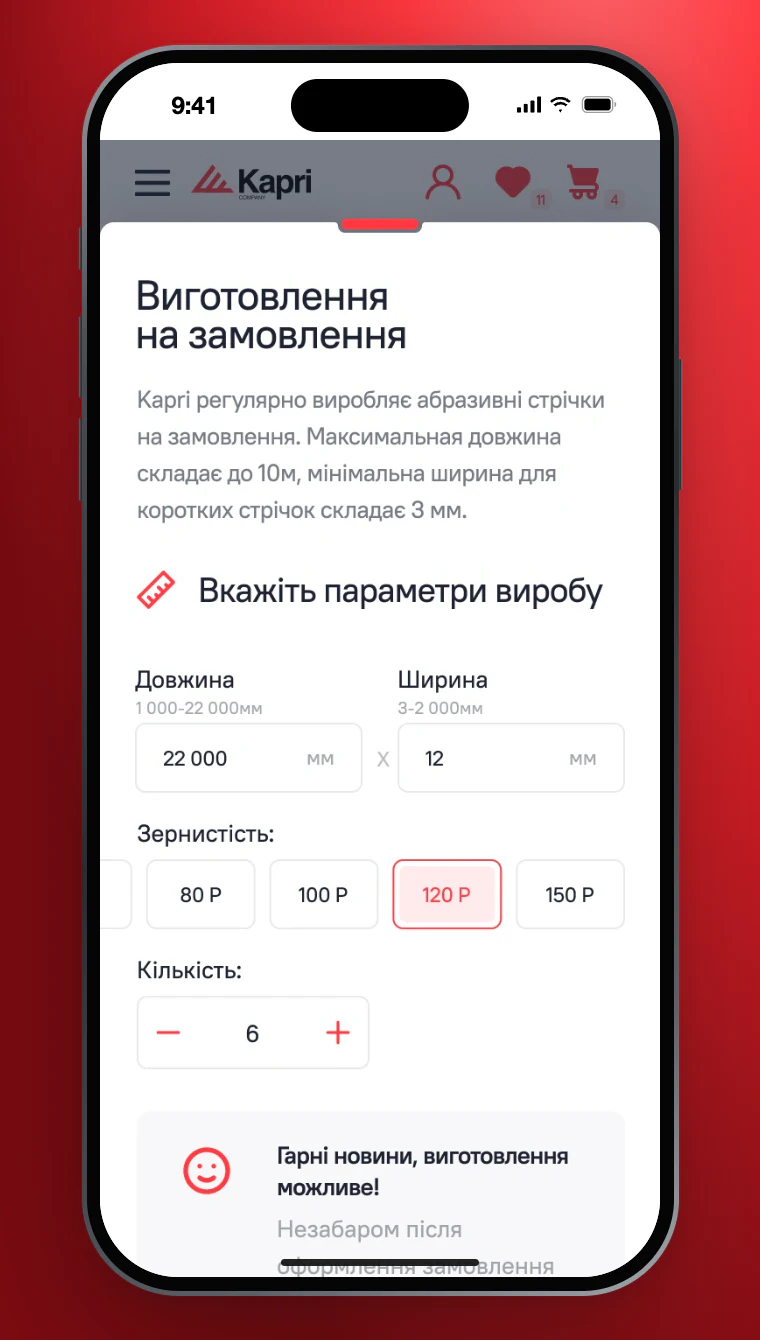
Kapri doesn’t only resell rolls: it cuts, rewinds and die-cuts tapes to customers’ sizes at its own facility. A custom size ordered by phone means a manager checking the numbers by hand and calling back when they don’t fit.
We built a made-to-order flow for that service. The buyer enters length and width, picks the grit and quantity, and the form checks the request against the limits of Kapri’s production before it goes in. A size the line can make goes to the manager with every detail filled in; one it can’t make gets a clear reason on the spot instead of a rejected order a day later.

08 · Cart and checkout
A one-page checkout, for guests and regulars
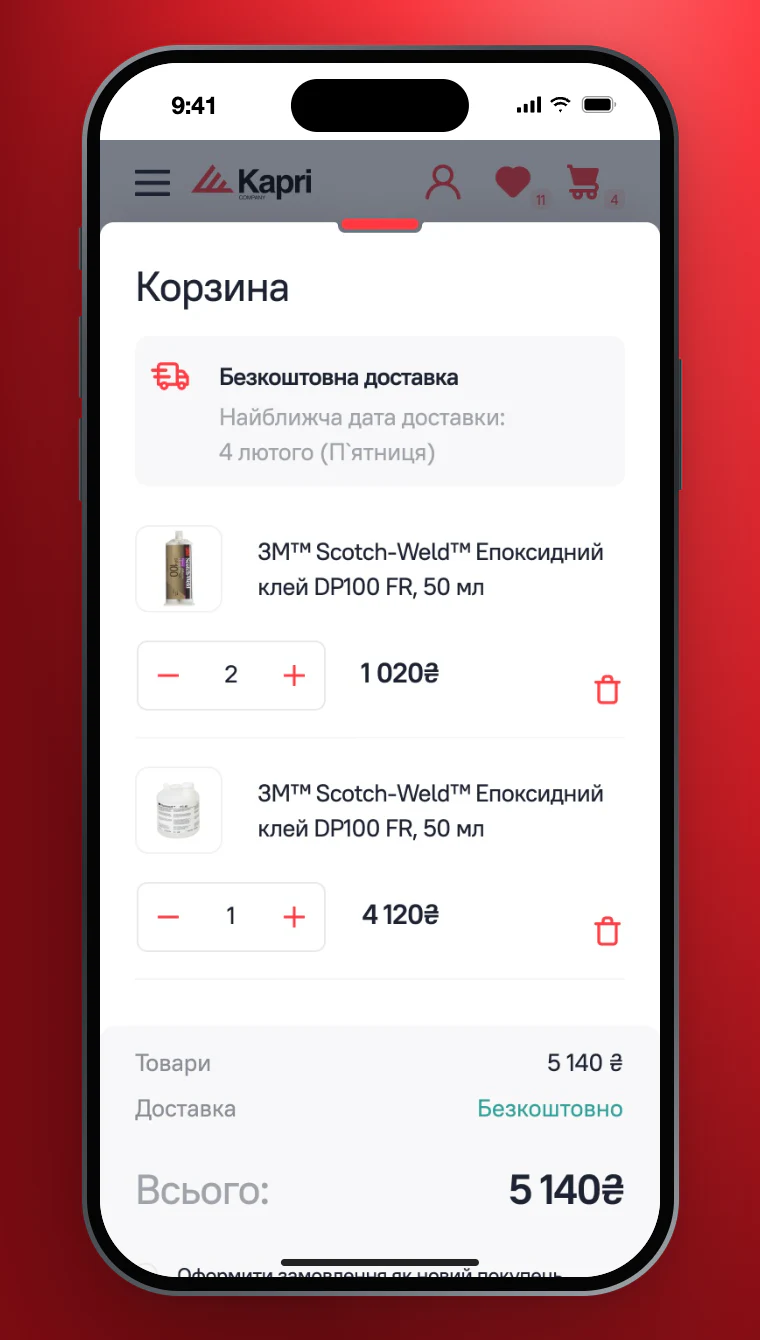
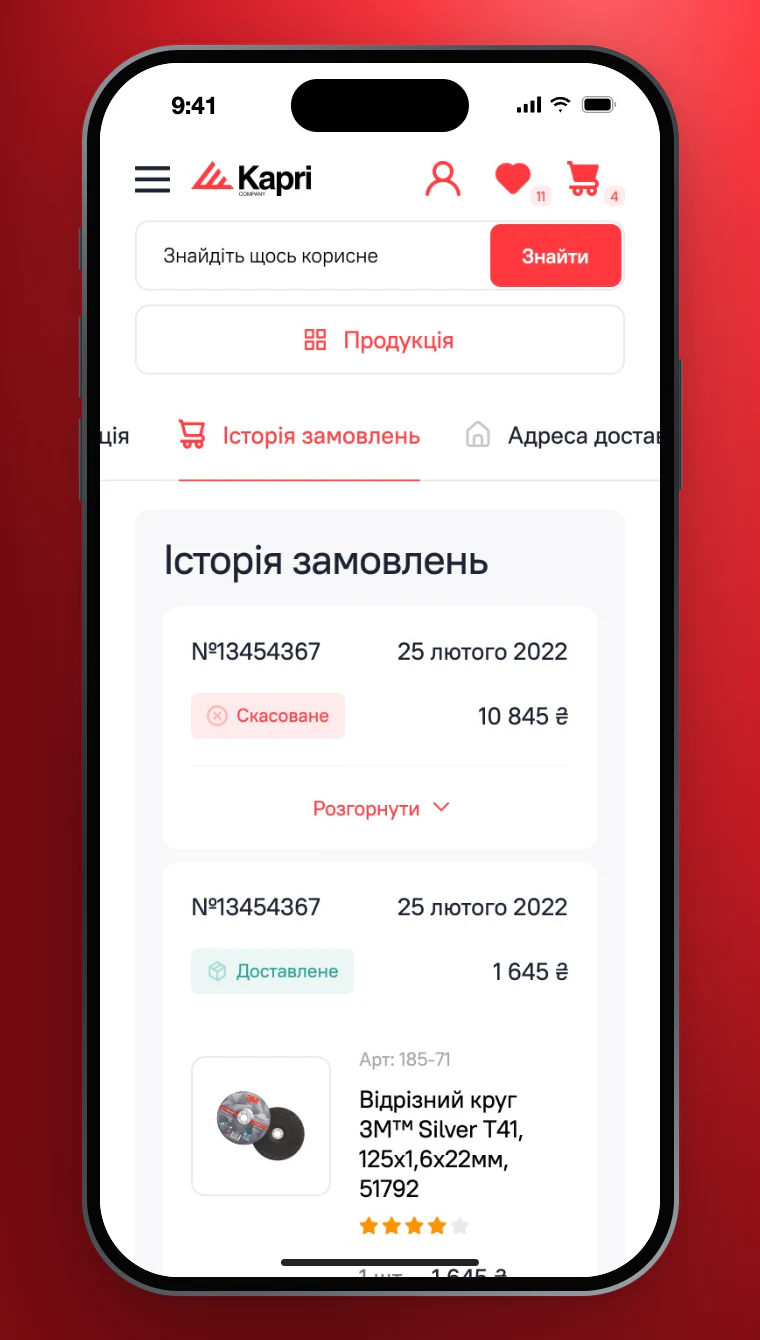
The cart opens as a side panel over the page the buyer is on: quantities change in place, a promo code applies in one click, and the buyer chooses to order as a guest or sign in.
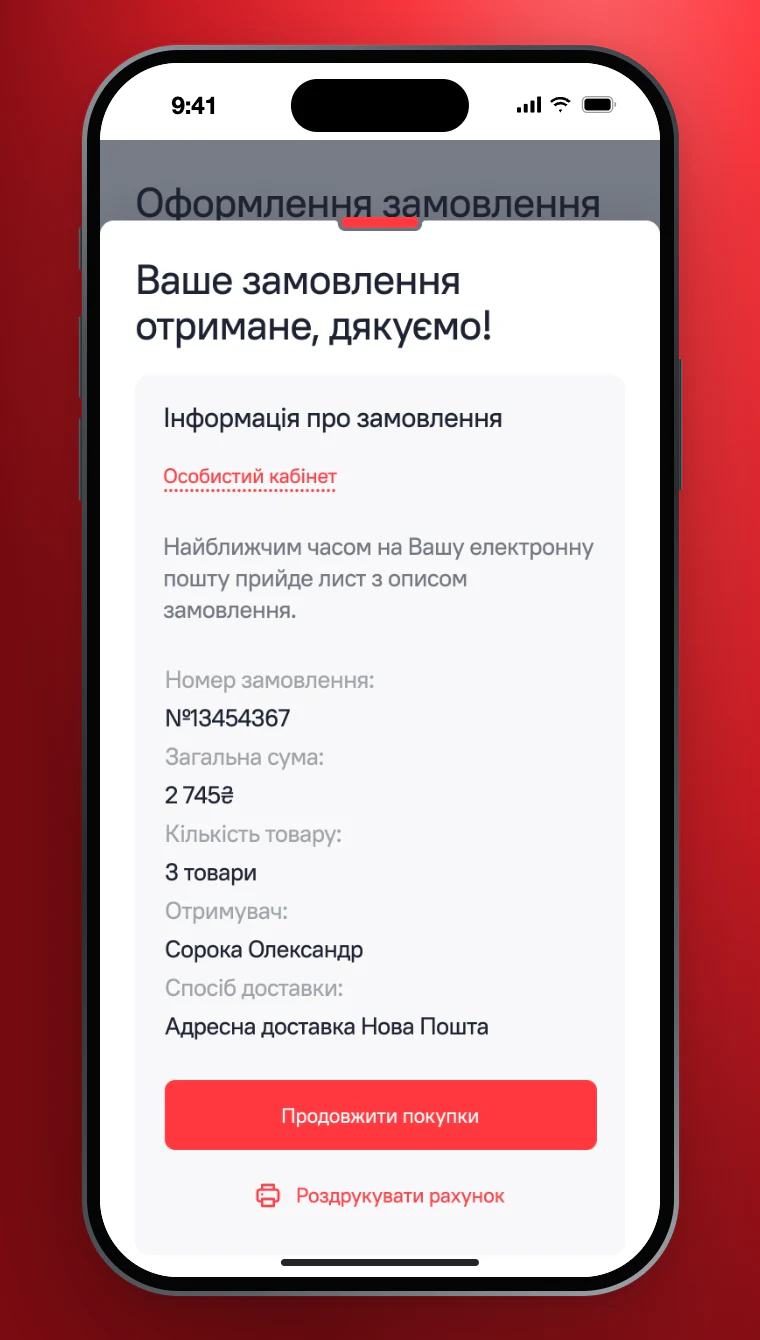
Checkout fits on one page: contact details, delivery, payment. A returning buyer signs in with one button and gets the form filled in, nobody is forced to create an account, and the order ends on a confirmation page with its number and details.

09 · Nova Poshta delivery
Nova Poshta inside the checkout
Most orders from outside Kyiv travel by Nova Poshta. When a buyer types a branch by hand, a wrong number means a lost parcel and a call to support.
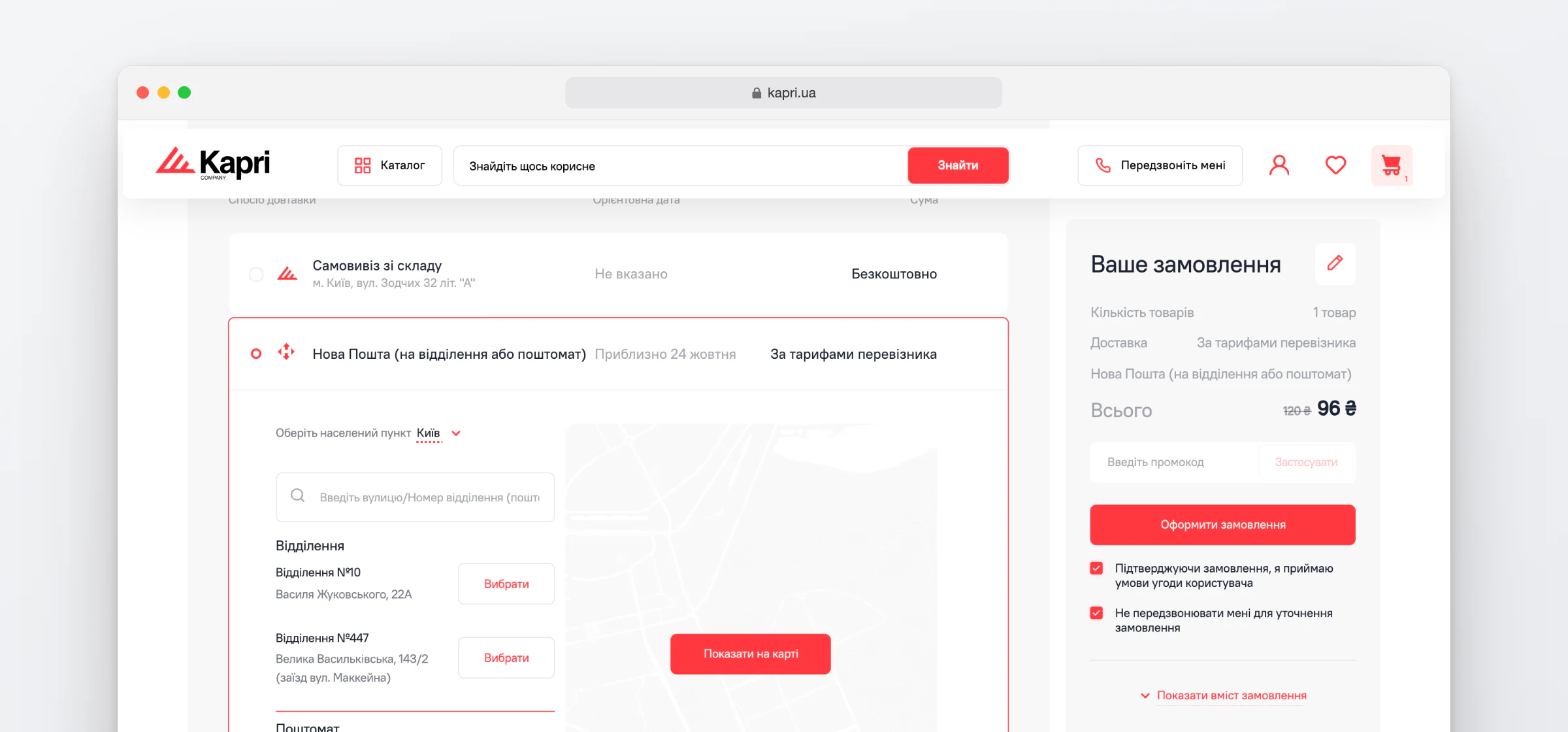
We connected Nova Poshta to checkout. The buyer picks a city, searches branches and parcel lockers by street or number or finds one on the map, and confirms it with one click. Pickup from Kapri’s Kyiv warehouse, Nova Poshta to the door and Kapri’s own courier sit in the same list, each with an estimated date and cost.
10 · Payment
Card for people, invoice for companies
Private buyers pay online by card, Apple Pay or Google Pay on PrivatBank’s secure page, or in cash when the order arrives.
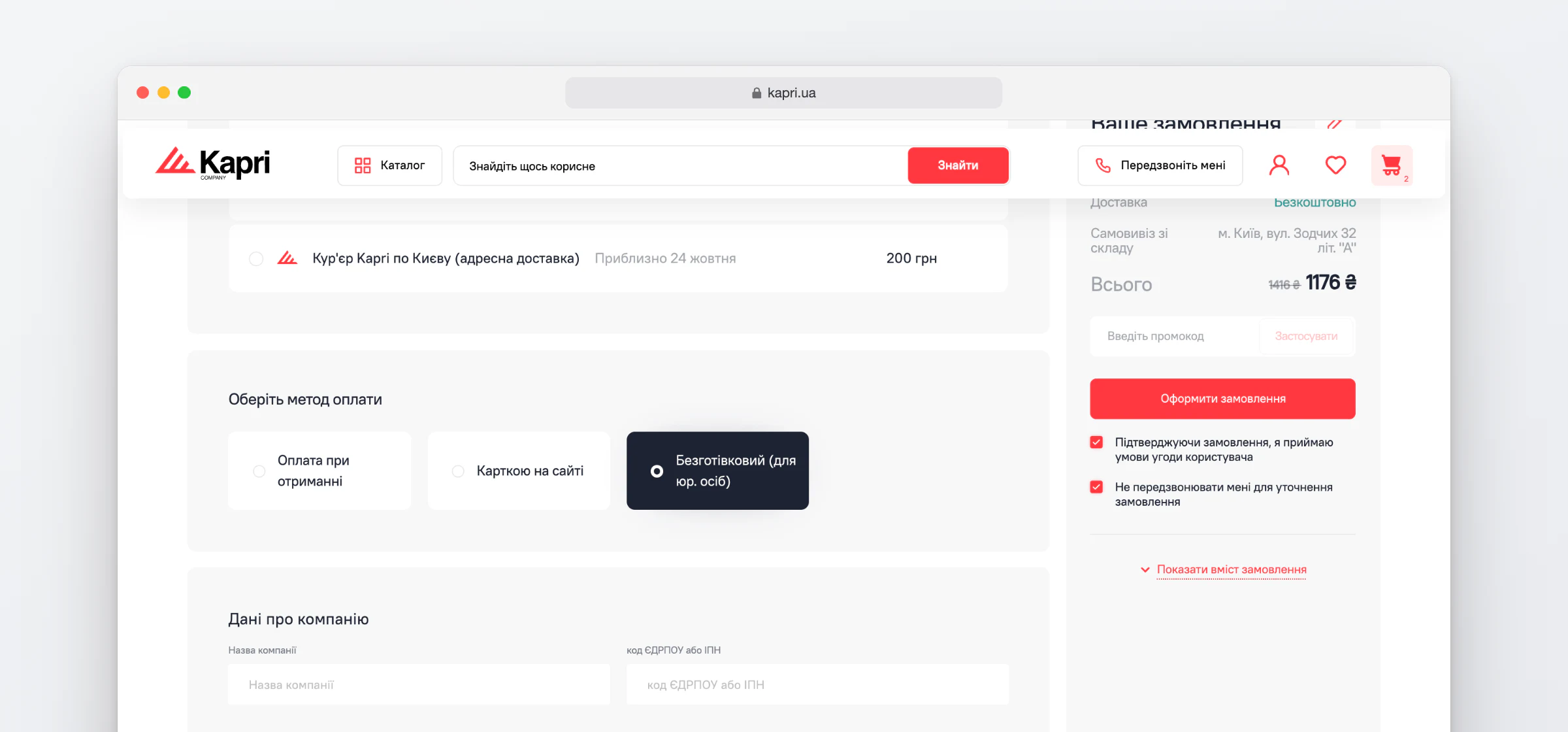
Companies choose bank transfer and enter the company name and EDRPOU or tax number. Kapri emails an invoice and ships when the payment lands. With both kinds of buyer in one checkout, Kapri runs one store instead of a shop and a separate B2B portal.
11 · 1C integration
Prices and stock straight from 1C
Kapri runs its business on 1C. A store whose prices and stock are updated by hand soon sells items that are no longer on the shelf, at last month’s price.
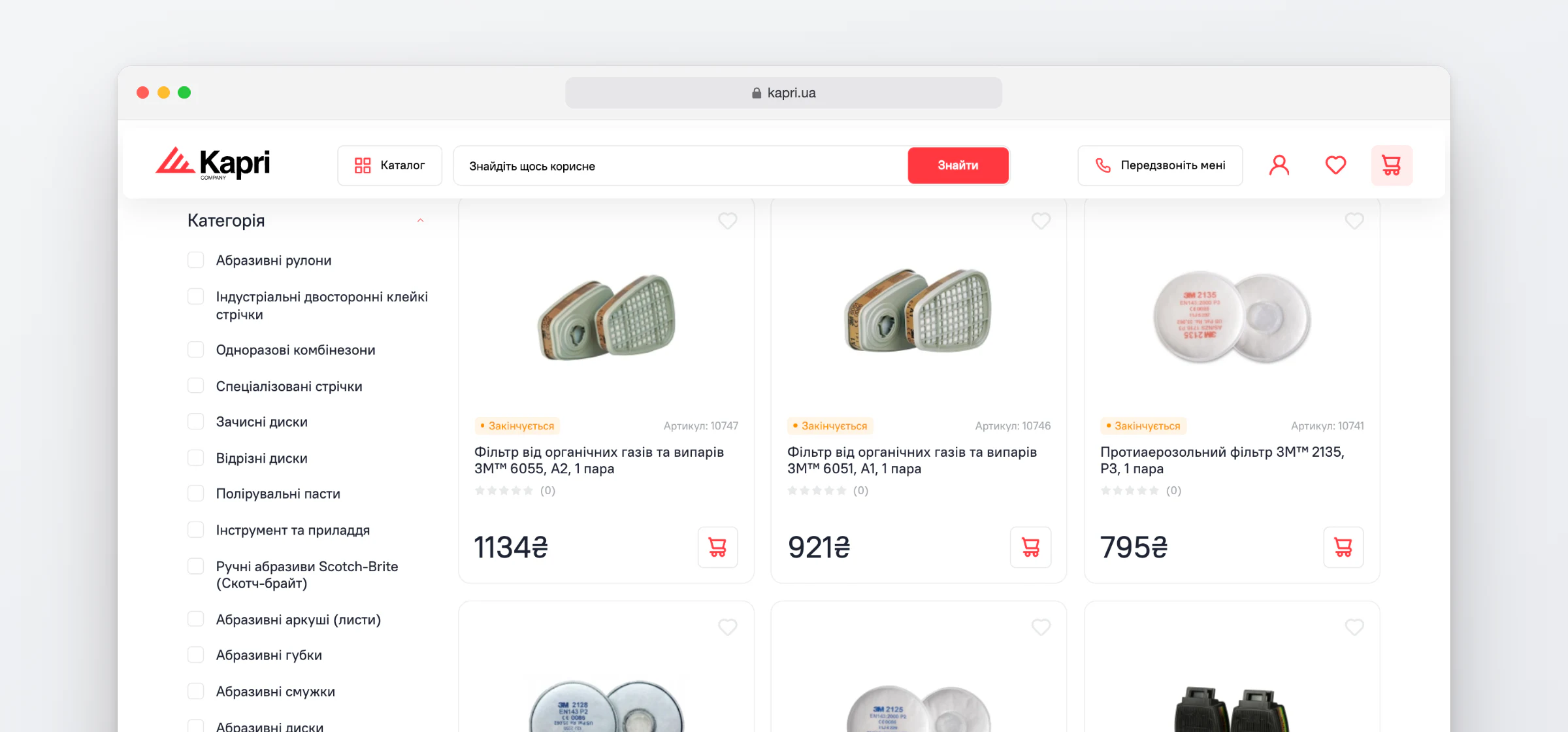
We integrated the store with Kapri’s 1C, so prices and stock on the site come from the company’s own records. The status on every product card, from in stock to running low or on order, reflects what is in the warehouse, and the sales team doesn’t retype a single price.
12 · Google Shopping and SEO
Every product ready for Google
People who search Google for a part number are ready to buy. A store that only appears in ordinary results misses them in Google Shopping.
We built a Google Merchant Center feed that lists the store’s products with price, availability, brand and SKU. It is rebuilt from the store’s data every hour, so prices and stock in Google match the site. For ordinary search, the sitemap is generated from the catalog and every product gets its title and description from a template, so nobody writes meta tags by hand.
13 · Accounts
An account that makes the second order faster
Kapri’s customers reorder the same consumables, so the second order should be quicker than the first.
Buyers register with email, Google or Facebook. The account keeps their personal details, order history and saved delivery addresses, a wishlist sits one tap away in the header, and registered buyers join Kapri’s bonus program.

14 · Promotions and content
Tools for Kapri’s sales team
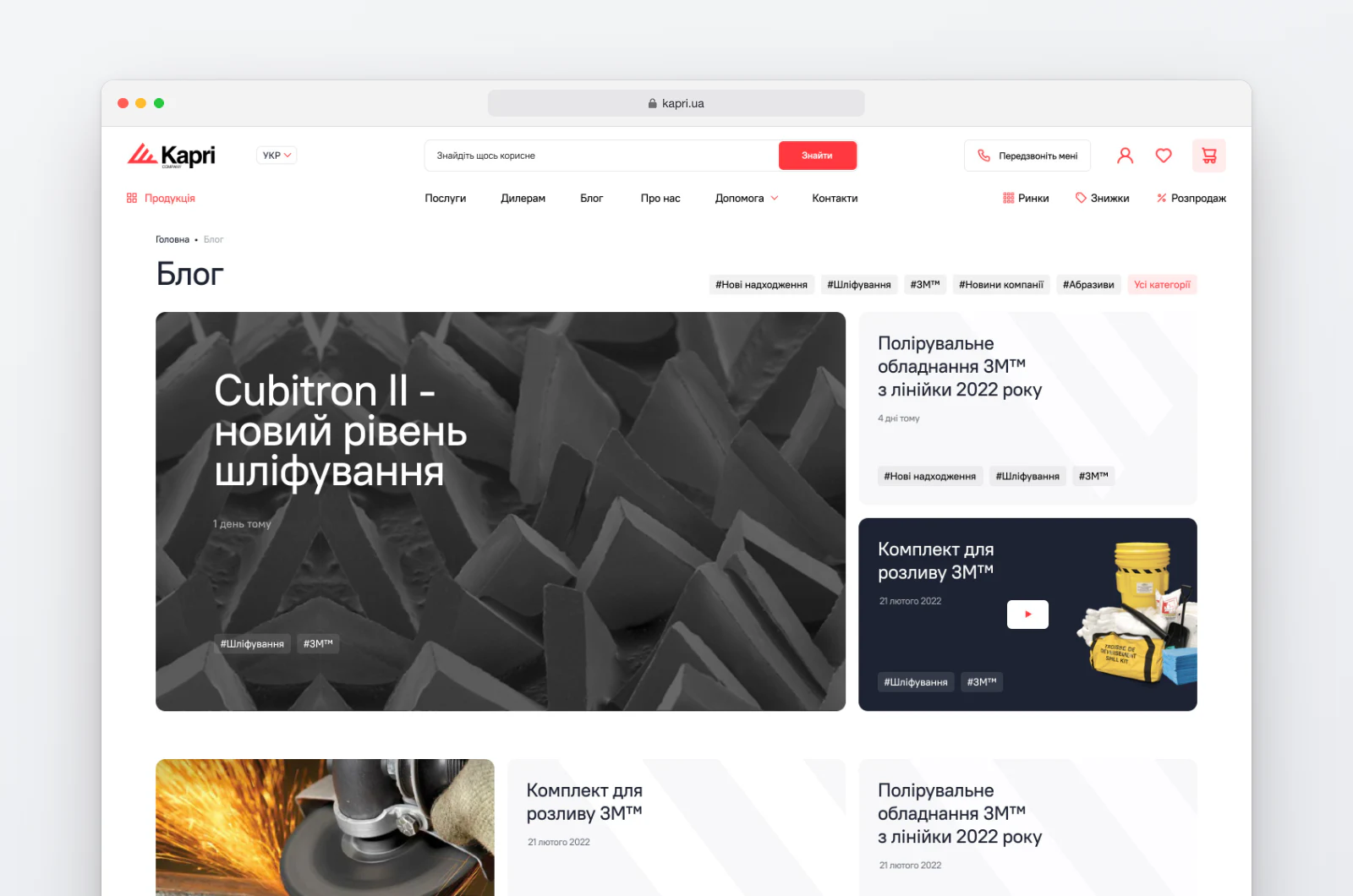
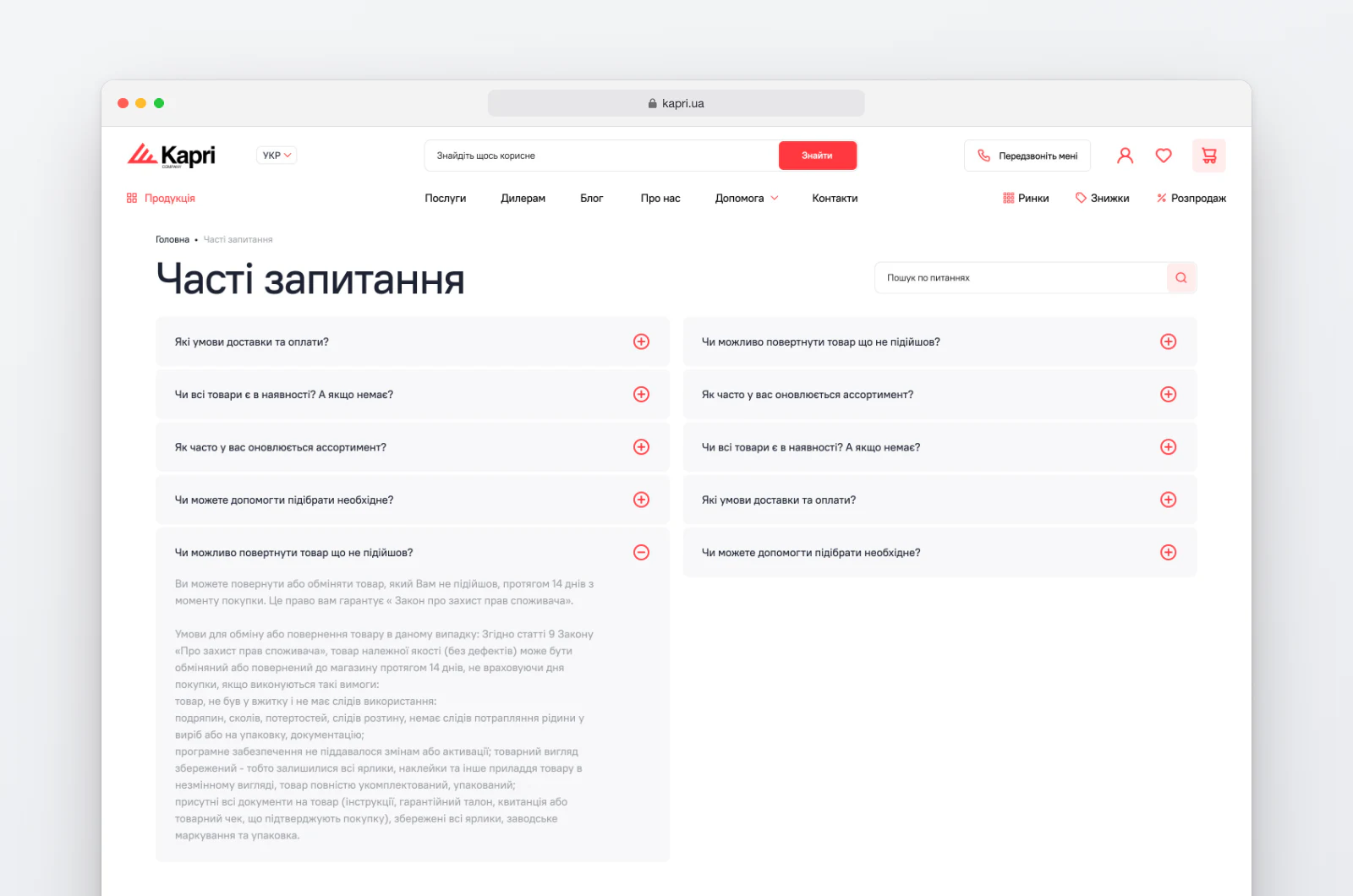
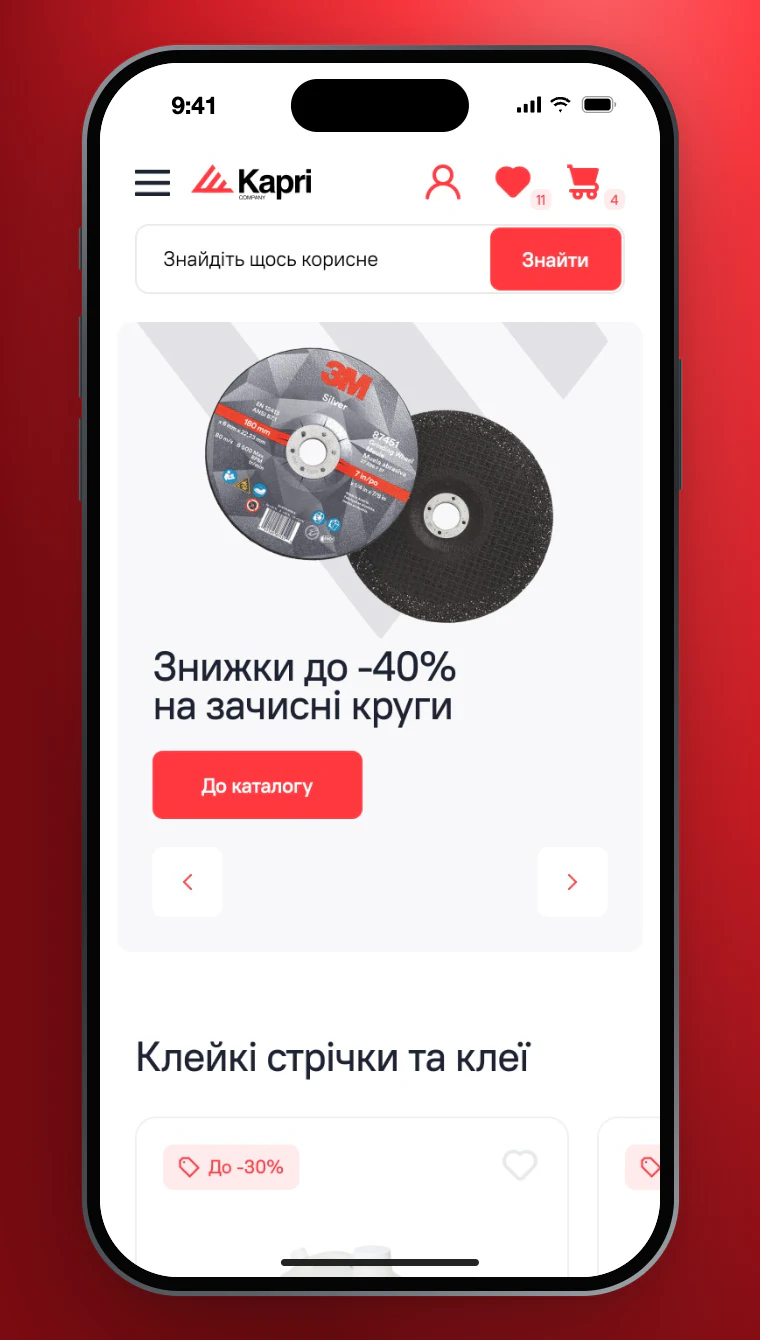
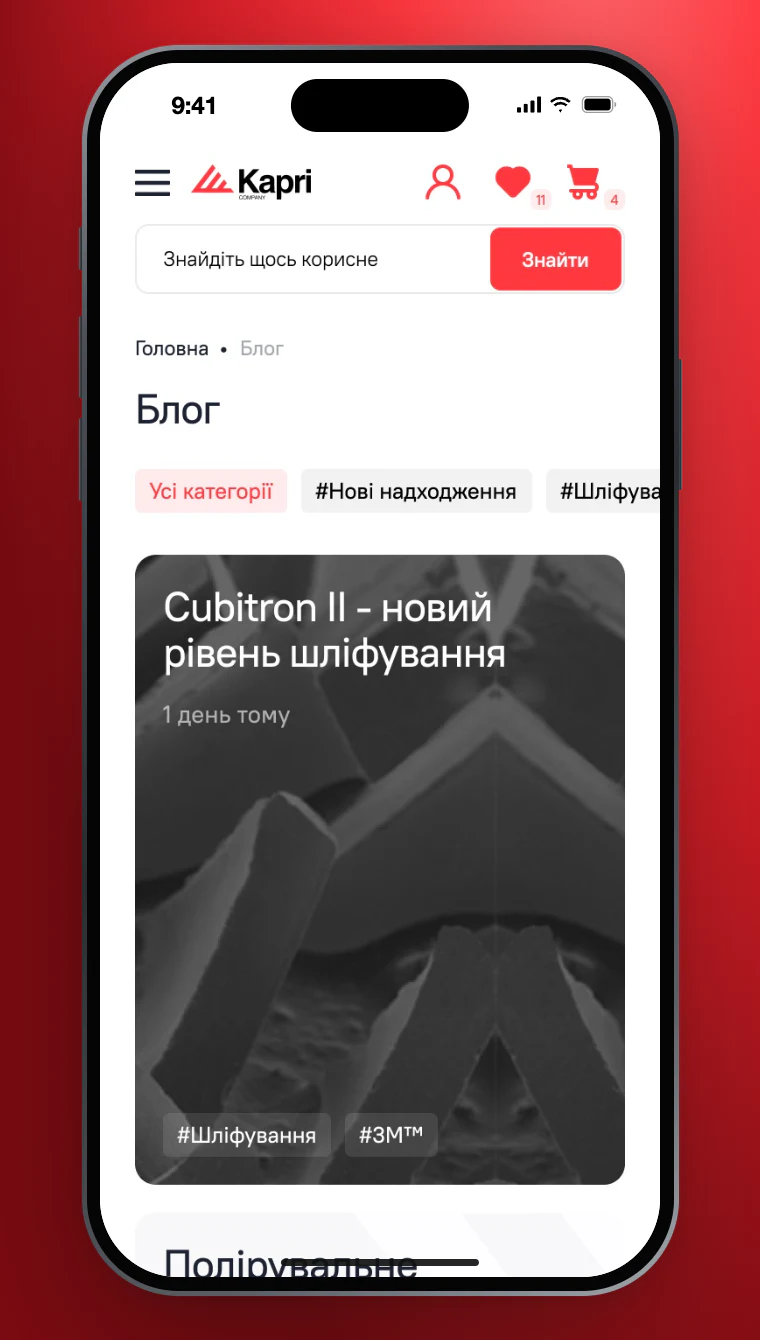
From the admin panel Kapri’s team runs home page banners, new arrivals, discounts and a clearance section with stock from the warehouse, and publishes blog articles and the FAQ.
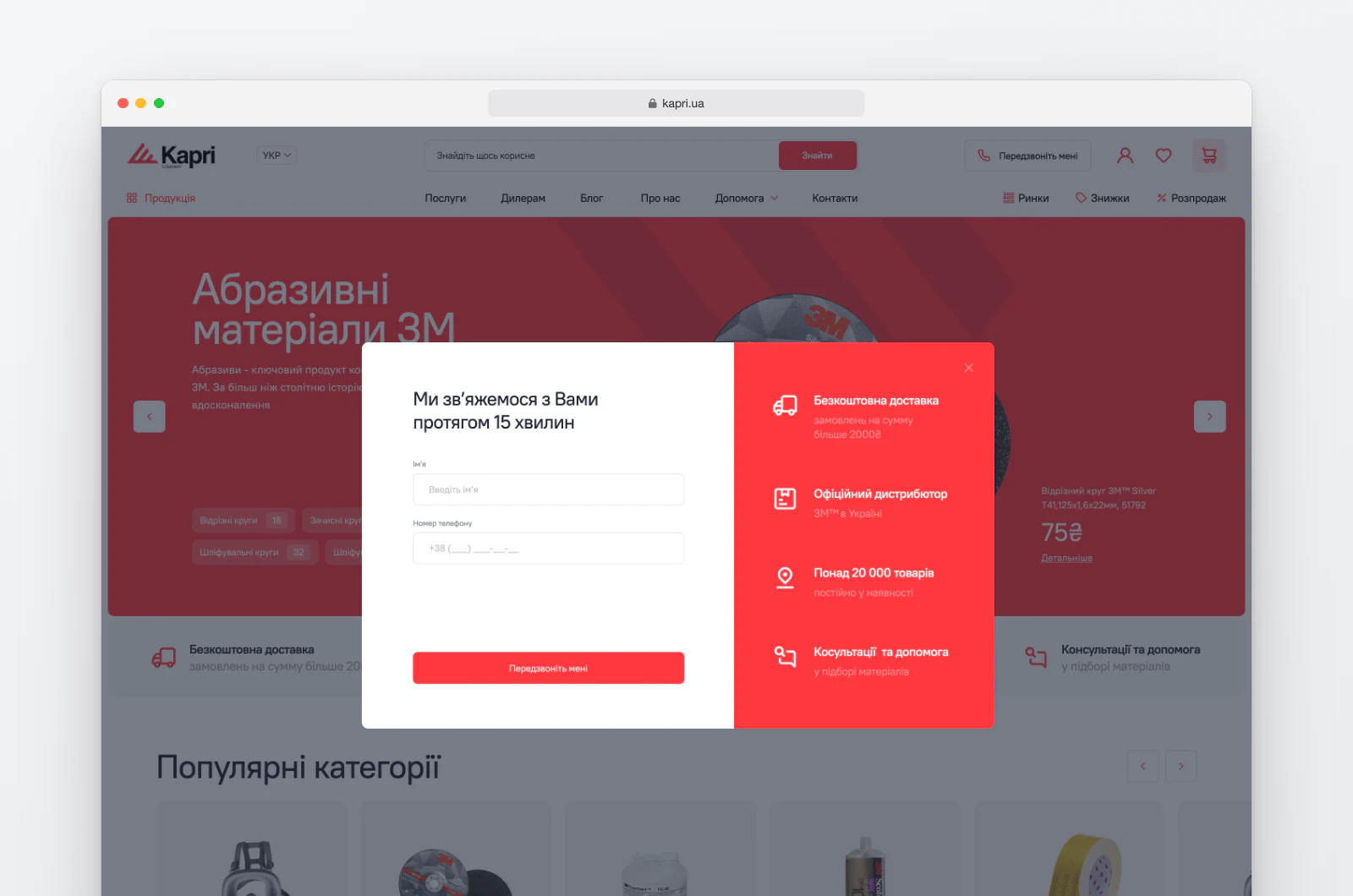
Buyers who would rather talk leave their number for a call back, which Kapri promises within 15 minutes, and dealers apply for partnership through a form on their own page.
Architecture
Nuxt.js, Laravel and MongoDB, built to grow
We chose Nuxt.js for the storefront because it renders pages on the server: a buyer gets a complete page on the first load, and search engines read every product and category in full rather than an empty shell.
A Laravel backend serves the store through an API and runs the custom admin panel and the integrations. MongoDB holds the catalog, because products here don’t share one set of fields: a tape has width and adhesive, a respirator a protection class and a valve.
Storefront, backend and search are separate pieces, so each can change on its own: a new integration doesn’t touch the storefront, and a new filter doesn’t touch checkout.
- Nuxt.js
- Laravel
- MongoDB
- Node.js
- 1C
- Nova Poshta API
- PrivatBank payments
- Apple Pay
- Google Pay
- Google Merchant Center
- Google sign-in
- Facebook sign-in
Results
One store for retail and B2B, ready for Google
Kapri sells to companies and private buyers through one store and runs it day to day on its own: the team edits content and promotions in the admin panel, and nobody retypes prices or stock.
- 1,310products in the Google Shopping feed
- 1,400+pages in the sitemap
- 100Lighthouse SEO score, desktop
- 100Lighthouse best practices score, desktop
Feed and sitemap counted on the live site; Lighthouse audit of the desktop home page that we ran in October 2026.
Our team
The people who built kapri.ua.
6 specialists- 1
Project manager
Planning and delivery
- 1
Tech lead
Architecture and code review
- 2
Frontend developers
Storefront, search and checkout
- 1
Backend developer
API, admin panel and integrations
- 1
QA engineer
Testing and quality
Questions about Kapri
Case study by Redlab · Updated
Who built the kapri.ua online store?
Redlab, a software development studio with a distributed team across Europe and its head office in Ukraine. A team of six built the store end to end: storefront, backend, admin panel and integrations.
What is Kapri?
A Kyiv distributor and converter of industrial materials. Through kapri.ua it sells 3M, Tesa, Scapa, Egebant and Montex products to companies and private buyers across Ukraine.
Can Redlab connect an online store to 1C?
Yes. We first look at how the client’s 1C is configured and agree which data moves between it and the store, and how often. On Kapri the store takes prices and stock from 1C.
Can you add Nova Poshta delivery to a checkout?
Yes. We work with Nova Poshta’s API for cities, branches and parcel lockers, and can add door-to-door delivery and the store’s own courier or pickup point as further options in the same step.
Do you set up Google Merchant Center feeds?
Yes. We build the feed from the store’s own product data in the format Merchant Center expects, with price, availability, brand and identifiers, and refresh it on a schedule that suits the catalog.
Can one online store serve B2B and retail customers?
Yes. Catalog, search and cart work the same for both; the differences sit in checkout, where companies need invoices with their legal details and private buyers need card payment and parcel delivery.
What does Redlab need from a client to start a store like this?
The design or a brief, a sample of product data, documentation for the accounting system such as 1C, and accounts with the delivery and payment providers. We can start on the storefront while the integrations are being prepared.
Can Redlab build an online store like this?
Yes. We build e-commerce for companies with large technical catalogs, B2B and retail buyers, and an accounting system behind the store. See web app development, or tell us about your store below.
More products we’ve built
Tell us about your store
A few lines or a link is enough — we’ll come back with questions and a first view of scope.

Thank you
Linda has your request. Expect a reply within 12 hours — with questions, or a time to talk.